I wasn't talking about quotas for skaters, but about quotas for officials. The sport has a problem with long-entrenched patterns and relationships that show up in both the composition of judging panels and tech panels the results they put out - unintentionally or otherwise - and that means that they impact the results of competitions. Ensuring that at least 50% of the tech panel and judging panel at every high-level competition comes from a non-traditional skating country seems to me to be a way to break up those patterns and start to unskew the results, creating a more level playing field for all skaters. Is there another mechanism you can think of that would have a similar impact?
As for skater quotas, I'm the wrong person to ask, I'm afraid. I'd rather watch ninety-seven Zahra Laris struggle to land one jump in the SP at Worlds than one Nathan Chen land seven flawless quads in the FS. All my arguments would be for taking places away from the already extremely powerful, and creating as many more as possible for the powerless.
Re the term 'persons of colour' - yes, I know it's a broad-strokes, Western-centric term, but I chose it because I considered it the most likely to be understood by the majority of posters on the board who would be interested in having this discussion (as opposed to, say, the UK term BAME which is less widely recognised). And I do consider it to encompass Asian skaters (and officials) in the context of the sport as a whole, because as a whole the sport still is, unfortunately, very white-centric, and skaters from many Asian nations have experienced and do experience racism during their careers, and I think it highly likely that officials have too. But I agree there must be a better term to express that with out there somewhere!
First you should define which one is the "traditional" and which one the "non-traditional" country, The term itself is blurry and very prone-to-bias. Is let's say Norway with the second highest number of golden medals in ladies traditional or non-traditional? Does it matter that the last time Sonja Henie won gold is 1936, is that the "tradition"?
Or the tradition is not exactly the tradition from the long-term perspective? Is Russia traditional country, even if the russian ladies won only eight golds with the first one in 1999? And how to differ between disciplines? Particular country can be succesful in one discipline but unsuccesful in the other tree. Or should be the tradition understood as divided between the disciplines? Some countries attend competitions for a long time and are not winning much, some others are relatively new but succesful.
Where my country should be? Traditional, because historically there is a strong tradition in the past, but also not very bright future, at least when it comes to the highest ranks? Does it make the judges from my country biased or unbiased? Little exercise,
this is the panel of judges at the 2021 worlds for ladies, which country is traditional and which one is not.
And do the non-traditional countries (still the question which ones that should be) have even enough of staff qualified to judge important competitions? I don't know hiow about you, but when I want to buy a car, for instance, I don't care whether the team behind it's creation and manufacturing, is traditional or not, diverse or homogenic, but I want them to be properly qualified, from designers and engeneers to the workers in the plant. And I don't know why the judging panel in any sport should be taken different way. Either you are professional ot not, and that does not depend on your skin colour and being from so called "non-traditional: country (whatever that country should be) definitely is not a guarantee for me that that person is prejudice-free and non biased.
As for the part about Nathan. When I'm wastching worlds, I want to watch worlds top competition, not a competition representing a consolation prize. The very purpose of sport bigger, faster higher can't be replaced by some weird key how to qualify based on the origin or colour, because that's exactly what should be completely destroyed: priviledge and protection. As I've said before, those who want to succeed have to worj for it, not just on the level of individuals, but also on the level of states and organizations, create training possibilities, prepare athletes and coaches, fight for the success. No one should be disadvantaged because his ancestors gave all their effort to create all this and give his descendants the possibilities of a good-working system of preparation.
If being better should be taken as disadvantage ("you are from a strong country, we don't need you"), than I openly call such proposal as completely spoiliíng and destructive to the sport.



 ). The international aspect was the reason why I've put my contribution to the discussion.


 ) that the OP is not American and indeed, lives far to the East of Eastern : Europe. ETA: But I am teasing, I know pure geography is not the only definition, although that is confusing to me.


 I generally dislike Sound of Silence programs, and I am no fan of the Disturbed cover, but Elladj coming back one last time and skating it lights out at Canadian Nats... I had to go rewatch again.
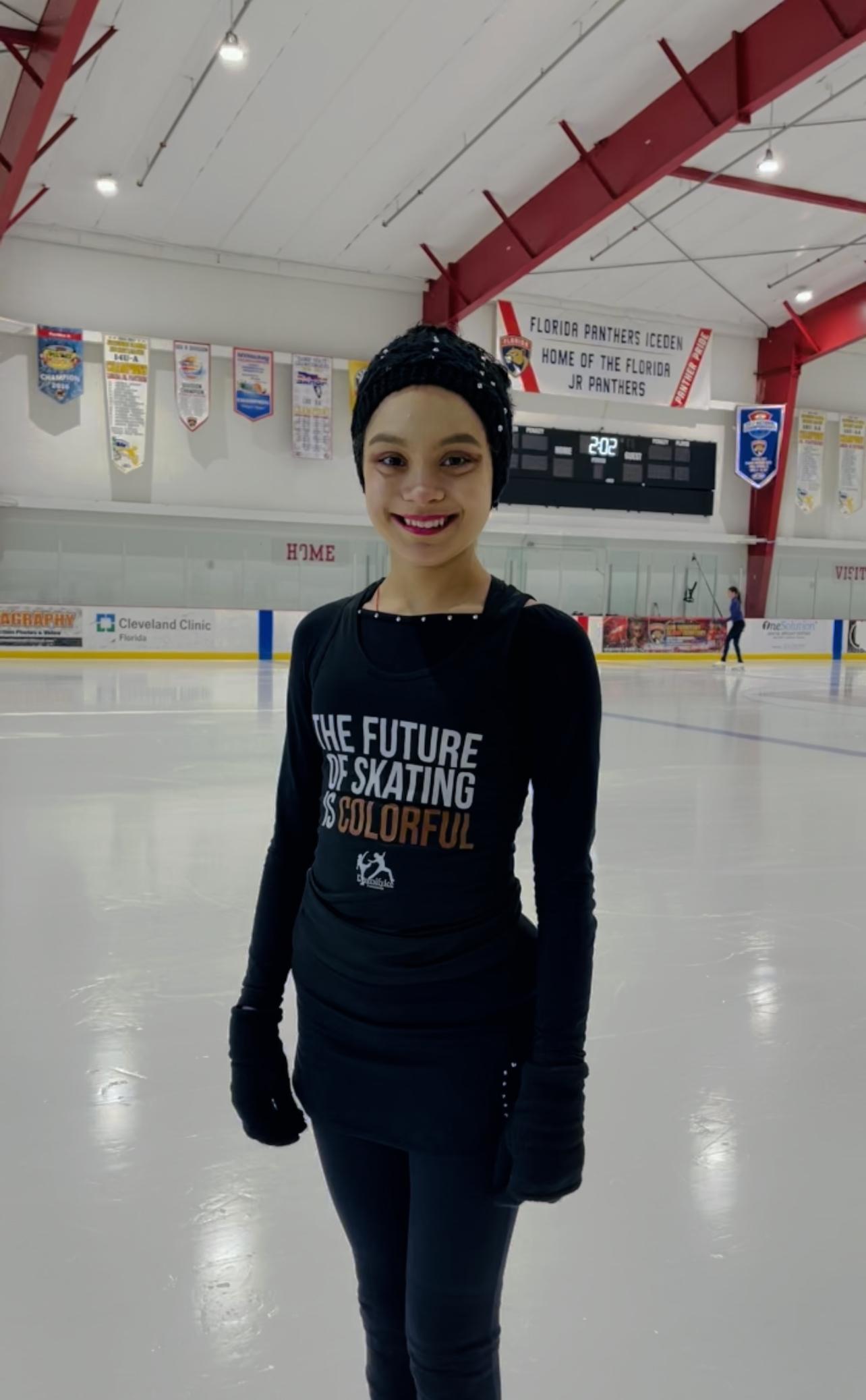


 ) but also his dancing and the fact he's a black skater. I had a fun time scrolling through the comments
 . There were a few skating fans in there who obviously knew about him but most people were really surprised and also very supportive and started following him.
 (but of course everyone is different, and some may like that. Good for them, they have skaters they can watch
  I don't need to subscribe to other definitions of the purpose of "sport"; like everything else in this world, as I have learned in my advancing years, it is not an absolute or set in concrete. We all differ


