- Joined
- Jun 21, 2003
Timur Balymbetov interviewed Shaidorov on his Youtube channel. Then Tengrin News reached out to the Ministry of Sports and received a received a response from the Directorate for Sports Development.
Summary:
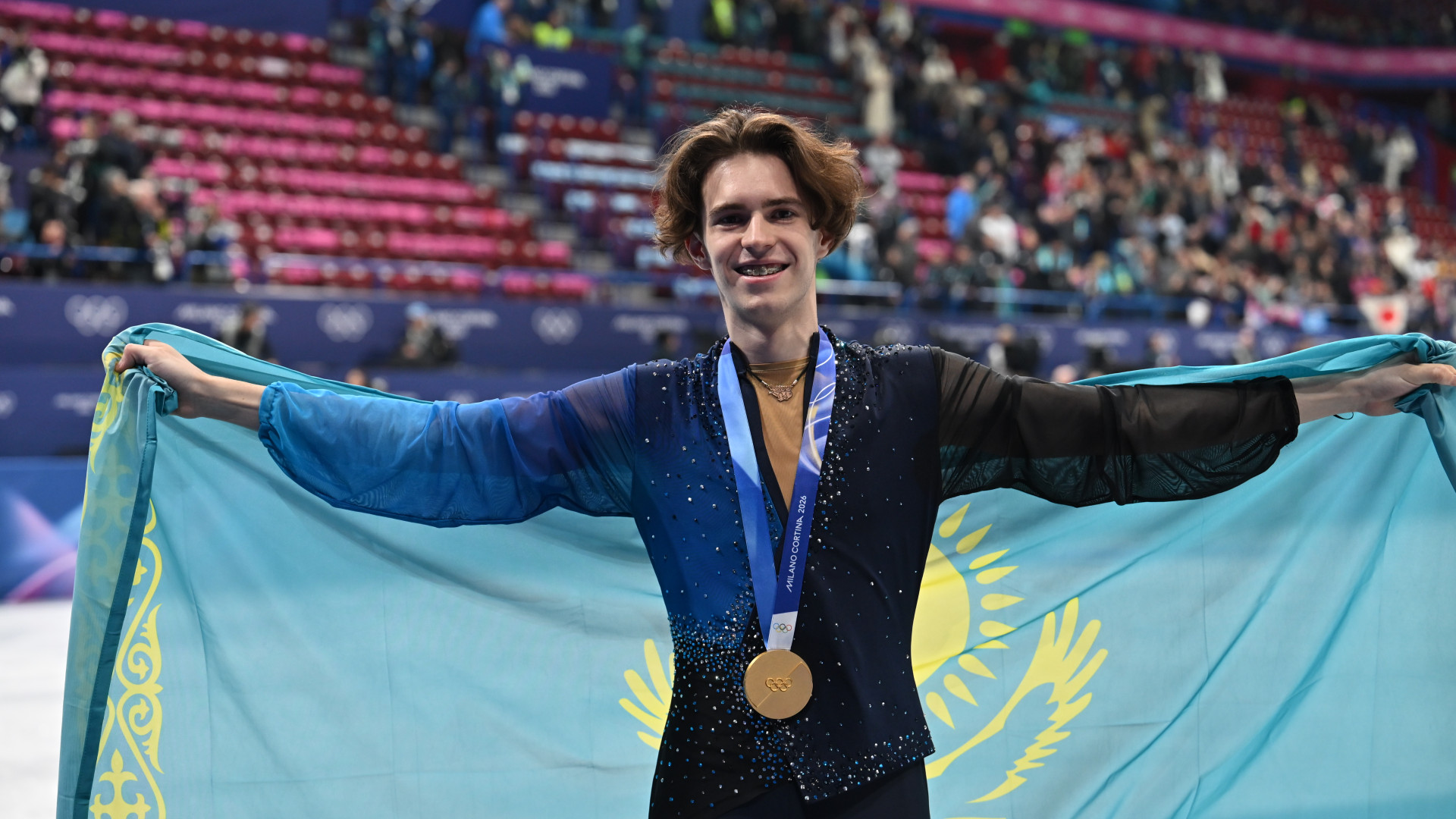
Kazakh Olympic champion Mikhail Shaidorov has claimed that he has not been receiving a salary since winning gold at the 2026 Winter Olympics and is now uncertain how he will prepare for the upcoming season. According to Shaidorov, training camps and program choreography are already being planned, but the lack of funding has created significant uncertainty.
Shaidorov suggested the situation may be connected to his public criticism of Kazakhstan's Ministry of Tourism and Sports. He had previously objected to the public disclosure of his salary following his Olympic victory, arguing that such information should not have been made public.
The skater also stated that he no longer has access to a team doctor and that there is still uncertainty regarding payment for new program choreography. He said he feels as though he is being punished for speaking openly about the issue.
In response, Kazakhstan's Sports Development Directorate said that Shaidorov was paid in full for January and February 2026. Officials explained that a new contract reflecting his Olympic champion status has been under negotiation since March and that discussions are ongoing.
The agency also noted that, as Olympic champion, Shaidorov is entitled to a $250,000 bonus, a three-bedroom apartment in Almaty, and lifetime monthly state payments.
Here is a rough translation where this part of the interview begins at 1:31 regarding salary:
T. Balymbetov: Tell me, we've already lost count discussing gifts and so on. But do you actually have a regular source of income? A salary, perhaps? Or some kind of side business? How do you cover your everyday expenses?
Shaidorov: When my salary information was published, I reacted to it. Honestly, it felt disrespectful to me because I was the only athlete whose salary was made public. No other athletes were included.
It felt like they wanted to diminish the work of my family, especially my father. To make it seem as though they themselves were responsible for this medal.
But an Olympic cycle lasts four years.
T. Balymbetov: Four years?
Shaidorov: Yes. Preparation for the next Olympics has to begin now. It's constant work. It doesn't happen in a single year. It's every day, over many years. For me, it was five years of preparation for these Olympic Games.
I needed support. I asked many times for support. Sometimes I received some, but it was very limited.
Only in 2025, after I won the World Championship silver medal, did they begin supporting me properly. Then I finally received support.
They paid for program choreography and costume construction. But that support should have started four years earlier. You can't create an Olympic champion in a single year. That doesn't happen.
T. Balymbetov: In those leaked reports about your income, was the information only for 2025?
Shaidorov: Yes, only for 2025.
T. Balymbetov: And the previous two or three years weren't included?
Shaidorov: No. The picture would have looked completely different. I paid for programs and costumes myself through sponsors.
So naturally it was unpleasant. I've already spoken about this publicly. It felt like they were trying to devalue all my efforts.
When I spoke negatively about it, it seems they wanted to punish me. For the past five months I haven't received a salary.
T. Balymbetov: Wait, seriously?
Shaidorov: Yes. Since my victory, I still haven't been paid. It's strange to me.
T. Balymbetov: You bring home a historic victory—the first in 32 years. You're welcomed in the presidential palace, honored by the president, and that's when your salary stops?
Shaidorov: Yes. For five months now I haven't received a salary.
Now I need to prepare for next season, and I don't understand how I'm supposed to do that. Training camps are already scheduled. Program choreography dates need to be set.
We've repeatedly asked whether program costs would be covered. One person says one thing, another says something else, a third says something different. The whole situation is unclear.
Since February 1st, I no longer have a team doctor. Officially, I have no medical supervision.
That's strange. It's unpleasant, of course. But I usually don't like talking about these issues—about not being supported or about why my salary was published.
The only time I publicly asked for support was in 2025. I said I needed support and ice time. Credit to the city administration—they provided me with an ice rink. I even have my own locker room now, which was a dream of mine.
The city is trying to support me as much as possible. But for some reason neither I nor my team are receiving salaries.
T. Balymbetov: It's not just you?
Shaidorov: Not just me. The entire team isn't being paid. That's extremely strange to me.
T. Balymbetov: Did you send official requests asking what was happening?
Shaidorov: First of all, when my salary was published, I reacted to it, and I never received a clear explanation.
No one explained why it was done. The Olympic cycle lasts four years—why publish only one year's figures? Why weren't other athletes included?
We know the total spending on the Olympics was 13.3 billion tenge.
T. Balymbetov: And your salary wasn't even half of that?
Shaidorov: Honestly, even in that report I couldn't understand where all the expenses were. They simply listed my salary and, I think, my coaches' salaries.
There was a total figure showing what was spent on me in 2025, but there was no explanation or analysis.
I don't like discussing this. I have a difficult relationship with all these officials. I just want to develop as an athlete. I just want to skate.
It's important for me to remain a "golden asset" of our country and continue raising our flag because I have enormous potential.
T. Balymbetov: Just to clarify, "golden asset of the country" was the president's phrase, not something he's calling himself.
Shaidorov: I don't usually call myself that, of course.
T. Balymbetov: Since the president said it, it's allowed. Honestly, I'm sorry you have to deal with these things.
Shaidorov: I don't like intrigue or scandals. I don't need any of that. I just want to develop.
People from the sports world in different countries call me and ask how things are going. I tell them I haven't been paid for almost six months.
They're shocked. They say, "How is that possible? You're an Olympic champion."
I tell them, unfortunately, that's the situation.
T. Balymbetov: I hope the people responsible look into this seriously. Five months without salary is a very important question, and I hope the right people hear it.
Shaidorov: I always try to speak honestly. I've told you before about letters to the federation and other issues.
When I said I was upset about my salary being published, I felt it was wrong legally. Nobody reacted to that either.
I don't really want to talk about it.
It's unpleasant. It feels like they're trying to punish me for speaking the truth.
Because I spoke out, I still haven't received the title of Honored Master of Sport, even though more than a year has passed. And my entire team hasn't been paid for five months, even though we're already in pre-season training.
I've already returned to the ice. I've been skating for several weeks. Even after the Olympics, I only took a short vacation to recover.
Unfortunately, these situations are still happening, and it's strange to me. Because if this can happen to an Olympic champion, I can't imagine what happens to other athletes.
Or maybe this treatment is only directed at me—I don't know.
I've always been grateful to everyone who supported me. I've never publicly complained about a lack of support. Only in 2025, after a major breakthrough, did I express hope that things would continue moving forward positively.
I never stood in the mixed zone saying I wasn't supported or that everything was terrible. I didn't want to discuss many of these situations.
But I had to, because others did it for me.
T. Balymbetov: They told the story for you.
Shaidorov: Exactly. So I had to explain what really happened.
Now people know the truth.
T. Balymbetov: Well, I certainly wouldn't want to be the person responsible for such a decision. I imagine there will be serious questions asked.
Let's talk about something more pleasant.
Shaidorov: Yes, let's.
Summary:
Kazakh Olympic champion Mikhail Shaidorov has claimed that he has not been receiving a salary since winning gold at the 2026 Winter Olympics and is now uncertain how he will prepare for the upcoming season. According to Shaidorov, training camps and program choreography are already being planned, but the lack of funding has created significant uncertainty.
Shaidorov suggested the situation may be connected to his public criticism of Kazakhstan's Ministry of Tourism and Sports. He had previously objected to the public disclosure of his salary following his Olympic victory, arguing that such information should not have been made public.
The skater also stated that he no longer has access to a team doctor and that there is still uncertainty regarding payment for new program choreography. He said he feels as though he is being punished for speaking openly about the issue.
In response, Kazakhstan's Sports Development Directorate said that Shaidorov was paid in full for January and February 2026. Officials explained that a new contract reflecting his Olympic champion status has been under negotiation since March and that discussions are ongoing.
The agency also noted that, as Olympic champion, Shaidorov is entitled to a $250,000 bonus, a three-bedroom apartment in Almaty, and lifetime monthly state payments.
Here is a rough translation where this part of the interview begins at 1:31 regarding salary:
T. Balymbetov: Tell me, we've already lost count discussing gifts and so on. But do you actually have a regular source of income? A salary, perhaps? Or some kind of side business? How do you cover your everyday expenses?
Shaidorov: When my salary information was published, I reacted to it. Honestly, it felt disrespectful to me because I was the only athlete whose salary was made public. No other athletes were included.
It felt like they wanted to diminish the work of my family, especially my father. To make it seem as though they themselves were responsible for this medal.
But an Olympic cycle lasts four years.
T. Balymbetov: Four years?
Shaidorov: Yes. Preparation for the next Olympics has to begin now. It's constant work. It doesn't happen in a single year. It's every day, over many years. For me, it was five years of preparation for these Olympic Games.
I needed support. I asked many times for support. Sometimes I received some, but it was very limited.
Only in 2025, after I won the World Championship silver medal, did they begin supporting me properly. Then I finally received support.
They paid for program choreography and costume construction. But that support should have started four years earlier. You can't create an Olympic champion in a single year. That doesn't happen.
T. Balymbetov: In those leaked reports about your income, was the information only for 2025?
Shaidorov: Yes, only for 2025.
T. Balymbetov: And the previous two or three years weren't included?
Shaidorov: No. The picture would have looked completely different. I paid for programs and costumes myself through sponsors.
So naturally it was unpleasant. I've already spoken about this publicly. It felt like they were trying to devalue all my efforts.
When I spoke negatively about it, it seems they wanted to punish me. For the past five months I haven't received a salary.
T. Balymbetov: Wait, seriously?
Shaidorov: Yes. Since my victory, I still haven't been paid. It's strange to me.
T. Balymbetov: You bring home a historic victory—the first in 32 years. You're welcomed in the presidential palace, honored by the president, and that's when your salary stops?
Shaidorov: Yes. For five months now I haven't received a salary.
Now I need to prepare for next season, and I don't understand how I'm supposed to do that. Training camps are already scheduled. Program choreography dates need to be set.
We've repeatedly asked whether program costs would be covered. One person says one thing, another says something else, a third says something different. The whole situation is unclear.
Since February 1st, I no longer have a team doctor. Officially, I have no medical supervision.
That's strange. It's unpleasant, of course. But I usually don't like talking about these issues—about not being supported or about why my salary was published.
The only time I publicly asked for support was in 2025. I said I needed support and ice time. Credit to the city administration—they provided me with an ice rink. I even have my own locker room now, which was a dream of mine.
The city is trying to support me as much as possible. But for some reason neither I nor my team are receiving salaries.
T. Balymbetov: It's not just you?
Shaidorov: Not just me. The entire team isn't being paid. That's extremely strange to me.
T. Balymbetov: Did you send official requests asking what was happening?
Shaidorov: First of all, when my salary was published, I reacted to it, and I never received a clear explanation.
No one explained why it was done. The Olympic cycle lasts four years—why publish only one year's figures? Why weren't other athletes included?
We know the total spending on the Olympics was 13.3 billion tenge.
T. Balymbetov: And your salary wasn't even half of that?
Shaidorov: Honestly, even in that report I couldn't understand where all the expenses were. They simply listed my salary and, I think, my coaches' salaries.
There was a total figure showing what was spent on me in 2025, but there was no explanation or analysis.
I don't like discussing this. I have a difficult relationship with all these officials. I just want to develop as an athlete. I just want to skate.
It's important for me to remain a "golden asset" of our country and continue raising our flag because I have enormous potential.
T. Balymbetov: Just to clarify, "golden asset of the country" was the president's phrase, not something he's calling himself.
Shaidorov: I don't usually call myself that, of course.
T. Balymbetov: Since the president said it, it's allowed. Honestly, I'm sorry you have to deal with these things.
Shaidorov: I don't like intrigue or scandals. I don't need any of that. I just want to develop.
People from the sports world in different countries call me and ask how things are going. I tell them I haven't been paid for almost six months.
They're shocked. They say, "How is that possible? You're an Olympic champion."
I tell them, unfortunately, that's the situation.
T. Balymbetov: I hope the people responsible look into this seriously. Five months without salary is a very important question, and I hope the right people hear it.
Shaidorov: I always try to speak honestly. I've told you before about letters to the federation and other issues.
When I said I was upset about my salary being published, I felt it was wrong legally. Nobody reacted to that either.
I don't really want to talk about it.
It's unpleasant. It feels like they're trying to punish me for speaking the truth.
Because I spoke out, I still haven't received the title of Honored Master of Sport, even though more than a year has passed. And my entire team hasn't been paid for five months, even though we're already in pre-season training.
I've already returned to the ice. I've been skating for several weeks. Even after the Olympics, I only took a short vacation to recover.
Unfortunately, these situations are still happening, and it's strange to me. Because if this can happen to an Olympic champion, I can't imagine what happens to other athletes.
Or maybe this treatment is only directed at me—I don't know.
I've always been grateful to everyone who supported me. I've never publicly complained about a lack of support. Only in 2025, after a major breakthrough, did I express hope that things would continue moving forward positively.
I never stood in the mixed zone saying I wasn't supported or that everything was terrible. I didn't want to discuss many of these situations.
But I had to, because others did it for me.
T. Balymbetov: They told the story for you.
Shaidorov: Exactly. So I had to explain what really happened.
Now people know the truth.
T. Balymbetov: Well, I certainly wouldn't want to be the person responsible for such a decision. I imagine there will be serious questions asked.
Let's talk about something more pleasant.
Shaidorov: Yes, let's.