
Navigation
Install the app
How to install the app on iOS
Follow along with the video below to see how to install our site as a web app on your home screen.
Note: This feature may not be available in some browsers.
More options
You are using an out of date browser. It may not display this or other websites correctly.
You should upgrade or use an alternative browser.
You should upgrade or use an alternative browser.
Diana Davis & Gleb Smolkin
- Thread starter adelia
- Start date
More options
Who Replied?


- Joined
- Feb 10, 2022
Eteri Tutberidze about Diana Davis and her move to America:
"- I don't think I'm an overbearing mom - absolutely. It's just that I have her so kind and soft. We're two different people. That said, she has serious goals, desires, and I respect her decisions. If she wanted to, she could live quietly in Moscow next to her mother, and I would do everything for her. I have an only child.
When Diana turned 16 and said: “I don't see a coach here who would be interested in us, a professional who can teach us to skate well and become a real athlete” - that's when she showed the very persistence. Bombarded my phone: "I'll go - that's it! We have to train there!" And I said, "Well, how can you imagine it? It's a very long distance, I won't get there by cotton. I can't help you." But she showed character, no matter how hard I tried to persuade her."
"- I don't think I'm an overbearing mom - absolutely. It's just that I have her so kind and soft. We're two different people. That said, she has serious goals, desires, and I respect her decisions. If she wanted to, she could live quietly in Moscow next to her mother, and I would do everything for her. I have an only child.
When Diana turned 16 and said: “I don't see a coach here who would be interested in us, a professional who can teach us to skate well and become a real athlete” - that's when she showed the very persistence. Bombarded my phone: "I'll go - that's it! We have to train there!" And I said, "Well, how can you imagine it? It's a very long distance, I won't get there by cotton. I can't help you." But she showed character, no matter how hard I tried to persuade her."


- Joined
- Oct 26, 2016
I am impressed by both the high-energy RD and the poetic FD! Bravo, Diana and Gleb!


- Joined
- Feb 10, 2018
Diana Davis/Gleb Smolkin after the free dance at the
 Grand Prix stage in France
 : “Today was a little more difficult.”G: "Today was tough both physically and mentally because I've been a bit ill for the last few days and haven't been feeling my best, plus we've had three competitions in a row. We want to work on our levels. We have some free time now, and then we'll prepare for the
  Grand Prix in Finland."
- Joined
- Feb 10, 2018
Diana on her hearing problems:
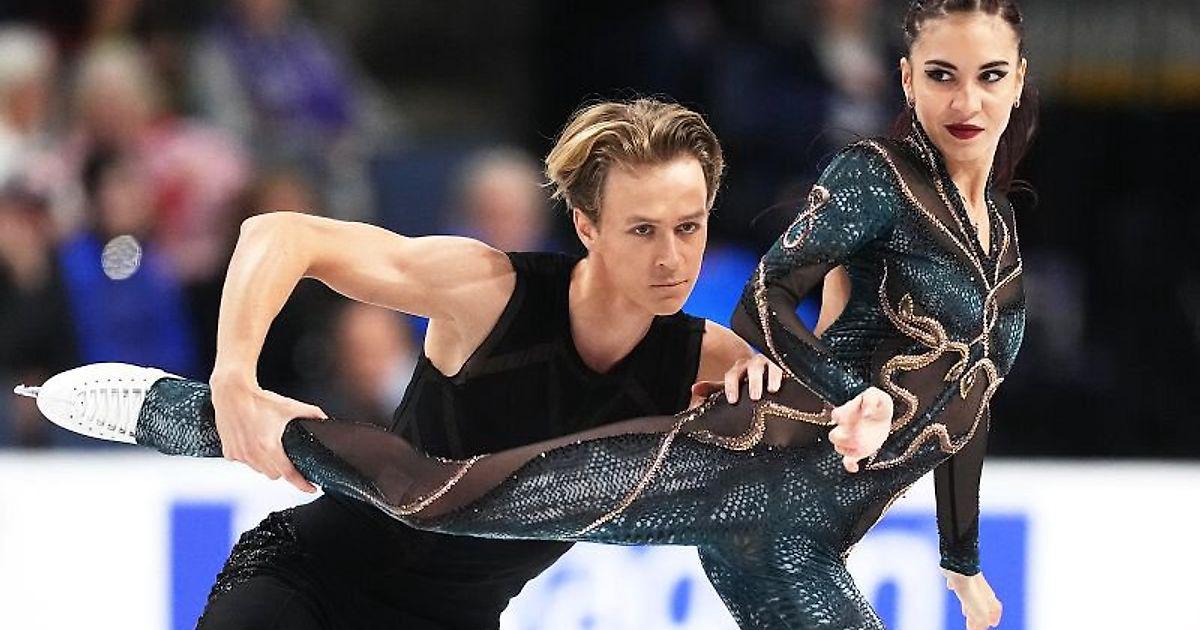
Georgian figure skater Diana Davis , who competes in ice dancing with Gleb Smolkin , explained why she decided to no longer hide her hearing problems.
– Why did you decide to talk about this now?
– I've been thinking about this for quite a long time. I was greatly inspired by the example of French dancer Geoffrey Brisseau, who trains with us at the same rink in Montreal. He recently revealed that he suffers from dyslexia (a difficulty recognizing text and reading – Sports), and I see how many people with this diagnosis responded with gratitude. Perhaps it’s also because I’ve become more confident and mature – I’m no longer afraid to admit that I’m different in some way. I used to be frequently asked for interviews by various medical clinics—to raise awareness of this diagnosis. But I always declined; I didn't want to highlight it or have it discussed. People with similar hearing difficulties also messaged me privately on social media, and I didn't know what to say. One girl wrote that she hadn't even imagined someone with this diagnosis could be so successful in sports. So at some point, I realized I shouldn't keep it quiet. I had to share my story—maybe it could help someone gain confidence.
– Six years ago, you published another post, a very emotional one: you said you had hearing problems, but you recovered and are now completely healthy. Do you remember that moment?
- "Yes. I had adapted to the diagnosis at the time, learned to live with it, so I didn't want to admit I had problems. I didn't want to be treated differently. I was going through a difficult time, a lot was piling up – I wanted to shut everyone out and be left alone." There were all sorts of comments: some were supportive, while others wrote rather nasty things. "Get out of the sport, what's your future with something like that?" Apparently, that was my attempt to defend myself. Of course, many people knew I had hearing problems. But like any teenager, I didn't want to be talked about—especially not in a negative way. So I decided to say I was fine, that I was just a normal person. And now I realize I don't want people to be afraid. I used to be always afraid—what if someone spoke to me and I didn't understand. As a child, I experienced all sorts of things: people laughed at me and teased me. <...>
– How do you hear music? I'm sure you're often asked – how do you skate?
- "No, I really don't have any problems with the music—I can hear both the rhythm and the beat. It's just that if there's some kind of rustling special effect in the background, I might miss it. And I can't make out the words—that is, Gleb and I can't agree on doing something on the ice "after this phrase." If it's something short and to the point, like "Who's Bad?" in a Michael Jackson-set program, then there's no problem, but otherwise, you have to look for other options.
- Which?
- "I rely on rhythm and our feelings. Gleb and I have a very good feel for each other; I remember the tempo and follow it." It's also very important that I like the music, that it plays in my head on its own – it's much easier for me to catch the rhythm that way, Davis said.
Диана Дэвис о проблемах со слухом: «В какой-то момент поняла, что не надо это замалчивать – вдруг моя история поможет кому-то обрести уверенность»
Грузинская фигуристка Диана Дэвис , выступающая в танцах на льду с Глебом Смолкиным , рассказала, почему решила больше не замалчивать проблемы со слухом.
www.sports.ru
Georgian figure skater Diana Davis , who competes in ice dancing with Gleb Smolkin , explained why she decided to no longer hide her hearing problems.
– Why did you decide to talk about this now?
– I've been thinking about this for quite a long time. I was greatly inspired by the example of French dancer Geoffrey Brisseau, who trains with us at the same rink in Montreal. He recently revealed that he suffers from dyslexia (a difficulty recognizing text and reading – Sports), and I see how many people with this diagnosis responded with gratitude. Perhaps it’s also because I’ve become more confident and mature – I’m no longer afraid to admit that I’m different in some way. I used to be frequently asked for interviews by various medical clinics—to raise awareness of this diagnosis. But I always declined; I didn't want to highlight it or have it discussed. People with similar hearing difficulties also messaged me privately on social media, and I didn't know what to say. One girl wrote that she hadn't even imagined someone with this diagnosis could be so successful in sports. So at some point, I realized I shouldn't keep it quiet. I had to share my story—maybe it could help someone gain confidence.
– Six years ago, you published another post, a very emotional one: you said you had hearing problems, but you recovered and are now completely healthy. Do you remember that moment?
- "Yes. I had adapted to the diagnosis at the time, learned to live with it, so I didn't want to admit I had problems. I didn't want to be treated differently. I was going through a difficult time, a lot was piling up – I wanted to shut everyone out and be left alone." There were all sorts of comments: some were supportive, while others wrote rather nasty things. "Get out of the sport, what's your future with something like that?" Apparently, that was my attempt to defend myself. Of course, many people knew I had hearing problems. But like any teenager, I didn't want to be talked about—especially not in a negative way. So I decided to say I was fine, that I was just a normal person. And now I realize I don't want people to be afraid. I used to be always afraid—what if someone spoke to me and I didn't understand. As a child, I experienced all sorts of things: people laughed at me and teased me. <...>
– How do you hear music? I'm sure you're often asked – how do you skate?
- "No, I really don't have any problems with the music—I can hear both the rhythm and the beat. It's just that if there's some kind of rustling special effect in the background, I might miss it. And I can't make out the words—that is, Gleb and I can't agree on doing something on the ice "after this phrase." If it's something short and to the point, like "Who's Bad?" in a Michael Jackson-set program, then there's no problem, but otherwise, you have to look for other options.
- Which?
- "I rely on rhythm and our feelings. Gleb and I have a very good feel for each other; I remember the tempo and follow it." It's also very important that I like the music, that it plays in my head on its own – it's much easier for me to catch the rhythm that way, Davis said.
- Joined
- Feb 10, 2018
Longer interview on that here:

«Не хочу, чтобы меня жалели». Разговор с Дианой Дэвис о проблемах со слухом
Интервью от Багрянцевой.
www.sports.ru


