
Navigation
Install the app
How to install the app on iOS
Follow along with the video below to see how to install our site as a web app on your home screen.
Note: This feature may not be available in some browsers.
More options
You are using an out of date browser. It may not display this or other websites correctly.
You should upgrade or use an alternative browser.
You should upgrade or use an alternative browser.
Elena Kostyleva
- Thread starter Remilia
- Start date
More options
Who Replied?


- Joined
- Feb 14, 2018
New interview with Lena. I was going to wait for someone to do a proper translation, but the translator I used seems to be pretty accurate

Elena Kostyleva is only 13 years old, but in her youth she has repeatedly won All-Russian figure skating competitions. On March 1, another medal was added to her awards - for winning the Junior Grand Prix final. During the free program, the figure skater performed five elements of increased complexity, which delighted not only the judges, but also her coach, Olympic champion Evgeni Plushenko. Correspondents of TV Gubernia learned how the girl from Rossosh managed to become the best in the country and what is needed for bright victories.

Things were tough in the capital at first. Lena couldn't find a suitable school or coach. The endless competition, which was not only among the children but also among the parents of the athletes, was also a burden.
"Lena was six years old when a five-year-old rival came up to her and said that she hated her and would definitely overtake her," recalls the figure skater’s mother Irina. "Of course, such thoughts could not have occurred to a child just like that. It is no secret that some mothers pit their children against each other in order to unbalance their child’s rival."

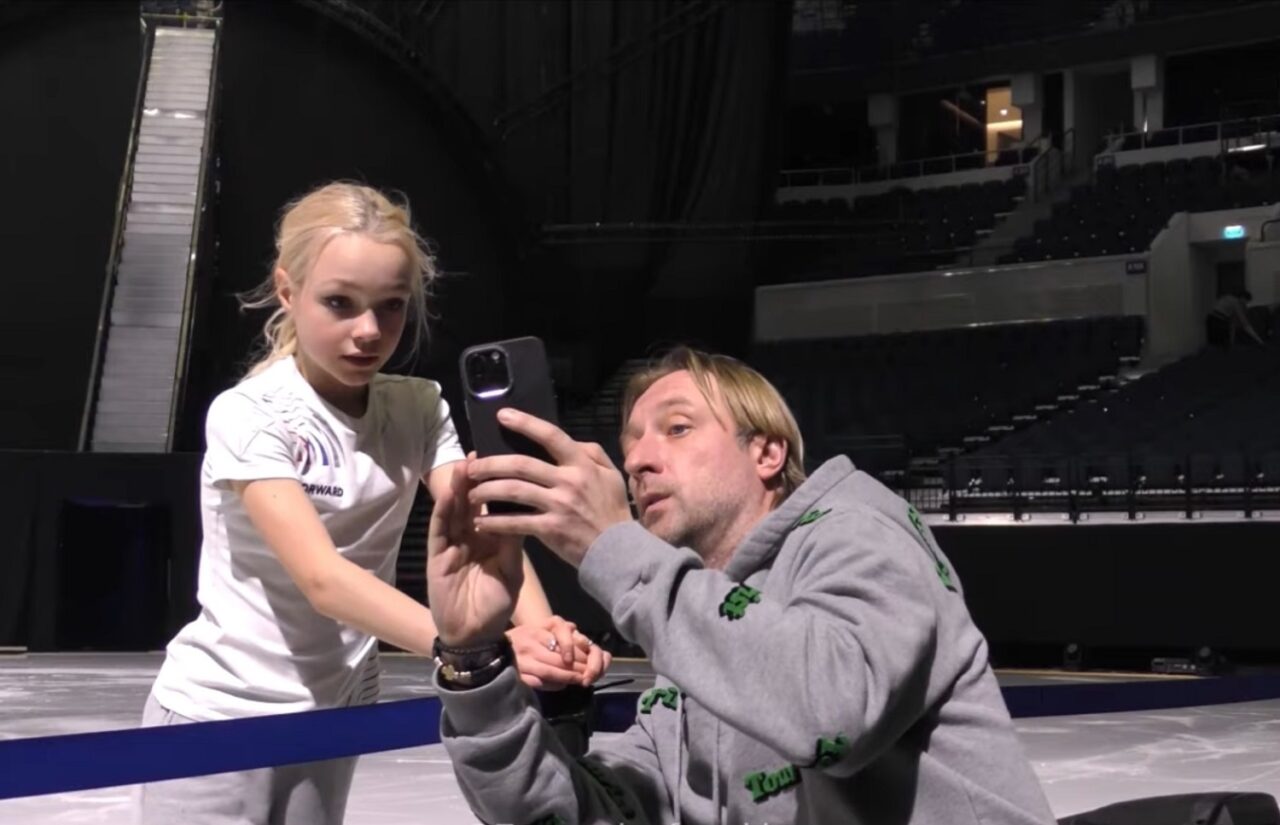
At the academy, Lena's day is scheduled down to the minute. At 7.45 - wake up, and at 8.30 - already warm-up and first ice, immediately after the skater pumps up the press, does push-ups and does other physical exercises. So, one full training session takes about three hours, of which on the ice - 1 hour 15 minutes. To remain the best among the juniors, Kostyleva trains three times a day. Fortunately, the rink is only a five-minute walk from the cottage where the sixth-grader lives with her mother.


"When I get really tired, I can say that I’m fed up with all this, I’m quitting sports… But deep down I know that I’ll never do it," Elena admits. "I can’t imagine my life without exercise. About a year ago I got injured, I couldn’t step on my foot, so I walked on my hands to have at least some movement. I can’t do otherwise."

Like most athletes, Lena has her own talisman - a red hair tie. Over the years, it has become quite worn out, but the owner does not think of throwing it away, because even the most difficult elements can be done with it. Of course, to succeed in the elements, rubber bands - and training - are not enough. You have to carefully monitor your diet. For example, Kostyleva never has bread or other flour and fatty products in her refrigerator. With a height of 143 cm, the girl's weight is only 32-33 kg. It is this body weight that allows her to cope with the necessary loads.


Lena doesn't have any grand plans for 2025. She believes that athletes shouldn't make predictions. However, she hopes that in the near future she will be able to fulfill her dream - to skate on the ice of Mountain Baikal and enjoy the beauty of Siberia.

Elena Kostyleva is only 13 years old, but in her youth she has repeatedly won All-Russian figure skating competitions. On March 1, another medal was added to her awards - for winning the Junior Grand Prix final. During the free program, the figure skater performed five elements of increased complexity, which delighted not only the judges, but also her coach, Olympic champion Evgeni Plushenko. Correspondents of TV Gubernia learned how the girl from Rossosh managed to become the best in the country and what is needed for bright victories.
On skates since the age of three
Lena first started skating when she was three years and three months old. The girl suffered from bronchitis, so doctors advised her to breathe cold air as often as possible to avoid asthma. At one of the skating sessions at the Rossoshansky Ice Palace, the little girl was noticed and the future ice princess was invited to her first training session. Success was not long in coming. To develop it, the family first moved to Voronezh, and then to Moscow.
Things were tough in the capital at first. Lena couldn't find a suitable school or coach. The endless competition, which was not only among the children but also among the parents of the athletes, was also a burden.
"Lena was six years old when a five-year-old rival came up to her and said that she hated her and would definitely overtake her," recalls the figure skater’s mother Irina. "Of course, such thoughts could not have occurred to a child just like that. It is no secret that some mothers pit their children against each other in order to unbalance their child’s rival."
Nine hours on the rink
Despite the pressure from outside, Lena continued to improve. About a year ago, she finally managed to find "her" coach. It was two-time Olympic champion Evgeni Plushenko. "I came to the Angels of Plushenko figure skating academy to learn how to jump a quadruple toe loop. The element is quite difficult, many people go to it for years, but Evgeni Viktorovich was able to teach me in one training session," Lena shares. "He is a very kind and incredibly hardworking person. In many ways, I follow his example."
At the academy, Lena's day is scheduled down to the minute. At 7.45 - wake up, and at 8.30 - already warm-up and first ice, immediately after the skater pumps up the press, does push-ups and does other physical exercises. So, one full training session takes about three hours, of which on the ice - 1 hour 15 minutes. To remain the best among the juniors, Kostyleva trains three times a day. Fortunately, the rink is only a five-minute walk from the cottage where the sixth-grader lives with her mother.
Financial support
According to Irina Kostyleva, for the first time in nine years of her daughter's career, she has not spent anything at all. Accommodation, costumes and other needs are fully covered by the academy. Financial support has made the family's life much easier. And why not! Good skates cost 160 thousand rubles, leggings - 10 thousand, a dress - all 120 thousand. "Evgeni Viktorovich is more of an athlete than a businessman, so his wife Yana Rudkovskaya is in charge of everything. Thanks to her, Lena started to have expensive dresses, skates and other necessary things. The Figure Skating Federation allocates very little money. For example, only 60 thousand for a dress. For ordinary people, this amount seems large, but athletes know that a good dress costs from 100 thousand rubles," Irina explains. "And I had to beg for skates, because Lena was not given them even after all-Russian victories, although they were supposed to be given for achievements."
During the injury she walked on her hands
Despite her busy schedule, Lena manages to study and relax. In her free time, the sixth-grader draws and weaves beads. The girl is not yet thinking about getting a higher education diploma. Her goal is to continue developing as an athlete in order to become a coach and maybe even open her own school."When I get really tired, I can say that I’m fed up with all this, I’m quitting sports… But deep down I know that I’ll never do it," Elena admits. "I can’t imagine my life without exercise. About a year ago I got injured, I couldn’t step on my foot, so I walked on my hands to have at least some movement. I can’t do otherwise."
Like most athletes, Lena has her own talisman - a red hair tie. Over the years, it has become quite worn out, but the owner does not think of throwing it away, because even the most difficult elements can be done with it. Of course, to succeed in the elements, rubber bands - and training - are not enough. You have to carefully monitor your diet. For example, Kostyleva never has bread or other flour and fatty products in her refrigerator. With a height of 143 cm, the girl's weight is only 32-33 kg. It is this body weight that allows her to cope with the necessary loads.
"You have to be cheeky on the ice"
"There is no secret to success in victories. You just need to train hard and go towards your goal," Lena believes. "At competitions, I forget that there are coaches, competitors and a jury in front of me. And I manage to calm down and skate the program the way I do it in training." Lena's favorite figure skater is Alexandra Ignatova (Trusova). The athletes often crossed paths in the shared locker room. The Olympic medalist admires Lena not only for her talent, but also for her honesty and persistence. "You have to be brazen on the ice, I miss that," Lena admits. "And you can feel the energy of strength and power coming from Sasha."
Lena doesn't have any grand plans for 2025. She believes that athletes shouldn't make predictions. However, she hopes that in the near future she will be able to fulfill her dream - to skate on the ice of Mountain Baikal and enjoy the beauty of Siberia.
Last edited:
- Joined
- Feb 14, 2018
Now that the 24/25 season is over for Lena, I've been thinking about music I'd like to see her skate to next season, which include
clubbed to death
roxie
a cover is not the book
cinema italiano
beautiful like me
die with a smile (piano ver)
goodbye yellow brick road
business of love
don't rain on my parade
le jazz hot
o fortuna
stuff like that there
carmen
river flows in you
what was I made for?
waltz of the flowers
moonlight sonata
sweet dreams
claire de lune
the nutcracker music
one ring to rule them all
all that jazz
that's amore
merry go round of life
ofc, she probably won't skate to any of these, but a girl can dream!
clubbed to death
roxie
a cover is not the book
cinema italiano
beautiful like me
die with a smile (piano ver)
goodbye yellow brick road
business of love
don't rain on my parade
le jazz hot
o fortuna
stuff like that there
carmen
river flows in you
what was I made for?
waltz of the flowers
moonlight sonata
sweet dreams
claire de lune
the nutcracker music
one ring to rule them all
all that jazz
that's amore
merry go round of life
ofc, she probably won't skate to any of these, but a girl can dream!
Last edited:


- Joined
- Feb 14, 2018
And her programs for the 25/26 season
SP: Gaga mix with choreo by Yuri Bureiko and Elizaveta Nugumanova
FP: Peer Gynt Suite 1 "Morning Mood" by Edvard Grieg with choreo by Ekaterina Mitrofanova
very happy they gave her something fun and upbeat for her short
SP: Gaga mix with choreo by Yuri Bureiko and Elizaveta Nugumanova
FP: Peer Gynt Suite 1 "Morning Mood" by Edvard Grieg with choreo by Ekaterina Mitrofanova
very happy they gave her something fun and upbeat for her short
Last edited:
 here's a throwback to her first competition a decade ago


- Joined
- Feb 14, 2018
Moscow region competition in Naro-Fominsk. She's already restored all her jumps, so I think she should be fine, but we'll have to see how she handles the free tomorrow with multiple ultra-c jumpsWhere is she competing? This is not from Magnitogorsk. I hope she has an okay season after all the earlier mess and injuries


- Joined
- Feb 14, 2018
Recent interview with Lena. Despite her moms frequent shenanigans, Lena seems to have a good head on her shoulders 
The rising star of world figure skating spoke to Sport-Express about international isolation, coach Evgeni Plushenko, patriotism, and her relationship with her mother.
Elena Kostyleva is a unique figure in Russian figure skating. On the one hand, she is a Russian junior champion, performs quadruple and triple Axels, and is rightfully considered one of the leading rising stars. On the other hand, she is constantly at the center of controversy. In particular, her mother, Irina, has already become one of the most controversial figures in the figure skating world after a series of accusations against other families and coaches.
This is precisely why I wanted to speak directly with Elena herself—to hear her perspective on the situation and give fans the opportunity to separate the athlete from the figure surrounded by emotional judgments. From all our conversations, both recorded and unrecorded, I got the impression that the younger Kostyleva has a strong independent opinion and doesn't always agree with her mother's actions. At the same time, the discussions in Telegram chats around the rink hardly distract her from her sport and development.

— Elena, how does it feel to perform in big shows?
"I really like the atmosphere of ice shows. I can say I'm happy."
Evgeni Plushenko celebrated his birthday on Monday as part of the show. What would you wish him and how would you describe him?
"I'd like to wish him good health, for his work to bring him happiness, for us to bother him less and for him not to waste so much time on us. For him not to get angry with us." (Laughs.)
What is he like? If I had to choose three words, it would be... Fair, honest... Four would be better. Calm and kind. Very kind. This is what sets him apart from many other coaches.
— Does kindness help in high-performance sports at all?
"It depends. He doesn't overdo it with kindness. If an athlete doesn't hear after the third or fourth time, he might stop making comments or raise his voice a little."
— Which approach do you consider more effective—tough, kind, or some other?
"It's better for me to just explain calmly if something isn't working. Well, sometimes you need to yell, yes. We all have those moments when we get a little slack and need to be brought back into focus."
— There's a saying that athletes mature early. Do you feel like a grown-up?
"No, I'm not trying to grow up fast. I'm certainly not a 7-8 year old, but I wouldn't call myself an adult."
— Buzzer?
- And who are these?
— Let's say, young guys who like to make TikToks.
- Oh, no, I'm not like that.
Here Irina Kostyleva joins the conversation:
"She's still just a child. She can't make her bed or brush her teeth. It's a good thing she has a servant in me."
— She's lying. I brush my teeth, I make my bed. It's not true.
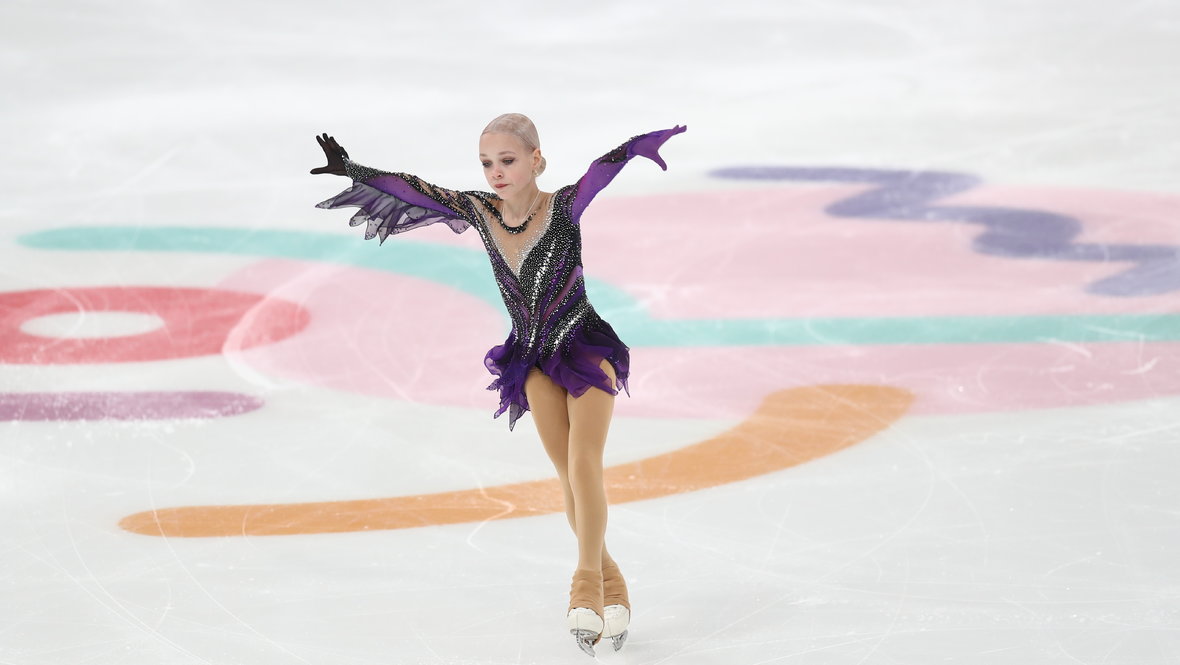
— I get up around 7:50. I have breakfast, get ready for training, and off I go. I train—warm-up, ice, and if anything hurts, I do various procedures, like physical therapy. The training session lasts an hour and 15 minutes. Then I rest for about three hours, take a break, eat, and then warm-up—training—rest again. Sometimes there's a third training session, but not always. At the end of the day, there's a cool-down, physical therapy, and then home to rest. And I have one day off.
— Do you have time for anything else besides sports? Reading a book?
— More on the phone... I don't read books, to be honest. I don't have the energy for that.
— Do you even consider having a life outside of figure skating? If not a figure skater, then who?
— Artistic gymnastics, perhaps. But I only see myself as a figure skater, nothing else. I can't see myself outside of figure skating.
Irina: "Is it worth spreading yourself too thin if you're only good at one thing? A career in sports requires several components: health—we've already experienced this ourselves; talent—without it, you can't even start, it's a tragedy for both the child and the parent; hard work; and, perhaps, luck."
How do you manage to adapt so quickly when changing coaches? Many athletes report a long adaptation period.
"For me, it's nothing special, just the usual process. I communicated well with all the coaches. I can't describe why. I immediately start trying hard, giving it my all. I do what I'm told, and because of that, the coach takes an interest in me, and we become closer. Even Eteri Georgievna and I had easy communication."
Irina: "She's the one who noticed us. We went to Rozanov in May, but he didn't take her. Then I went to Eteri Tutberidze after the training camp in July, and she said, 'I'll take you right away, definitely. No one in the world can jump as much as you, little one.'"
— How is your health now and what are your plans for the season?
— My health is fine. I haven't felt any different since entering the season because I didn't miss anything special, only sustaining an injury in the off-season. I've already competed in a few events and felt the competitive spirit. Now I'm ready to compete in the Grand Prix. My goal for the season is to repeat last year's medal count. As for content, whether or not I'll attempt the quad loop depends on my health. I'm still worried about a minor groin injury. We're gradually getting back to the level of content I was skating at the end of last season. I don't have any long-term plans; I'm setting goals for a specific season.
— Don't you feel like you've run out of room to grow since the age limit was raised? You've won the major tournaments in Russia, but a senior career isn't imminent.
"I feel like I have no room to grow, that's true. Sasha Trusova, at my age, was already setting records and getting into the Guinness Book of Records. I was just thinking about it yesterday—how many times I could have gotten into the book, but I'm stuck in the same place, stuck in our circle. It's not even about figure skating—the same thing applies to gymnastics and football. What do hockey players have to do with it, for example? It's unfair! Even my staff is forced to stay in Russia and not travel the world. We athletes haven't broken any laws or sporting rules, but we're forced to stay indoors because of a problem I have no control over. But the situation has developed in such a way that we just have to get through it, I suppose. Of course, in my opinion, we all need to be allowed onto the international stage. That's my honest opinion."
Also, to be honest, I didn't like the increase in the age limit. It's better to reach the senior level at least at 16. Kamila Valieva competed at the Olympics at 15! I realize that at my age you can already win major competitions; they used to be won. But now I have to wait. I won't be able to jump quads at 25 like 17-year-olds. Moreover, figure skating is developing every day; young kids are starting to jump more quads because it's much easier at a young age. I realized this this year—it's really hard to get your body going, to come in the morning and jump. I felt it already at 14.
— This was the ISU’s argument.
"I understand—so that 19-year-olds don't compete against 14-year-olds, because, naturally, the kids will win. They're agile and will jump better. It's much harder to be technically proficient at 19."

"They invited me to China in the fall of 2023. They said: two starts, and you'll be selected for the national team, we'll give you athletic citizenship. The Chinese team managers discussed the terms with us.
Irina: - I still have the number in my address book, we thought about this option.
"But I said no right away. I didn't even think about it! I was born in Russia and I want to compete under my own flag; I'm not interested in other flags. The situation with our sport has turned out that we've been shut down, although I think it's unfair. What are we, the athletes, guilty of? Why are we sitting here waiting to be released? I still can't understand."
— Do you often argue with your mother? Do you have a say?
"Yes, I expressed my opinion about the Lady Gaga costume. I wanted a different one. They didn't listen to my opinion, but in other cases it's taken into account. When they showed me the sketch, it seemed beautiful, but when they made it... I like it, but I think this look is a bit too old for me. Maybe in two or three years I'll come back to it."
You know better than me how much discussion there is about you on social media. Doesn't it distract you from your sport?
I try not to read the hate that's pouring in my direction; there's a lot of it. I went into a chat once, read it, and realized it was best not to delve into it anymore. But when I do read it, I'm completely calm. I stick to my own opinion, what's inside me. I'd rather rely on my own opinion than on other people's. But I do listen to my surroundings, both the good and the bad, as long as it's constructive. There's normal hate, which sometimes requires listening. And then there are people who just spew dirt. That's what I ignore.
— How do you find balance when your mom and your coach have different opinions?
"You definitely have to listen to your coach during training. There's a disciplined training day—and the coach is the boss there, of course. But a mom is a mom. She has a completely different role in life, outside the rink. It's incomparable. I don't care about all that noise around me—I think about the sport."
Irina: "That's why we came to Evgeny—to get him to take Lena away. We're tired of carrying everything on our own. And we're not to blame for this fuss. It's the people around us, in Telegram channels and chats. We're not causing anything."
"Oh, I don't want to hear about it. Can I go eat some cake? They'll eat it without me!"
The rising star of world figure skating spoke to Sport-Express about international isolation, coach Evgeni Plushenko, patriotism, and her relationship with her mother.
Elena Kostyleva is a unique figure in Russian figure skating. On the one hand, she is a Russian junior champion, performs quadruple and triple Axels, and is rightfully considered one of the leading rising stars. On the other hand, she is constantly at the center of controversy. In particular, her mother, Irina, has already become one of the most controversial figures in the figure skating world after a series of accusations against other families and coaches.
This is precisely why I wanted to speak directly with Elena herself—to hear her perspective on the situation and give fans the opportunity to separate the athlete from the figure surrounded by emotional judgments. From all our conversations, both recorded and unrecorded, I got the impression that the younger Kostyleva has a strong independent opinion and doesn't always agree with her mother's actions. At the same time, the discussions in Telegram chats around the rink hardly distract her from her sport and development.
Zoomers? Who are they?
— Elena, how does it feel to perform in big shows?
"I really like the atmosphere of ice shows. I can say I'm happy."
Evgeni Plushenko celebrated his birthday on Monday as part of the show. What would you wish him and how would you describe him?
"I'd like to wish him good health, for his work to bring him happiness, for us to bother him less and for him not to waste so much time on us. For him not to get angry with us." (Laughs.)
What is he like? If I had to choose three words, it would be... Fair, honest... Four would be better. Calm and kind. Very kind. This is what sets him apart from many other coaches.
— Does kindness help in high-performance sports at all?
"It depends. He doesn't overdo it with kindness. If an athlete doesn't hear after the third or fourth time, he might stop making comments or raise his voice a little."
— Which approach do you consider more effective—tough, kind, or some other?
"It's better for me to just explain calmly if something isn't working. Well, sometimes you need to yell, yes. We all have those moments when we get a little slack and need to be brought back into focus."
— There's a saying that athletes mature early. Do you feel like a grown-up?
"No, I'm not trying to grow up fast. I'm certainly not a 7-8 year old, but I wouldn't call myself an adult."
— Buzzer?
- And who are these?
— Let's say, young guys who like to make TikToks.
- Oh, no, I'm not like that.
Here Irina Kostyleva joins the conversation:
"She's still just a child. She can't make her bed or brush her teeth. It's a good thing she has a servant in me."
— She's lying. I brush my teeth, I make my bed. It's not true.
There's a feeling there's no room for growth. Why are we being kept locked up?
— What does Elena Kostyleva's day look like in general?— I get up around 7:50. I have breakfast, get ready for training, and off I go. I train—warm-up, ice, and if anything hurts, I do various procedures, like physical therapy. The training session lasts an hour and 15 minutes. Then I rest for about three hours, take a break, eat, and then warm-up—training—rest again. Sometimes there's a third training session, but not always. At the end of the day, there's a cool-down, physical therapy, and then home to rest. And I have one day off.
— Do you have time for anything else besides sports? Reading a book?
— More on the phone... I don't read books, to be honest. I don't have the energy for that.
— Do you even consider having a life outside of figure skating? If not a figure skater, then who?
— Artistic gymnastics, perhaps. But I only see myself as a figure skater, nothing else. I can't see myself outside of figure skating.
Irina: "Is it worth spreading yourself too thin if you're only good at one thing? A career in sports requires several components: health—we've already experienced this ourselves; talent—without it, you can't even start, it's a tragedy for both the child and the parent; hard work; and, perhaps, luck."
How do you manage to adapt so quickly when changing coaches? Many athletes report a long adaptation period.
"For me, it's nothing special, just the usual process. I communicated well with all the coaches. I can't describe why. I immediately start trying hard, giving it my all. I do what I'm told, and because of that, the coach takes an interest in me, and we become closer. Even Eteri Georgievna and I had easy communication."
Irina: "She's the one who noticed us. We went to Rozanov in May, but he didn't take her. Then I went to Eteri Tutberidze after the training camp in July, and she said, 'I'll take you right away, definitely. No one in the world can jump as much as you, little one.'"
— How is your health now and what are your plans for the season?
— My health is fine. I haven't felt any different since entering the season because I didn't miss anything special, only sustaining an injury in the off-season. I've already competed in a few events and felt the competitive spirit. Now I'm ready to compete in the Grand Prix. My goal for the season is to repeat last year's medal count. As for content, whether or not I'll attempt the quad loop depends on my health. I'm still worried about a minor groin injury. We're gradually getting back to the level of content I was skating at the end of last season. I don't have any long-term plans; I'm setting goals for a specific season.
— Don't you feel like you've run out of room to grow since the age limit was raised? You've won the major tournaments in Russia, but a senior career isn't imminent.
"I feel like I have no room to grow, that's true. Sasha Trusova, at my age, was already setting records and getting into the Guinness Book of Records. I was just thinking about it yesterday—how many times I could have gotten into the book, but I'm stuck in the same place, stuck in our circle. It's not even about figure skating—the same thing applies to gymnastics and football. What do hockey players have to do with it, for example? It's unfair! Even my staff is forced to stay in Russia and not travel the world. We athletes haven't broken any laws or sporting rules, but we're forced to stay indoors because of a problem I have no control over. But the situation has developed in such a way that we just have to get through it, I suppose. Of course, in my opinion, we all need to be allowed onto the international stage. That's my honest opinion."
Also, to be honest, I didn't like the increase in the age limit. It's better to reach the senior level at least at 16. Kamila Valieva competed at the Olympics at 15! I realize that at my age you can already win major competitions; they used to be won. But now I have to wait. I won't be able to jump quads at 25 like 17-year-olds. Moreover, figure skating is developing every day; young kids are starting to jump more quads because it's much easier at a young age. I realized this this year—it's really hard to get your body going, to come in the morning and jump. I felt it already at 14.
— This was the ISU’s argument.
"I understand—so that 19-year-olds don't compete against 14-year-olds, because, naturally, the kids will win. They're agile and will jump better. It's much harder to be technically proficient at 19."
At training sessions, the coach is in charge, but mom has a different role in life.
— Since you're talking about the difficulties with Russian competitions, have you ever been invited to compete for another country?"They invited me to China in the fall of 2023. They said: two starts, and you'll be selected for the national team, we'll give you athletic citizenship. The Chinese team managers discussed the terms with us.
Irina: - I still have the number in my address book, we thought about this option.
"But I said no right away. I didn't even think about it! I was born in Russia and I want to compete under my own flag; I'm not interested in other flags. The situation with our sport has turned out that we've been shut down, although I think it's unfair. What are we, the athletes, guilty of? Why are we sitting here waiting to be released? I still can't understand."
— Do you often argue with your mother? Do you have a say?
"Yes, I expressed my opinion about the Lady Gaga costume. I wanted a different one. They didn't listen to my opinion, but in other cases it's taken into account. When they showed me the sketch, it seemed beautiful, but when they made it... I like it, but I think this look is a bit too old for me. Maybe in two or three years I'll come back to it."
You know better than me how much discussion there is about you on social media. Doesn't it distract you from your sport?
I try not to read the hate that's pouring in my direction; there's a lot of it. I went into a chat once, read it, and realized it was best not to delve into it anymore. But when I do read it, I'm completely calm. I stick to my own opinion, what's inside me. I'd rather rely on my own opinion than on other people's. But I do listen to my surroundings, both the good and the bad, as long as it's constructive. There's normal hate, which sometimes requires listening. And then there are people who just spew dirt. That's what I ignore.
— How do you find balance when your mom and your coach have different opinions?
"You definitely have to listen to your coach during training. There's a disciplined training day—and the coach is the boss there, of course. But a mom is a mom. She has a completely different role in life, outside the rink. It's incomparable. I don't care about all that noise around me—I think about the sport."
Irina: "That's why we came to Evgeny—to get him to take Lena away. We're tired of carrying everything on our own. And we're not to blame for this fuss. It's the people around us, in Telegram channels and chats. We're not causing anything."
"Oh, I don't want to hear about it. Can I go eat some cake? They'll eat it without me!"
Similar threads


- Replies
- 261
- Views
- 10K