


My beautiful girl will never give up.

Navigation
Install the app
How to install the app on iOS
Follow along with the video below to see how to install our site as a web app on your home screen.
Note: This feature may not be available in some browsers.
More options
You are using an out of date browser. It may not display this or other websites correctly.
You should upgrade or use an alternative browser.
You should upgrade or use an alternative browser.
Kamila Valieva
- Thread starter Spirals for Miles
- Start date
More options
Who Replied?


Valieva needs to realize it's going to be much harder to come back to skating if her individual Olympic medal is stripped. And they're likely going to be stripped considering how previous cases have gone(though I think she'd have higher than typical chance of success).
Practically every time she'd compete it would be mentioned. It wasn't her fault to be in the position of the Team Tournament, but now she is responsible for being in the Individual Event.
Some insider who knows for a fact whether she was given this intentionally or not needs to intervene and tell her to pull out if she was given this intentionally.
Valieva needs legal advice that cares for her future and not for her coach's or federation's future.
If I was Valieva, even if it was accidental ingestion I would be happy with the Gold medal I'd receive if I won my case. If she wins her case then everyone is going to think she would have won the individual Gold. She has nothing to prove in that regard.
If I was Valieva, I would put out a statement that:
1. Slam being put into this situation without casting blame on anyone specifically.
2. Thanks CAS for agreeing she should have been allowed to compete in the individual event. Mention that because of his case future athletes are less likely to be put in this situation.
3. Mention that if you win your case you'll still have and cherish your Gold medal from the Team Event.
4. Pull out of the individual event so that the medalists can have their moment
5. Say you're leaving immediately to mount a defense. I might include a mention of hoping that providing a hair sample can help prove innocence.
6. Say you hope to be skating at the World FIgure Skating Championships.
Here's some information on hair testing helping athletes who have been accused of doping.
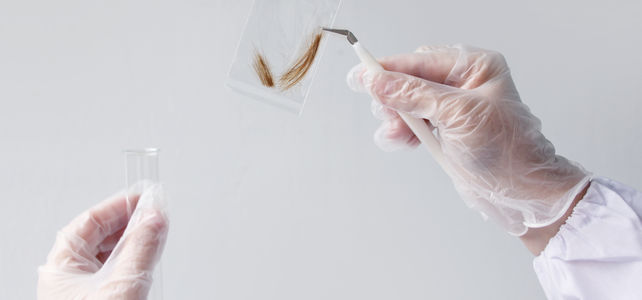
 www.esanum.com
Here's information about trimetazidine and why a couple people don't understand why it's banned.
https://www.esanum.com/today/posts/doping-the-challenges-of-weak-scientific-evidence
This is the Polish study WADA refers to according to this doctor: https://analyticalsciencejournals.onlinelibrary.wiley.com/doi/abs/10.1002/dta.1755
This is an editorial(thus I don't think peer reviewed) in a scientific journal asking if trimetazidine should be removed from WADA list: https://www.em-consulte.com/article/1396599/la-trimetazidine-vastarel-est-elle-un-produit-dopant (I can't open this in sci-hub).
There are some quotes from that editorial in this news article: https://www.lequipe.fr/Lutte-libre/...-khadjiev-dans-son-conflit-avec-l-ama/1191820
Here's just a couple general overview articles in french that quote the above criticism on the doping effect of trimetazidine.
https://www.midilibre.fr/2022/02/11...apres-le-test-antidopage-positif-10103496.php
https://www.sudouest.fr/sport/jeux-...ine-au-coeur-de-l-affaire-valieva-8621364.php
Peter Kintz has a presentation on YouTube: https://www.youtube.com/watch?v=mXaZl3Ik00w
Practically every time she'd compete it would be mentioned. It wasn't her fault to be in the position of the Team Tournament, but now she is responsible for being in the Individual Event.
Some insider who knows for a fact whether she was given this intentionally or not needs to intervene and tell her to pull out if she was given this intentionally.
Valieva needs legal advice that cares for her future and not for her coach's or federation's future.
If I was Valieva, even if it was accidental ingestion I would be happy with the Gold medal I'd receive if I won my case. If she wins her case then everyone is going to think she would have won the individual Gold. She has nothing to prove in that regard.
If I was Valieva, I would put out a statement that:
1. Slam being put into this situation without casting blame on anyone specifically.
2. Thanks CAS for agreeing she should have been allowed to compete in the individual event. Mention that because of his case future athletes are less likely to be put in this situation.
3. Mention that if you win your case you'll still have and cherish your Gold medal from the Team Event.
4. Pull out of the individual event so that the medalists can have their moment
5. Say you're leaving immediately to mount a defense. I might include a mention of hoping that providing a hair sample can help prove innocence.
6. Say you hope to be skating at the World FIgure Skating Championships.
Here's some information on hair testing helping athletes who have been accused of doping.
Doping: When an athlete is saved by a “hair's breadth”
Athletes suspected of doping, risk their careers due to unintentional contamination. Hair analysis is a complex but reliable technique separating real from fake, explains Prof. Pascal Kintz in an interview.
www.esanum.com
According to this, hair analysis can detect everything but hormones.esanum: Professor Kintz, why is hair analysis booming among athletes?
Prof. Kintz: Hair analysis is a technique frequently used in toxicology to detect drugs, pharmaceuticals or environmental contaminants. In forensic medicine, this technique has been recognised since 1995. It was originally used in cases of murder or rape under the influence of subtances. Now, some countries will only return a suspended driver's licence if the results of a hair analysis are presented to prove that the driver has not recently used cannabis or cocaine.
In my laboratory, we apply this forensic technique in several areas, including doping. Athletes who test positive use it to support their defence. They come mainly from Anglo-Saxon countries, where the legal system is based on adversarial proceedings. The burden of proof is on the accused to show that they are innocent.
If the athlete proves that he or she was accidentally contaminated by a product, and if they can prove its origin, then the anti-doping authorities pronounce a "no fault" and there is no sanction. A hair analysis costs only two to three thousand euros, a small amount compared to a lawyer's fees. To defend cyclist Christopher Froome [who was cleared by the World Anti-Doping Agency after testing positive for salbutamol in 2017], his team and sponsors paid 7.5 million euros in the legal case. This is unthinkable for lesser known or independent athletes.
The first time I used this technique at the request of a sportsman was in 1997. The Olympic judoka champion Djamel Bouras tested positive for nandrolone, an anabolic steroid. There was a scientific controversy about the fact that he could produce it naturally. For my part, I did not find any nandrolone in his hair. The initial sanction - a two-year suspension - was reduced to fifteen months. But it is since the Gasquet case in 2009, that the technique of hair analysis is really recognised by the international Court of Arbitration for Sport (CAS, also known as the Tribunal Arbitral du Sport or TAS].
Since then, demand has boomed. I now carry out around ten analyses of this type every month. Very few laboratories in the world are capable of doing them, and even fewer know how to detect the presence of SARMs [Selective Androgen Receptor Modulators are anabolic agents, such as ligandrol or ostarine]. But it is mainly these substances that are looked for.
We can also detect diuretics used to mask the intake of a doping product. They favour the urinary elimination of this product, often an anabolic, or increase blood retention, which lowers the urinary concentration. Some hormones, erythropoietin (EPO) or growth factors are undetectable in the hair. These molecules are too large to pass from the capillaries to the follicles. If diuretics are detected, this may indicate an attempt to mask them. If not, it is an exculpatory element for the athlete.
esanum: When is this test relevant?
Prof. Kintz: Hair analysis is valuable when urine analysis shows almost nothing - either because the amount of substance in the body is small or because it has been consumed for a long time - but especially when the concentration measured is uninterpretable. In these borderline cases, hair analysis can help. Each centimetre of hair represents what has circulated in the body during the corresponding month: if the substance is clearly found in it, this indicates chronic and long-standing consumption, and therefore reinforces the hypothesis of doping. If there is nothing in the hair, then accidental contamination is supported.
How can an athlete unintentionally have a doping substance in the body? Two scenarios are possible. Firstly, they could have ingested the product without their knowledge. Doping substances have already been found in meat or toothpaste. The same applies to certain diuretics which are prohibited by the anti-doping authorities because they "mask" the use of doping products. Traces of these diuretics can be found in medicines that are authorised. Second scenario: the athlete has unintentionally been impregnated with a prohibited product, either through contact with a person who regularly consumed it - this is known as "cross-contamination" - or because he or she has been exposed to "environmental" contamination.
Several cross-contaminated athletes have been cleared by hair analysis. Examples include world pole vault champion Shawnacy Barber, who was able to compete in extremis in the 2016 Olympics after being suspected of doping with cocaine, and Laurence Vincent-Lapointe, 11-time world canoe champion, whose urine analysis revealed the presence of ligandrol, an SARM.
Very recently, three female athletes with abnormal urine results were given a "no fault". They had a very low concentration of the substance or its metabolites in their urine and a negative hair analysis. They were also able to prove that their partners had consumed the substance, which we confirmed by analysing their hair. In all these cases, hair analysis supported the hypothesis of cross-contamination.
All prohibited substances but hormones should be detectable in hair
Here's information about trimetazidine and why a couple people don't understand why it's banned.
https://www.esanum.com/today/posts/doping-the-challenges-of-weak-scientific-evidence
esanum: Why is trimetazidine on this red list?
Dr. Jean-Pierre de Mondenard: That's what I would like to know. I have asked the WADA, which issues this list. I did not get an answer. There are no studies showing that this substance has any doping effect. When in July 2020 Khadjiev went before the disciplinary chamber of the International Wrestling Federation - which expelled him - his lawyer asked WADA to produce scientific proof of the doping nature of trimetazidine. WADA provided a 2014 Polish study2 showing that it was possible to find the substance in the urine of volleyball players. This put the effectiveness of the laboratory into question, but said absolutely nothing on whether trimetazidine improves performance.
The only other study available is the results of the tests carried out in Sochi during the 2014 Winter Olympics: out of 2,134 urine and 479 blood tests, trimetazidine was found only once. I would point out that trimetazidine does not mask the doping effect of another substance either, in which case it would appear in a specific paragraph of the list of illegal products.
The World Anti-Doping Code, which is enforced by WADA, has set three criteria for a product to be on this red list. It must enhance performance, which in this case there is no evidence of. It must present a proven or potential health risk, which is the case for any drug. Finally, it must be "contrary to the spirit of sport", therefore taken with the intention of improving results. Even a placebo can meet this last criterion. These three conditions raise questions.
When it was placed on the Red List in 2014, WADA explained that trimetazidine was one of the "emerging modalities of doping". We are talking about a substance that has been on the market since 1964... In fact, when a substance that is authorised but diverted from its therapeutic indications appears to be more widely used by athletes, WADA can put it "under surveillance". For example, if it is found more and more often during testing. This is often the first step before it is put on the red list. Trimetazidine has never been placed under surveillance.
In 2014, trimetazidine was first classified as a "specific stimulant" and therefore prohibited only in competition. In the event of a test, the sanction could be reduced or even cancelled if the athlete in question showed that he or she had not taken it to improve his or her performance. But in 2015, without any supporting scientific studies, trimetazidine was reclassified in the category of "non-specified metabolic and hormonal modulators", because of its supposed action on cardiac metabolism. As a consequence, it is now prohibited even out of competition. At the first offence, the athlete is banned for four years.
Why this red list classification in 2014 and this change of category in 2015? It is a mystery, and in the absence of an explanation, we can only hypothesise that trimetazidine was banned because of its similarity to another substance without any scientific work validating this change of category.
I am not alone in questioning the presence of trimetazidine on the red list. Pascal Kintz is professor of toxicology at the University of Strasbourg (France). He is a leading expert and a judicial expert at the Court of Cassation (esanum’s note: In France, the “Cour de Cassation” is the highest court in the French judiciary). In the editorial note3 of the latest edition of the French scientific journal Toxicologie analytique et Clinique, he describes the mechanism of action of trimetazidine as "not yet fully established" and recalls its damaging side effects that would be of crucial impairment for a sportsperson: drop in blood pressure and parkinsonian-type effects. Professor Kintz even writes: "It appears to be illusory to want to find an interest in improving performance with trimetazidine".
This is the Polish study WADA refers to according to this doctor: https://analyticalsciencejournals.onlinelibrary.wiley.com/doi/abs/10.1002/dta.1755
This is an editorial(thus I don't think peer reviewed) in a scientific journal asking if trimetazidine should be removed from WADA list: https://www.em-consulte.com/article/1396599/la-trimetazidine-vastarel-est-elle-un-produit-dopant (I can't open this in sci-hub).
There are some quotes from that editorial in this news article: https://www.lequipe.fr/Lutte-libre/...-khadjiev-dans-son-conflit-avec-l-ama/1191820
Here's just a couple general overview articles in french that quote the above criticism on the doping effect of trimetazidine.
https://www.midilibre.fr/2022/02/11...apres-le-test-antidopage-positif-10103496.php
https://www.sudouest.fr/sport/jeux-...ine-au-coeur-de-l-affaire-valieva-8621364.php
Peter Kintz has a presentation on YouTube: https://www.youtube.com/watch?v=mXaZl3Ik00w
Last edited:

No. She absolutely should compete. Valieva is the best of the best. If she doesn't deserve to "have her moment" then nobody does.4. Pull out of the individual event so that the medalists can have their moment
´
the article says that some substance can also be mistaken for Trimetazidine.
I would not be surprised because it’s not a medicine you prescribe for a 15 years old girl
Valieva needs to realize it's going to be much harder to come back to skating if her individual Olympic medal is stripped. And they're likely going to be stripped considering how previous cases have gone(though I think she'd have higher than typical chance of success).
Practically every time she'd compete it would be mentioned. It wasn't her fault to be in the position of the Team Tournament, but now she is responsible for being in the Individual Event.
Some insider who knows for a fact whether she was given this intentionally or not needs to intervene and tell her to pull out if she was given this intentionally.
Valieva needs legal advice that cares for her future and not for her coach's or federation's future.
If I was Valieva, even if it was accidental ingestion I would be happy with the Gold medal I'd receive if I won my case. If she wins her case then everyone is going to think she would have won the individual Gold. She has nothing to prove in that regard.
If I was Valieva, I would put out a statement that:
1. Slam being put into this situation without casting blame on anyone specifically.
2. Thanks CAS for agreeing she should have been allowed to compete in the individual event. Mention that because of his case future athletes are less likely to be put in this situation.
3. Mention that if you win your case you'll still have and cherish your Gold medal from the Team Event.
4. Pull out of the individual event so that the medalists can have their moment
5. Say you're leaving immediately to mount a defense. I might include a mention of hoping that providing a hair sample can help prove innocence.
6. Say you hope to be skating at the World FIgure Skating Championships.
Here's some information on hair testing helping athletes who have been accused of doping.
Doping: When an athlete is saved by a “hair's breadth”
Athletes suspected of doping, risk their careers due to unintentional contamination. Hair analysis is a complex but reliable technique separating real from fake, explains Prof. Pascal Kintz in an interview.
According to this, hair analysis can detect everything but hormones.
Here's information about trimetazidine and why a couple people don't understand why it's banned.
https://www.esanum.com/today/posts/doping-the-challenges-of-weak-scientific-evidence
This is the Polish study WADA refers to according to this doctor: https://analyticalsciencejournals.onlinelibrary.wiley.com/doi/abs/10.1002/dta.1755
This is an editorial(thus I don't think peer reviewed) in a scientific journal asking if trimetazidine should be removed from WADA list: https://www.em-consulte.com/article/1396599/la-trimetazidine-vastarel-est-elle-un-produit-dopant (I can't open this in sci-hub).
There are some quotes from that editorial in this news article: https://www.lequipe.fr/Lutte-libre/...-khadjiev-dans-son-conflit-avec-l-ama/1191820
Here's just a couple general overview articles in french that quote the above criticism on the doping effect of trimetazidine.
https://www.midilibre.fr/2022/02/11...apres-le-test-antidopage-positif-10103496.php
https://www.sudouest.fr/sport/jeux-...ine-au-coeur-de-l-affaire-valieva-8621364.php
the article says that some substance can also be mistaken for Trimetazidine.
I would not be surprised because it’s not a medicine you prescribe for a 15 years old girl


translate
"These days were very difficult for me. And there are almost no emotions left inside. That is, I am happy, but at the same time I am emotionally tired and therefore it is probably a tear of happiness and a little disappointment, but at the same time I am certainly happy to be at the Olympic Games and try to represent our country and I will hope that I will do it as well as possible."


- Joined
- Jan 12, 2018
Only last 5 months? I've been dazzled much longer..Kamila, go do your thing these next few days and dazzle the non skating viewers the way you dazzled us skating fans the last 5 months!


- Joined
- Nov 28, 2020
Obviously. But I wanted to keep it simple and only start from this season. Keeps me from having to do too much math. HahaOnly last 5 months? I've been dazzled much longer..


 I feel like this issue is very complicated because she's a kid and there are strong feelings, but man, people are brutal.

- Joined
- Nov 24, 2006
My feeling is that, and I've noticed this over the last five years is that she will be fine. In the last few years, people have seemed to group themselves into two categories: People who recognize the problems of others and instead of casting aspersions and behaving like a horrid and judgmental person they are willing to show compassion and empathy, especially to a young girl who was manipulated and let down by the adults around her. The other category are just finger pointing, pitchfork carrying, nasty, intolerant unpleasant people. I think more people are going to come out of the woodwork to be supportive and cheer her on. I know I will, and whenever she comes to the US I will make it a point to fly wherever she is skating and loudly support her. I'm sure many think similarly. She'll be fine, she has people that can look past this as fans who just want the best for her and let her have her best life to show off her otherworldly talent.Valieva needs to realize it's going to be much harder to come back to skating if her individual Olympic medal is stripped. And they're likely going to be stripped considering how previous cases have gone(though I think she'd have higher than typical chance of success).
Practically every time she'd compete it would be mentioned. It wasn't her fault to be in the position of the Team Tournament, but now she is responsible for being in the Individual Event.
I was thinking about hair testing and Kamila the other day. Her hair is super long though, so if she's been unknowingly doped by her team we might determine years of doping. I wouldn't stress hair testing unless she privately has it done first and knows what to expect. It could fully vindicate her though if all her hair shows is a one time event. That would probably end the case against her right there and then. And silence her loud critics. But.... she needs to get it done first just to make sure. That's my thought.Here's some information on hair testing helping athletes who have been accused of doping.
 you are unique, your talent is out of this world


- Joined
- Mar 20, 2019
Kamila sat there watching the whole hearing of 7 hours and OMG it went so late into the night. I hope she recovers to full energy by tomorrow, you can do it.
- Joined
- Nov 24, 2006
I actually hope this has totally released her pressure and that she will skate free as a bird. It's like a competition that she shouldn't have been in, so now she can just go out and do her thing without worrying about it.Good luck to Kamila tomorrow.She has the weight of the world on her.

- Joined
- Feb 27, 2014
I hope people in the arena are not mean to her and that she can focus and just do her thing.I actually hope this has totally released her pressure and that she will skate free as a bird. It's like a competition that she shouldn't have been in, so now she can just go out and do her thing without worrying about it.
Similar threads

- Replies
- 44
- Views
- 3K

- Replies
- 0
- Views
- 730


