


- Joined
- Mar 1, 2014
Deep Edge Plus photo gallery with many great shots from the dress rehearsal:

 deepedgeplus.kyodonews.jp
Machine translation:
*I have to admit, I don't fully understand this explanation, but that might be due to the machine translation.
無料写真特集 - フィギュアスケート専門情報サイトDeep Edge Plus 最新ニュース・充実のコラムをお届け
写真一覧(タップすると全画面表示できます)
deepedgeplus.kyodonews.jp
Machine translation:
Daisuke Takahashi speaks about his vision for ‘Kassouya ~Volume 2~’ – Full text of rehearsal comments
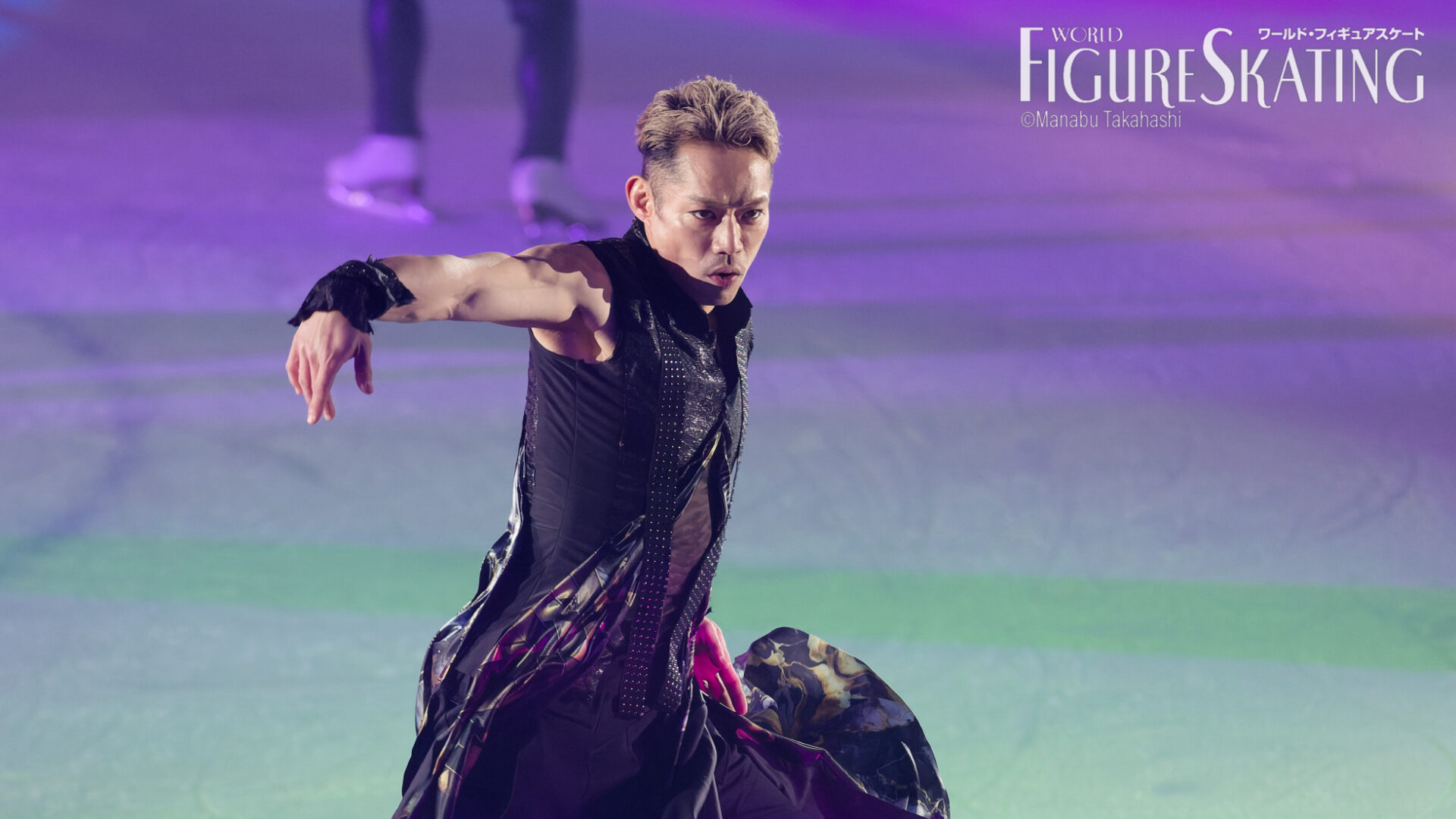
Rehearsals for the ice show ‘Kassouya ~Volume 2~’, directed by former world figure skating champion Daisuke Takahashi, were opened to the press on the 19th, before the premiere, at the O-Vision Ice Arena Fukuoka in Fukuoka City. Takahashi, who crafted the narrative around the Four Divine Beasts of Chinese mythology, proudly declared that “a wonderful production has been created”. Takahashi himself plays the Qilin, a divine beast symbolising good fortune, and expressed his enthusiasm, stating, “We aim to express the story through figure skating.”
Kanako Murakami remarked, “As there are no lines or songs, it demands the expressive power and facial expressions of each individual,” whilst Yuna Aoki (MF Academy) emphasised, “We will be able to present a ‘Kassouya’ unlike any before.” Haruto Toda (Toyo University), a native of Kitakyushu, expressed his enthusiasm, saying, “We aim to put on a performance that will get the local crowd going.”
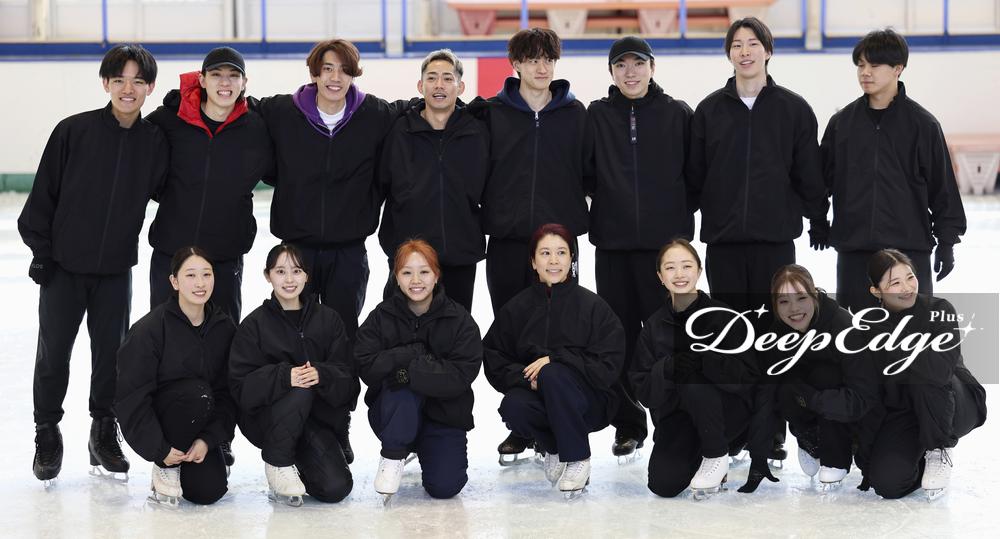
The show runs until the 22nd, featuring a total of 29 performers, including Wakaba Higuchi, who retired at the end of this season.
The full text of the comments given to the press is as follows.
“A One-of-a-Kind Ice Show”
—Host: Thank you for joining us.
Takahashi: “Thank you all for gathering here today for the dress rehearsal. This production of ‘Kassouya’ features a total of 29 performers, which is the largest cast we’ve ever had. Stylistically, this ‘Kassouya’ aims to deliver a dark and stylish performance, but in addition to that, we’re expressing a narrative through figure skating. Within that framework, we’ve chosen the theme of the ‘Four Divine Beasts’. I’m playing the Qilin, Kanako Murakami is the Suzaku, Yuna (Aoki) is the Seiryū, and Toda-kun is here with us now—he’s Kanako’s henchman, hehehe (laughs). With 29 of us, there are seven people in each team, and that’s the main structure. However, apart from the skaters performing solos, the rest of us take on roles such as the Byakko or the Seiryū, and the performance unfolds in that way. We’re creating a narrative within a stylish framework, expressing it through figure skating, and weaving the story together in that way.”
―Next, I’d like to hear from Kanako Murakami, who has been appearing since the very first production, about how things are shaping up and how it’s feeling.
Murakami: “Yes, we’re really coming together. As this is the second instalment, I feel it’s shaping up to be a ‘Kassouya’ with a real narrative. Since there are no lines or songs, I think a great deal is demanded of each individual in terms of expressiveness and facial expressions, but when we first learnt the choreography, everyone was so focused on just memorising the moves. With 29 of us, there are so many things we have to be careful about, such as formations and movements. During the dress rehearsal, we really supported one another, and each person’s role and facial expressions really shone through. I truly felt that ‘with this, we can show everyone something wonderful on the night’, so I was reminded once again that this ‘Kassouya’ is truly a one-of-a-kind ice show.”
―Yuna Aoki, who has also been performing since the very first show, please tell us about your enthusiasm for Volume 2.
Aoki: “Yes, this will be my third time since the very first event, but as this is Volume 2, I think we’ll be able to show a different side of ‘Kassouya’ compared to before. The storyline is very strong, and I think everyone is skating whilst keeping that story in mind, even as they perform. So, I believe we’ll be able to offer something fresh even to those who came to see us last year. We’ve got a truly diverse line-up of unique skaters, so I’d be delighted if you could enjoy that aspect as well.”
—Haruto Toda, the only skater in ‘Kassouya’ hailing from Fukuoka, please share your enthusiasm and thoughts.
Toda: “Hello. I’m Haruto Toda, from Fukuoka Prefecture. The first time I saw ‘Kassouya’ was at this very performance in Fukuoka. I thought, ‘Wow, that’s amazing’ and ‘I’d absolutely love to be part of that’, and before I knew it, I was on the performing side myself – I’m truly delighted. I’m grateful to Daisuke-san for choosing me, and I’ll do my best to live up to everyone’s expectations. Also, as Fukuoka is my hometown, I hope to deliver a performance that really gets the crowd going.”
Requirements for the Auditions
(Questions from reporters)
―Could you tell us what criteria you prioritised during the audition selection process?
Takahashi: “As we’re divided into four groups this time, I looked at the individual characters of each skater. Compared to a standard ice show, there’s so much to learn in ‘Kassouya’ and so many things we have to do. I looked at aspects beyond just skating—though they do tie in with skating—such as how quickly they could pick up the choreography and how well they could express what was asked of them.”
—Specifically, what did you ask of the skaters during the auditions?
Takahashi: “Firstly, we divided it into three parts. The first was the ‘set piece’. Everyone was given the same choreography two weeks in advance and had to memorise and demonstrate it. The second was the ‘free skate’, where each skater chose a song they liked and wanted to express themselves to, and skated for about a minute. The third was the ‘floor (off-ice)’ section. Choreographer Yuma Suzuki taught them for about an hour, and they were divided into three categories to see how quickly they could learn and perform it.”
—I imagine it was a gruelling journey, from the training in Funabashi to the training camp in Matsuyama. Could the four of you please reflect on the process so far, sharing any difficulties you faced, the challenges you overcame, and your thoughts on the performance itself?
Aoki: “I joined the training in Funabashi for a short while, but I was a bit busy with other ice shows and such. However, as part of the preparation, they made a video for us and sent it over, so I practised on my own using that before arriving in Matsuyama. I think everyone managed to do that, not just me, so that part went very smoothly. We were able to start in Matsuyama on the basis that the choreography was already in place, so I feel that, being in our third year, we were able to prepare quite smoothly.” The difficult part is, of course, not just memorising the choreography, but because there are so many of us, we have to be very careful about our movement paths and positioning—it’s quite different from skating alone. What’s more, when we come over here and the smoke is blown, the positioning feels different too, so I’m really struggling with that at the moment (laughs).”
Takahashi: ‘This time, we have characters like Seiryū and Suzaku. Well, last time we all discussed it together, but this time the top performers each had quite a lot of discussion amongst themselves about how to convey their respective characters. In that sense, I think the group leaders had a tough time leading the way. With 29 people in the formation this time, there were many moments where it was genuinely dangerous when skating as a whole, and it took a long time to work out how to navigate those safely. As we created four different multi-endings, there was even more to memorise. Although it’s been decided which ending we’ll perform on which day, there was an absolute mountain of things to memorise—also how to change costumes and how to greet the audience. Because there’s a narrative running through the production, we were constantly debating which programme sequence would work best for each character—should we do this part first, or that part? Even choosing the music was a struggle; sometimes we just couldn’t find the right number. Compared to the first time, precisely because there’s a theme this time, I found it really hard to get everything just right. There were also parts where there was simply too much to keep track of, and I'm sorry for causing trouble for everyone, but even so, everyone has been desperately trying to keep up, sometimes getting scolded, but still trying their best, and I'm incredibly grateful to them.”
Murakami: “I was able to participate fully from the Funabashi rehearsals, but this was the first time I’d been involved right from the stage of building it up to this point. From the very first practice in Funabashi, I could really feel that Daisuke, Yuma, Kana Muramoto and everyone else were giving 120 per cent to create this ‘Kassouya’. Personally, I was juggling other TV work and commentating on Yuna’s (winning) Four Continents performance, so pushing myself to the limit was incredibly tough, but I believe that’s precisely why we’ve managed to pull this off. Above all, Daisuke Takahashi, who had the toughest job, pushed himself to the limit, led everyone without ever complaining, and was even strict at times (laughs). That's why I think we were able to act this time with the primary desire to help in any way we could. The actual performance is still to come, but this is one area where I already feel a sense of achievement. I believe our leader will continue to lead us right to the end, so as a leader myself, I’ll do my best to lead Suzaku as well.”
Toda: “The hardest part was, of course, learning the choreography. With everyone gathered like this, there were slight differences in nuance, and it was difficult to synchronise those. But we’ve all worked hard to get here, and it’s brilliant now, so I’m really looking forward to it! That’s all. (Everyone bursts out laughing)”
“Daisuke’s summary really got me fired up.”
—Given the unprecedented narrative depth, could you tell us what you focused on when trying to express your character and role without dialogue?
Aoki: “I’m playing the role of ‘Seiryū’, and I hope to lead the way alongside Koshiro Shimada as the two main performers. At first, I only had a vague image of ‘beautiful expression’ and didn’t have a very concrete vision. But as we practised the choreography and synchronised with everyone, we felt it would be great if we could all share a clear vision of the performance. So, we had a discussion off the ice to talk about what kind of image and expression we should aim for in this number. We discussed that we wanted to fully express the essence of ‘Seiryū’—which embodies a love of nature and elegance—by adding an element of strength, rather than just focusing on beauty.”
Murakami: ‘I’m playing the role of Suzaku, and I see Suzaku as a character who embodies justice and discipline—but within that, there’s also the struggle of having to follow the rules, as well as a certain sternness; it’s a role that blends all sorts of elements. That’s precisely why Byakko feels free and carefree, whilst Genbu has a slightly venomous vibe. That’s why I made it clear to the team that Suzaku must be crisp and precise, with not a single moment of slackness in the movements. Everyone joins me for my solo section, and I’ve been telling them, ‘Even when you turn around, there’s absolutely no part where you turn slowly.’ I’m asking everyone to do it in a way that’s truly ‘Suzaku-like’. Everyone is performing to rhythms they’ve never experienced before, so I imagine there are difficult parts, but I’m being careful about that myself. At first, I only understood the aspects of justice and discipline, but when Daisuke-san shared the synopsis of every number with everyone, I could feel that everyone’s switch had been flipped at that moment. So, I hope that each of us can review the synopsis once more, especially now, and approach the performance with that in mind.”
Toda: “I’m Toda from the Suzaku team. Suzaku represents justice and rules. I struggled with how to express that through skating, but I’ve worked it out for myself. Even the timing of turning around isn’t just a ‘slow, lazy’ movement; I’m consciously focusing on the expression.”
Takahashi: "Originally, Qilin-san was chosen from one of the teams to become Qilin, but due to the festival, he stepped down from the role. From there, how he feels about the festival and how it comes to an end is the finale. After that comes the ending. In such parts, I myself hardly interact with everyone else, but within that, I express Qilin's feelings as an individual. I think those feelings change day by day as I continue to play the role and skate, so I do it quite freely. The aim of each of the four teams is the same and wonderful, but depending on how you aim for it, the madness and fear you see can differ, and if each goes in a different direction, it appears as a different kind of fear. I hope that aspect will also be expressed."*
The reason for selecting Sae Shimizu
—The roles of Qilin and the Four Gods had been announced, but what about the role of Sae Shimizu, who was wearing a silver costume? Why was she selected for the first appearance?
Takahashi: "That's right, Shimizu's role is that of a goddess. She descends in the end. I'm playing the Qilin. When we originally decided we wanted to create something like this, we thought that if we were to use the Four Symbols, my position would be that of the Qilin. A higher being, one level above the others. At first, I actually wanted to use a young skater, but the schedules of the young skaters in Fukuoka clashed with competitions, so we couldn’t use any of them and were forced to make a change… (laughs) But when I saw Sae's skating, I thought she would be a good goddess, and I felt that her skating was unwavering and that she really was. Actually, there was a change - (Miyake) Saki was going to play this role (goddess), but she got injured and couldn't perform, so we selected Sae, who we had originally thought would be good as a goddess. We were planning to use a kid skater, and Saki is very good at expressing innocence, and in a way, I thought it was wonderful that she still had that innocence even as an adult, so we had chosen Saki as goddess with that direction in mind, but she got injured, and when I thought of a goddess with the original direction and a presence that was different from everyone else, Sae was the only one who came to mind, so that's how it happened."
*I have to admit, I don't fully understand this explanation, but that might be due to the machine translation.


 ), I’ve come to the conclusion that I don’t have a favourite – to be honest, I love them all! It’s fascinating to see how the distinct characters of the "Divine Beasts" are reflected in the performances. What’s more, the entire new production has such an "otherwordly" vibe, unlike anything I've ever seen from other ice shows - it really has more in common with alternative (dance) theater. Together, Yuma Suzuki and Daisuke have created something truly unique, which could only have come about in this form thanks to their creative collaboration.
 (who finishes off any male who approaches her
  ):
):

 :
:




 God, she is so gorgeous.


 (though she does still end up reaching for his heart and breaking into a mad laugh in the end - maybe she stole his soul this time?):
 And I think it was necessary - to provide a light-hearted counterpoint to this very dramatic production.
 :
: :
: