


- Joined
- Nov 30, 2016
1981
European Figure Skating Championships
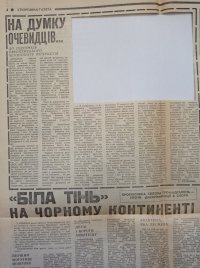
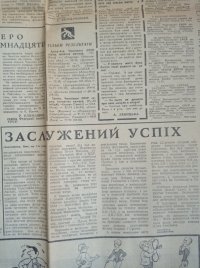
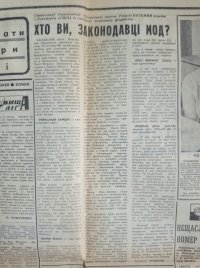
TO THE CONCLUSIONS OF THE EUROPEAN FIGURE SKATING CHAMPIONSHIPS
European Figure Skating Championships
IN THE OPINION OF EYEWITNESSES…
TO THE CONCLUSIONS OF THE EUROPEAN FIGURE SKATING CHAMPIONSHIPS
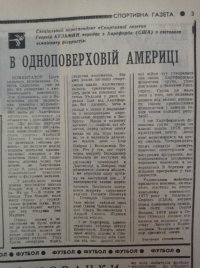
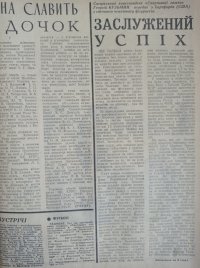
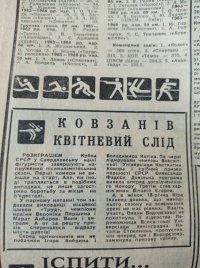
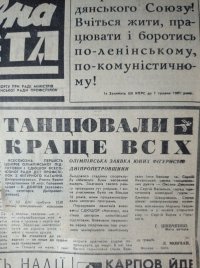
(the article published in Ukrainian 'Sportyvna Hazeta' on February 14, 1981)
"THE BEGINNING of the new Olympic cycle brought not only radical reforms in judging, but also a complete change of champions" - this is the main opinion of most comments. Some attribute the success of the newcomers in Innsbruck (last year, none of the current champions were even medalists) precisely to changes in the calculation of results. But statistics refute this thesis. Experts checked the championship tables for 20 years and found that in 77 cases out of 80, the gold medalists would have retained the championship under any judging system. It became more interesting for the spectators. Now a skater can drop from second place after the "school", for example, to seventh place after the short program, and finish as a champion. Previously, such swings were impossible. And yet, it is too early to give final assessments of the new system. Let's better see how the participants acclimatized to it.
In pair skating, only six duets made it onto the ice. What is this: a coincidence or a loss of coaching interest in finding new ways to develop this sport? After all, it is impossible to compete with representatives of the USSR, the GDR, and the FRG with old weapons. Well, let's wait for the world championship, where American and Canadian pairs will join the argument.
Speaking about a possible crisis, the Austrian Neuekronen-Zeitung emphasizes that it did not affect the Soviet school of figure skating. On the contrary, with extremely complex dynamic programs, “the Soviet masters stunned some rivals.” The Austrian Courier writes that “only the new champions Irina Vorobyova and Igor Lisovsky performed flawlessly in the short program.” The secret of their superiority, believes the ex-world champion Emmerich Danzer, is in the most harmonious combination of grace and acrobatics.
The winners themselves told reporters that now, after so many years of failures, they felt confident and relaxed. The couple from Leningrad believes that they will be able to climb the 1984 Olympic podium.
In general, Olympic motifs were also heard in the final interviews of our Igor Bobrin, English dancers Jayne Torvill - Christopher Dean, and only the winner in women's single skating, Swiss Denise Biellmann, was silent about her plans for the future. The charming 18-year-old figure skater already has 13 years of sports experience behind her. She was fond of acrobatics, gymnastics, skiing and car racing, was the Swiss champion in speed skating at a distance of 500 meters and in between these things she was engaged in figure skating for 11 years!
- I am tired, - Denise recently confessed. - And, as soon as I reach the "golden goal", I will switch to revue. It's much calmer... Due to the illness of Olympic champion Anett Poetszch (GDR), Denise achieved her goal sooner than expected. Maybe now she will change her mind? In any case, at the world championship in Hartford (USA), Biellmann will once again delight us with her art.
Kira Ivanova pleasantly surprised. Seventh place is no longer the limit for our single skaters: Vodorezova was also third. But the fact that Ivanova performed consistently in all three parts of the program indicates her psychological victory over herself. Now we can aim for more noticeable heights.
Almost all eyewitnesses recognized the most interesting competitions among men. The free program of 27-year-old Leningrader Igor Bobrin was called "almost flawless" by a correspondent of the Finnish Telegraph Bureau. "It was that program that allowed the Soviet skater to get ahead of such strong competitors as Simon (France), Schramm (Germany), Schulz (GDR)," says the champion of the 1976 Olympics, Englishman J. Curry.
Experts counted five different clearly executed triple jumps in Igor's program. But, perhaps most importantly, we should add that Igor always creates a holistic image on the ice, using a wide variety of techniques and all the richness of his plasticity and musicality.
The famous coach Carlo Fassi called our Volodymyr Kotin the "discovery of the year". The student of Elena Tchaikovskaya really made an excellent debut. And yet the judges ranked Volodymyr lower than Jozef Sabovčik (Czechoslovakia), whom he confidently beat two months ago at the international tournament in Moscow and who also noticeably prevailed in Innsbruck, despite all the talent of the champion of Czechoslovakia, the purity of his technique and the "airiness" of his jumps. What is the solution? The referees know Sabov čyk better. His international experience is much richer than Kotin's. This should be the basis for further conclusions.
Speaking of the referees, let's note that they are again wearing "birthday hats". The team that served the dancers' competition openly underestimated the scores in the compulsory and original dances of our famous champions Natalia Linichuk - Gennady Karponosov. When one of the most authoritative figures of the ISU, Jozef Dedic (Czechoslovakia), tried to find out from the team leader the reason for the court's harshness, he heard a paradoxical answer: "It's time for them (Natalia and Gennady) to end their careers. They won the Olympics - and that's it!"
I wonder when the judging panel turned into an insurance company that decides who to punish and who to spare? It's no wonder that the upset Linichuk and Karponosov spoiled the free dance a little...
In the unofficial team competition, the USSR team had no equal in Innsbruck. But we cannot relax. Ahead is a dispute with overseas masters, in which Igor Bobrin will obviously have a particularly difficult time. He will face strong Americans (S. Hamilton, S. Сramer) and Canadian B. Pockar. Difficult tasks also face our other athletes. After all, the balance of power after Hartford will be taken into account throughout the entire Olympic cycle.
In pair skating, only six duets made it onto the ice. What is this: a coincidence or a loss of coaching interest in finding new ways to develop this sport? After all, it is impossible to compete with representatives of the USSR, the GDR, and the FRG with old weapons. Well, let's wait for the world championship, where American and Canadian pairs will join the argument.
Speaking about a possible crisis, the Austrian Neuekronen-Zeitung emphasizes that it did not affect the Soviet school of figure skating. On the contrary, with extremely complex dynamic programs, “the Soviet masters stunned some rivals.” The Austrian Courier writes that “only the new champions Irina Vorobyova and Igor Lisovsky performed flawlessly in the short program.” The secret of their superiority, believes the ex-world champion Emmerich Danzer, is in the most harmonious combination of grace and acrobatics.
The winners themselves told reporters that now, after so many years of failures, they felt confident and relaxed. The couple from Leningrad believes that they will be able to climb the 1984 Olympic podium.
In general, Olympic motifs were also heard in the final interviews of our Igor Bobrin, English dancers Jayne Torvill - Christopher Dean, and only the winner in women's single skating, Swiss Denise Biellmann, was silent about her plans for the future. The charming 18-year-old figure skater already has 13 years of sports experience behind her. She was fond of acrobatics, gymnastics, skiing and car racing, was the Swiss champion in speed skating at a distance of 500 meters and in between these things she was engaged in figure skating for 11 years!
- I am tired, - Denise recently confessed. - And, as soon as I reach the "golden goal", I will switch to revue. It's much calmer... Due to the illness of Olympic champion Anett Poetszch (GDR), Denise achieved her goal sooner than expected. Maybe now she will change her mind? In any case, at the world championship in Hartford (USA), Biellmann will once again delight us with her art.
Kira Ivanova pleasantly surprised. Seventh place is no longer the limit for our single skaters: Vodorezova was also third. But the fact that Ivanova performed consistently in all three parts of the program indicates her psychological victory over herself. Now we can aim for more noticeable heights.
Almost all eyewitnesses recognized the most interesting competitions among men. The free program of 27-year-old Leningrader Igor Bobrin was called "almost flawless" by a correspondent of the Finnish Telegraph Bureau. "It was that program that allowed the Soviet skater to get ahead of such strong competitors as Simon (France), Schramm (Germany), Schulz (GDR)," says the champion of the 1976 Olympics, Englishman J. Curry.
Experts counted five different clearly executed triple jumps in Igor's program. But, perhaps most importantly, we should add that Igor always creates a holistic image on the ice, using a wide variety of techniques and all the richness of his plasticity and musicality.
The famous coach Carlo Fassi called our Volodymyr Kotin the "discovery of the year". The student of Elena Tchaikovskaya really made an excellent debut. And yet the judges ranked Volodymyr lower than Jozef Sabovčik (Czechoslovakia), whom he confidently beat two months ago at the international tournament in Moscow and who also noticeably prevailed in Innsbruck, despite all the talent of the champion of Czechoslovakia, the purity of his technique and the "airiness" of his jumps. What is the solution? The referees know Sabov čyk better. His international experience is much richer than Kotin's. This should be the basis for further conclusions.
Speaking of the referees, let's note that they are again wearing "birthday hats". The team that served the dancers' competition openly underestimated the scores in the compulsory and original dances of our famous champions Natalia Linichuk - Gennady Karponosov. When one of the most authoritative figures of the ISU, Jozef Dedic (Czechoslovakia), tried to find out from the team leader the reason for the court's harshness, he heard a paradoxical answer: "It's time for them (Natalia and Gennady) to end their careers. They won the Olympics - and that's it!"
I wonder when the judging panel turned into an insurance company that decides who to punish and who to spare? It's no wonder that the upset Linichuk and Karponosov spoiled the free dance a little...
In the unofficial team competition, the USSR team had no equal in Innsbruck. But we cannot relax. Ahead is a dispute with overseas masters, in which Igor Bobrin will obviously have a particularly difficult time. He will face strong Americans (S. Hamilton, S. Сramer) and Canadian B. Pockar. Difficult tasks also face our other athletes. After all, the balance of power after Hartford will be taken into account throughout the entire Olympic cycle.
G. KUZMIN.
Last edited:



 My PhD was in medieval languages, so that was no help at all with a figure skating term! I saw the "spins" and assumed this had to be something different. I tried using Grimm's Law and making "level" out of it, as in "the level of her over-all skating as compared to Bielmann's" but that wasn't working. Nor was going for the base syllable and relating it to "liberate" as in "free program". Didn't work either. I wouldn't have thought of connecting it to the specific camel spin. So maybe it is related after all to the Bosnian word for a carpenter's level, and refers to the ideal flat position in a camel, whereas the English term refers to the position you *don't* want to display with a hump in the middle
  .
.

 . (I figure if the Protopopovs could still perform at c80, I've got close to another 20 years to go as a pairs girl
  -- if my partner also keeps going, of course!)
 .
.
