Part III. 70's - 80's. Friends and idols. Stars of the Sanremo Music Festival
link
Gianni Morandi on the donkey
- I personally have always liked this festival, and I tried by all means to promote on our television fragments from there, - says the former editor of the music editorial office of Central Television, composer Vladimir Davydenko. - Of course, it was difficult: we submitted applications, they were approved or not approved. In 1982 in the program "Melodies and rhythms of foreign pop music", which was broadcast either on New Year's Eve or Easter Eve, so that people would not go to church, some performances from the San Remo festival began to appear, and later we began to show the complete concerts. It helped that even the KGB monsters listened to Italian pop music in their offices or at home: at that time they had access to these recordings, unlike ordinary citizens of the country. Italian pop music immediately became popular with us. Their melody turned out to be akin to our melody, and they are as musical as Russian people. And in terms of mentality our peoples are very similar. On TV it looked unusual for the Soviet viewer - bright, beautiful, color music, beautiful girls and guys in the ballet, and the artists themselves are beautiful.
Around the same time we had an Italian series "Sprut" with Michele Placido in the title role, - Oleg Shatskov, a former employee of the Main Department of Foreign Relations of the USSR Stateeleradio, who worked in the department of capitalist countries on the direction of Italy, shares with "LightPress". (I remember this movie, I watched it in my early childhood, a good film for a kid - a movie about the Sicilian Mafia, lol -
Mar.) - I can say that we had a lot of trouble getting this movie on our television: we wrote letters to the then chairman of Gosteleradio Lapin, convinced him. Then everything was decided at the level of the CPSU Central Committee. It turns out that then the spread of Italian culture went on different fronts. And when our television began to show the San Remo Festival, Italian producers began to appear. The first was the famous Gian Piero Simontacchi.

Photo: Bors online
It was he in 1982, together with our State Concert brought to the USSR Gianni Morandi. After the success at the same Sanremo, he was already popular. Remember the movie "The Most Charming and Attractive", where the main character Nadia Klyueva struggles to get tickets to the concert of this artist in Moscow.
- We then with director Evgeny Ginzburg shot a movie about Morandi's stay in our country, - says Vladimir Davydenko. - I remember we were with him in Uzbekistan. We shoot it in the middle of the road, and cars rushing past. And suddenly he said that he would like to ride a donkey. He said it as a joke, but I immediately found him a donkey, and he was happy to ride it and take the picture.
Easter night in Sanremo with Pugacheva
Toto Cutugno became the second after Celentano to have his records released in the Soviet Union. The first one was released in 1983 with a circulation of 733.780 copies and cost 3 rubles 30 kopecks in the stores of Melodiya. But the dealers made it many times more expensive. And it happened after Coutunio won the San Remo festival with the song L'italiano. We know it by its refrain: "Lachate mi cantare." Soviet people certainly did not understand what the singer was singing about: spaghetti aldente, some canary on the window, women who threw off their monastic robes, a partisan president - a hint to the then head of Italy Pertini. But who could have known that? Just liked the tune, and the women liked the handsome artist himself.
- With the translation of Italian songs to get them approved on our television - a separate story - laughs Oleg Shatskov. - In order to get the go-ahead from the management to show this or that foreign song, it was necessary to provide them with a translation. At first there were unsuccessful cases when we gave them the exact text, because we translated word for word, and the officials criticized: "There is too much love, eroticism!" So we started to be cunning: we corrected the texts so that it was convenient for the ears and eyes of the management. They don't know Italian anyway. And this translation then went on the credits during the performance of the song.
- Once we were talking to Simontacchi, and I suddenly expressed the following idea: it would be a good idea to bring San Remo to Moscow. He immediately caught fire with the idea and implemented it: he brought an airplane to the Soviet capital with half of the artists and half of the flowers," recalls Davydenko.
And so in March 1986 in the concert studio "Ostankino" held a concert "Flowers and songs of San Remo in Moscow". On stage performed then little-known Italian artists: Loretta Goji, Luca Barbarossa, Eros Ramazzotti, Flavia Fortunato, Giampiero Artegiani, Lena Biolkati, Gino Paoli and others. And in the role of presenters - two red-haired singers: from the Italian side - Milva, from the USSR side - Alla Pugacheva. By the way, Pugacheva would later go to Italy with her beloved Vladimir Kuzmin and sing at the San Remo Festival as a guest star. And that concert in "Ostankino", which lasted 2.5 hours, was broadcast live on the main Italian channel, and ours was recorded again on Easter night in early May.
That group included the epathetic Italian singer Loredana Berthe, who unexpectedly put forward conditions that she came to Moscow only in the company of her friends. She already had a lot of accompanying persons with her, and here there were a dozen of her buddies! But I had to agree.
For example, during their month-long stay in the Soviet Union in 1984, the family duo of Al Bano and Romina Power had one of their main demands that their family - their children and also Al Bano's parents - come with them.
- When we shot a movie about them "Magic White Night" in Leningrad, they lived in the coolest at that time the hotel "European" and asked that in their room they always had mineral water - shares Oleg Shatskov. - They were offered Leningrad water "Polyustrovo". But at that time it had such a high iron content that it left a yellow sediment at the bottom. Of course, they refused to drink it. Then we somehow found, which was not easy in those days, other water - "Borjomi" and "Narzan".
But it was Toto Cutugno who first appeared on Soviet television, directly in Moscow: during his tour of the Soviet Union in November 1985, he visited the TV studio of the New Year's "Blue Light", where he sang the famous "La shate mi cantare".
As the singer himself admitted later, after getting acquainted with Soviet people: "I am Russian at heart!" And later he called Russia "his second homeland". The last time he visited Moscow was in 2006 with a concert in the Kremlin.
Rest in peace Toto, we'll feel the emptiness in our souls for a long time.



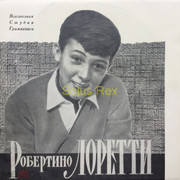
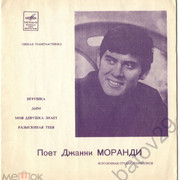
 ) : this is Gianni Morandi, who became a little later almost an "official friend" of the Soviet Union.... because his father was an Italian Communist.






 . i think i owe you kind of an explanation too. when it comes to italian classics abroad i can get a bit sour because of the stereotype attacched to it, as people all over the world tend to think of Italy like a place frozen in time and stuck somewhere between the post war period and the 50s, Toto Cutugno's Italy (whose most famous piece is kind of a reactionary hymn btw), a deeply conservative country, incapable of evolution. i see it's not the case with the russians. i'd like to leave here some modern great songs but, listening mostly to rock and metal, i'm far from an expert (also italian modern pop really is low level with few exceptions).


