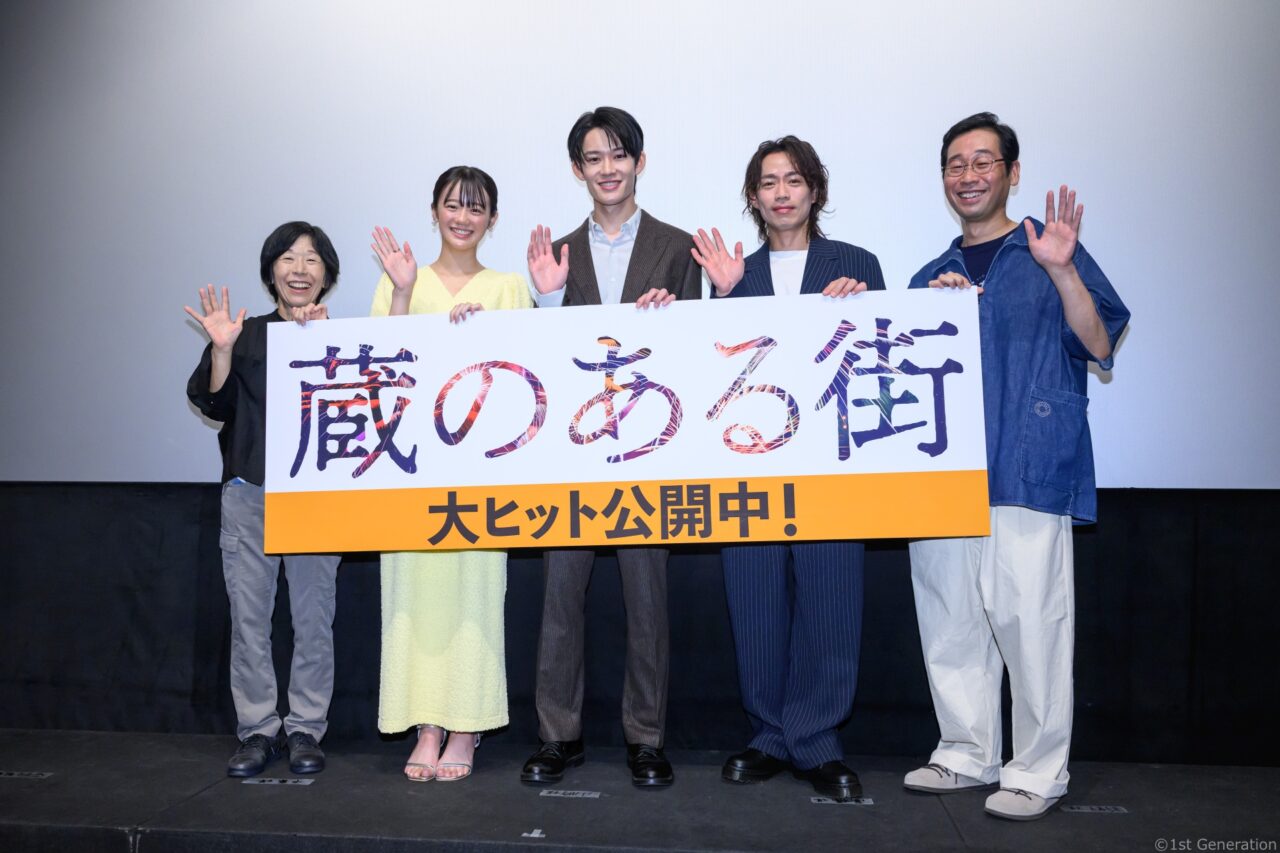
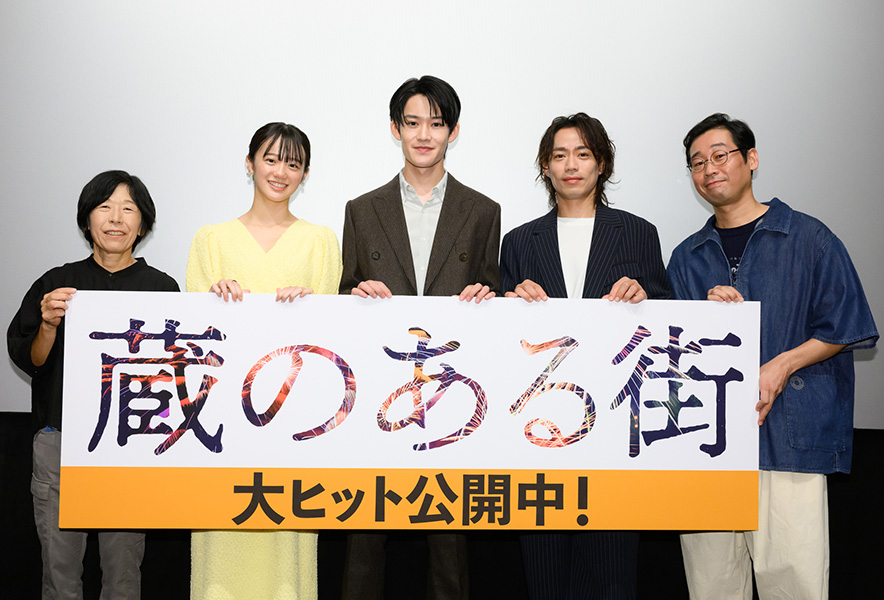
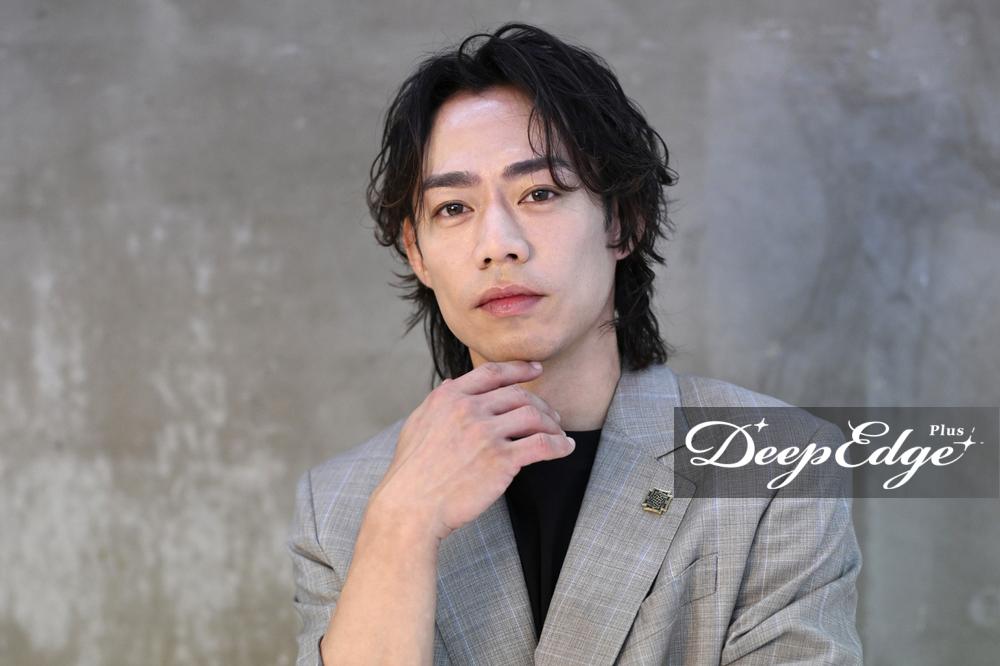
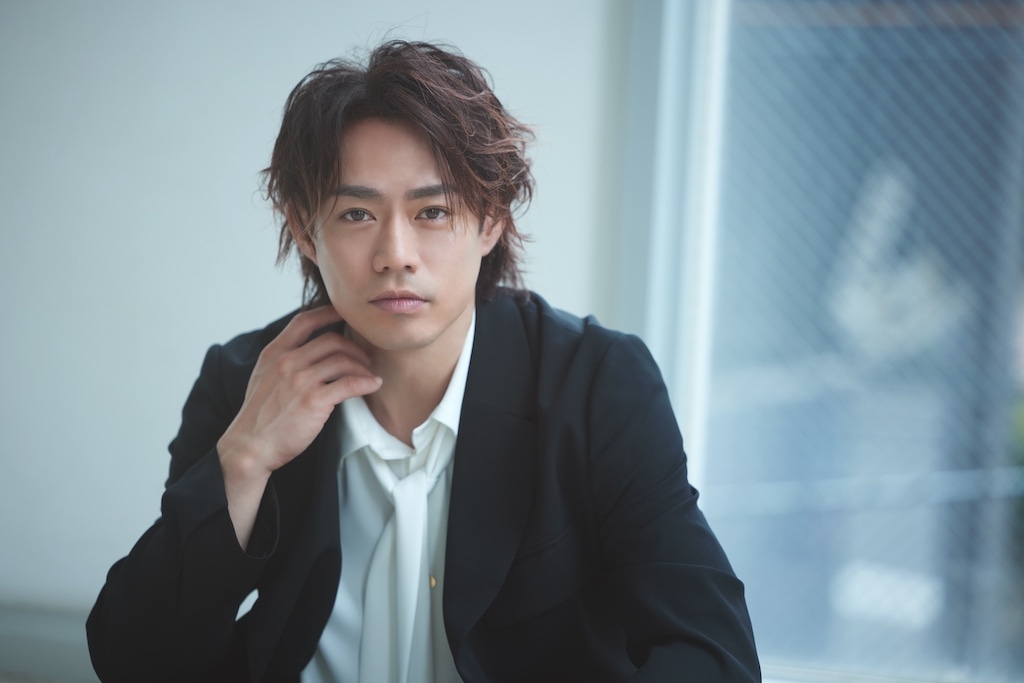
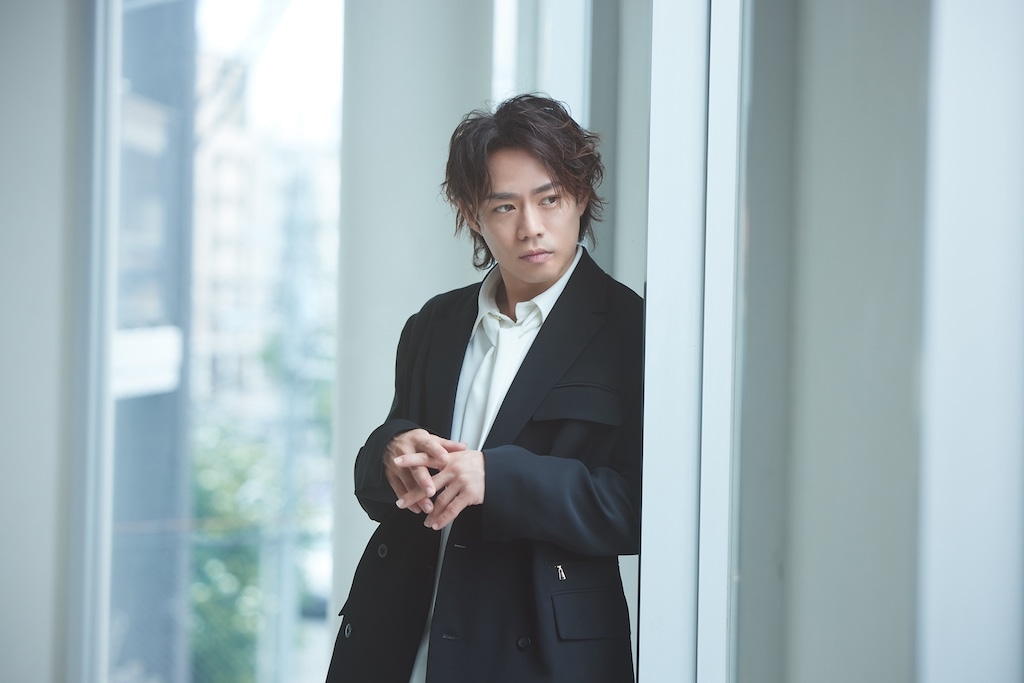
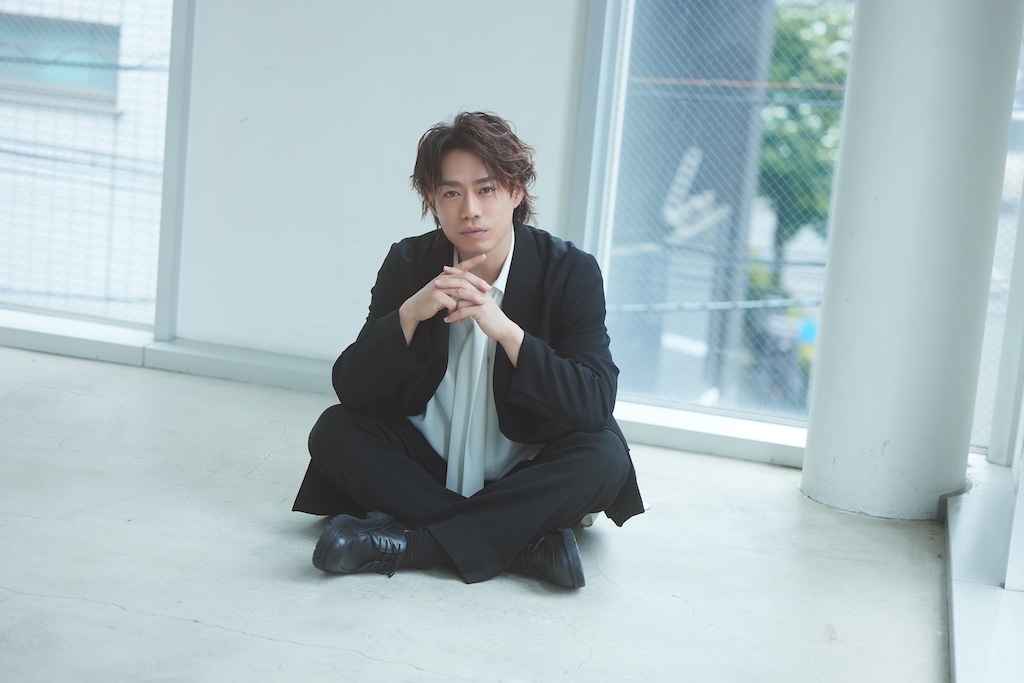
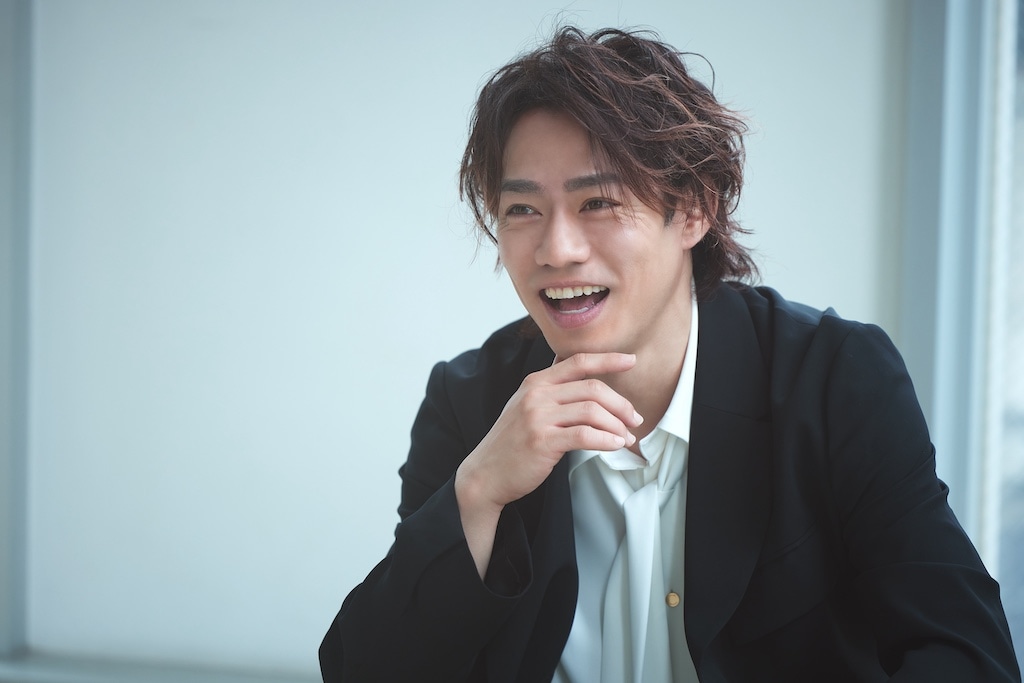
Daisuke Takahashi, making his film debut, discovers his potential as an actor. He gives a passionate performance as a curator in ‘The Tales of Kurashiki,’ which opens nationwide on the 22nd. Three-shot interview with the co-stars.
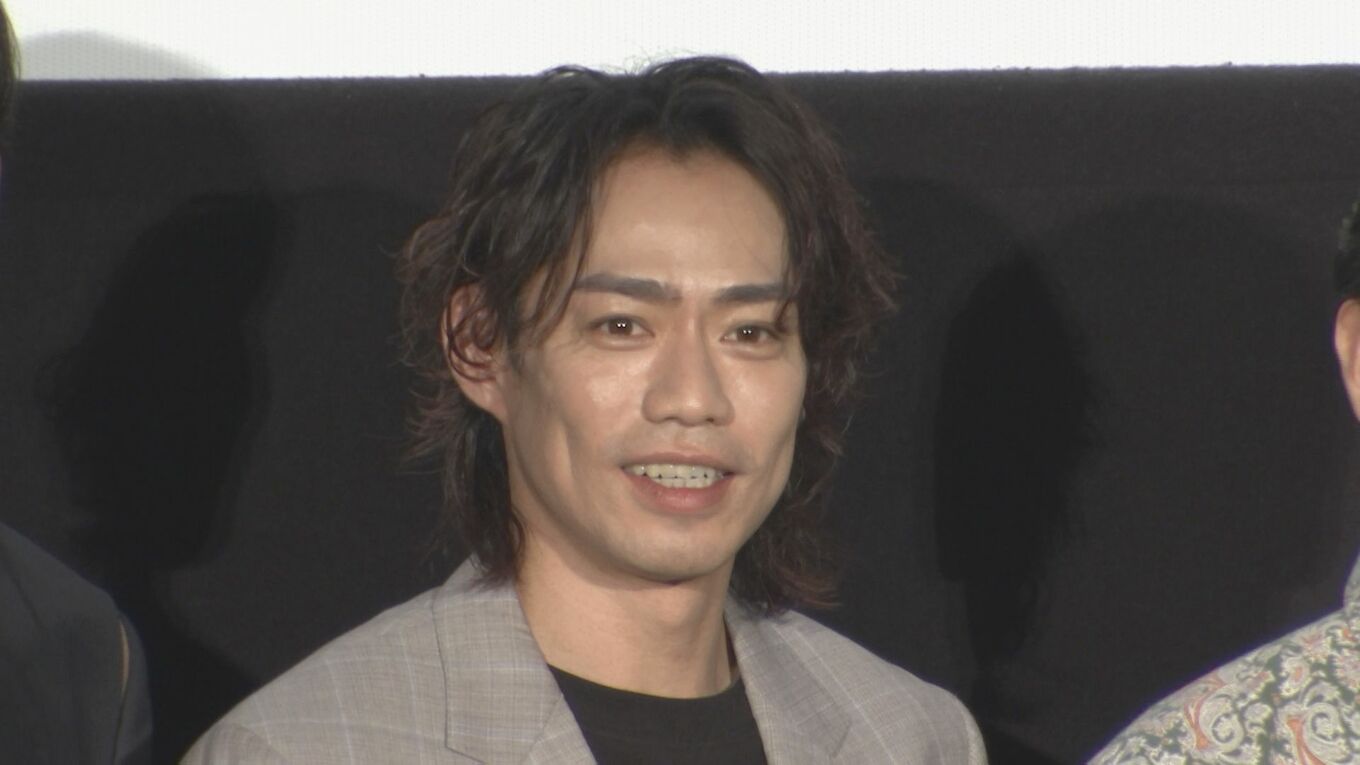
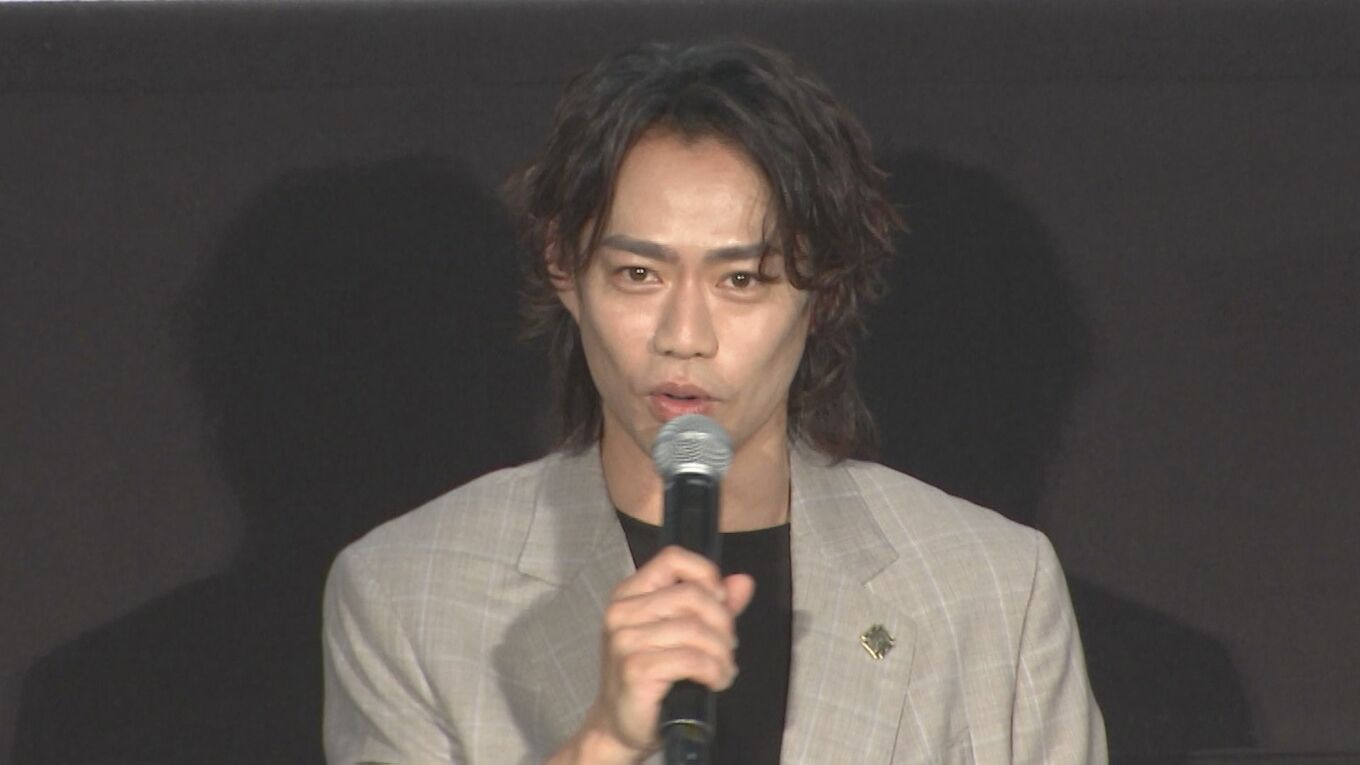
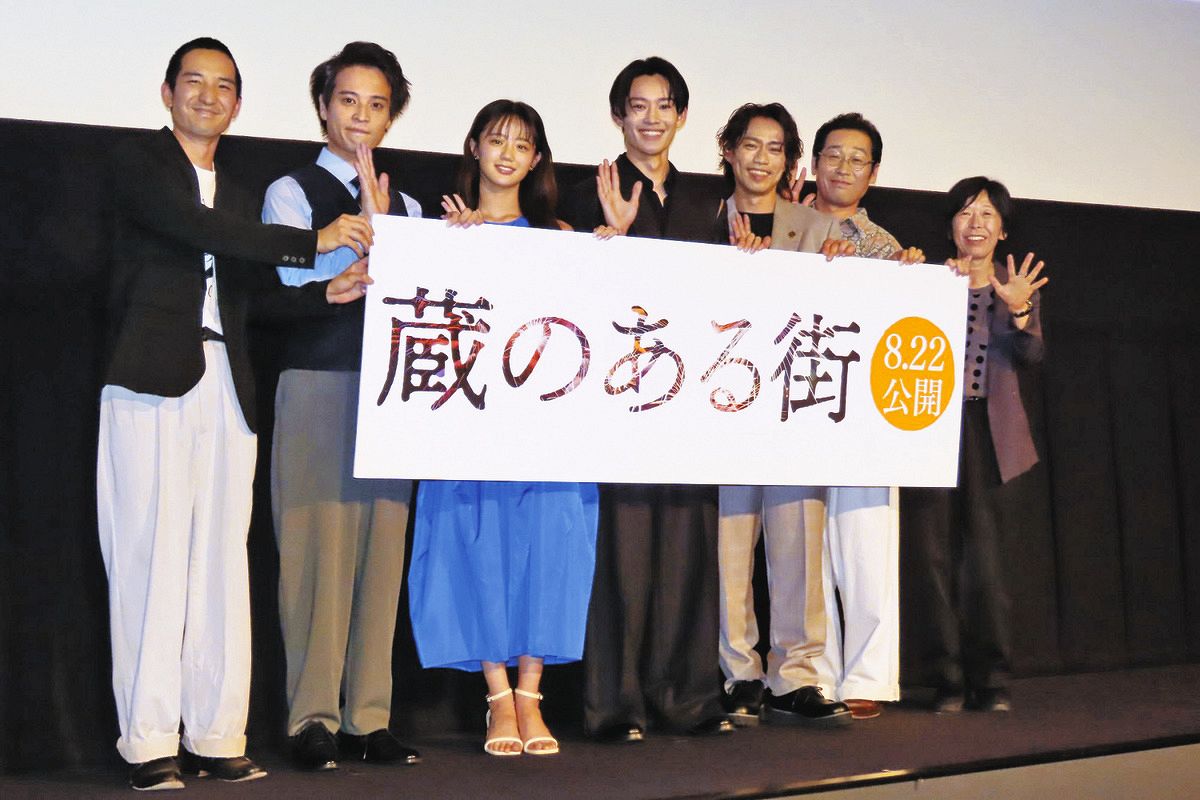
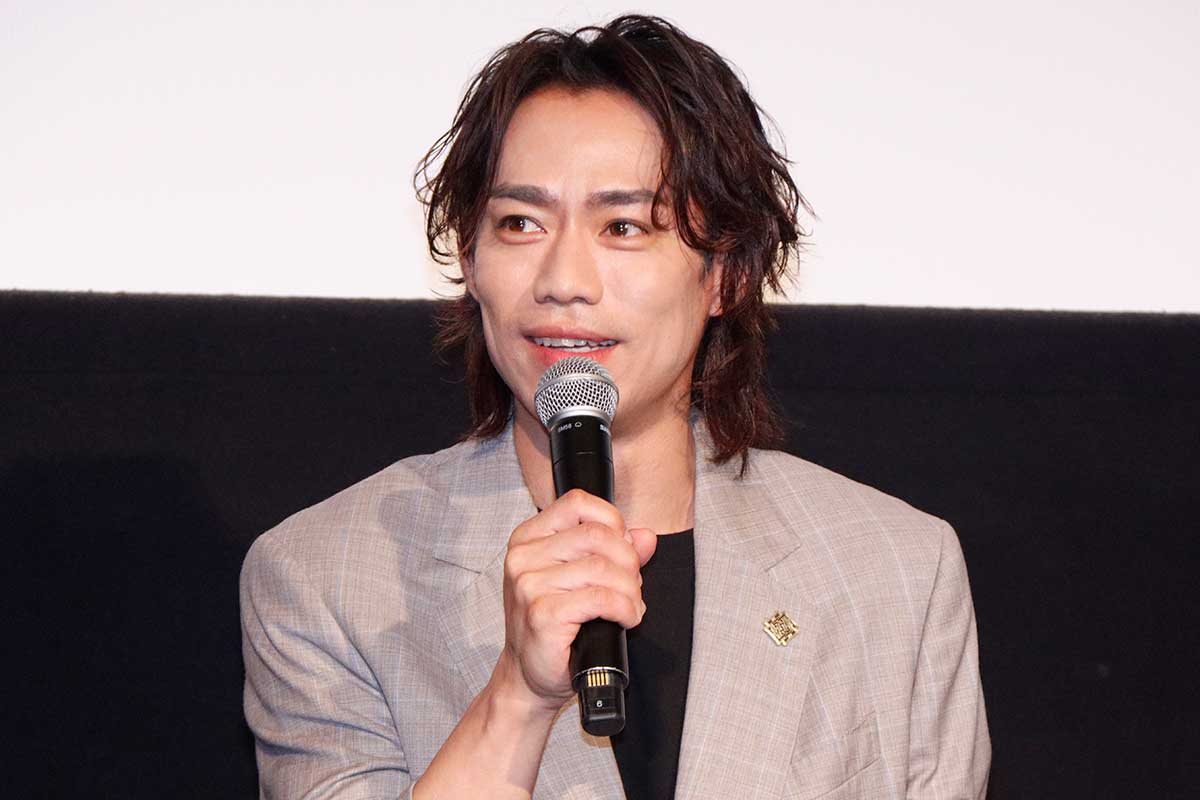
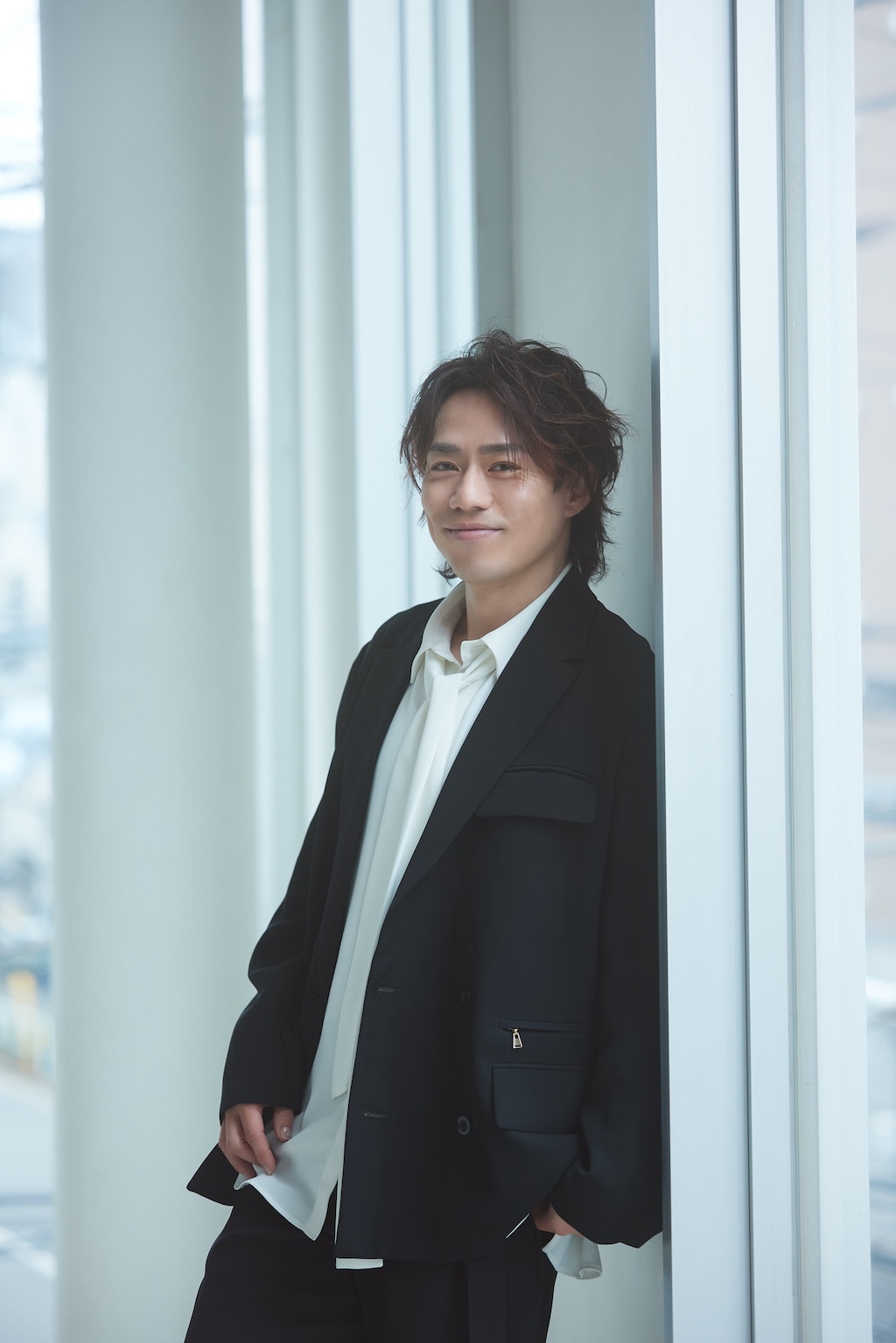
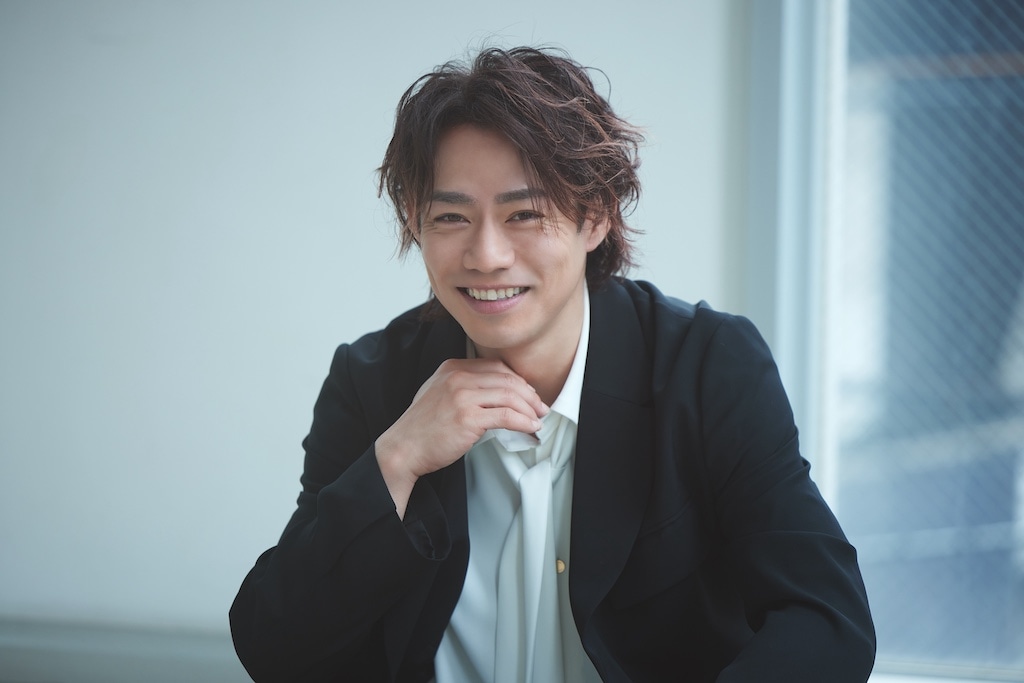
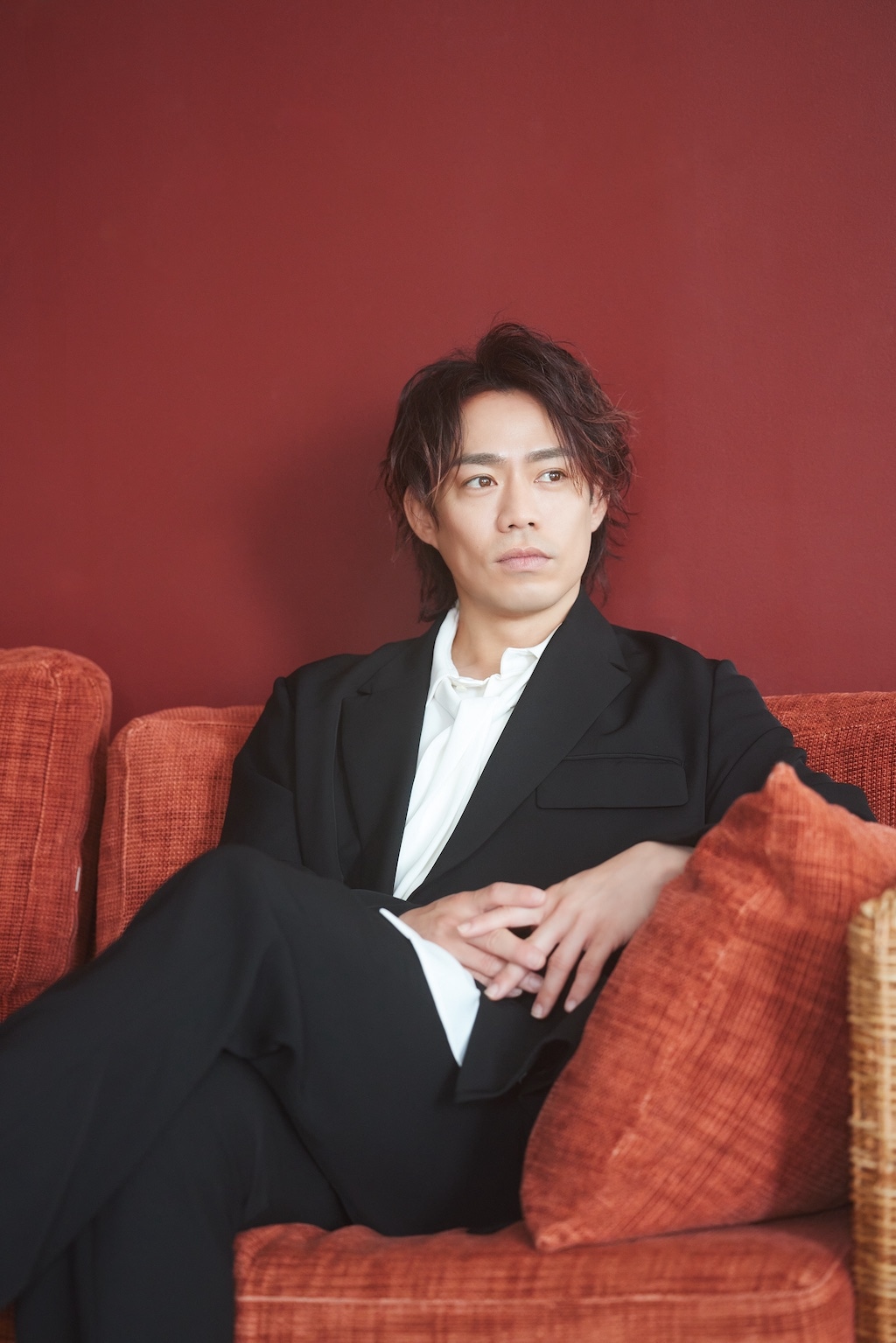
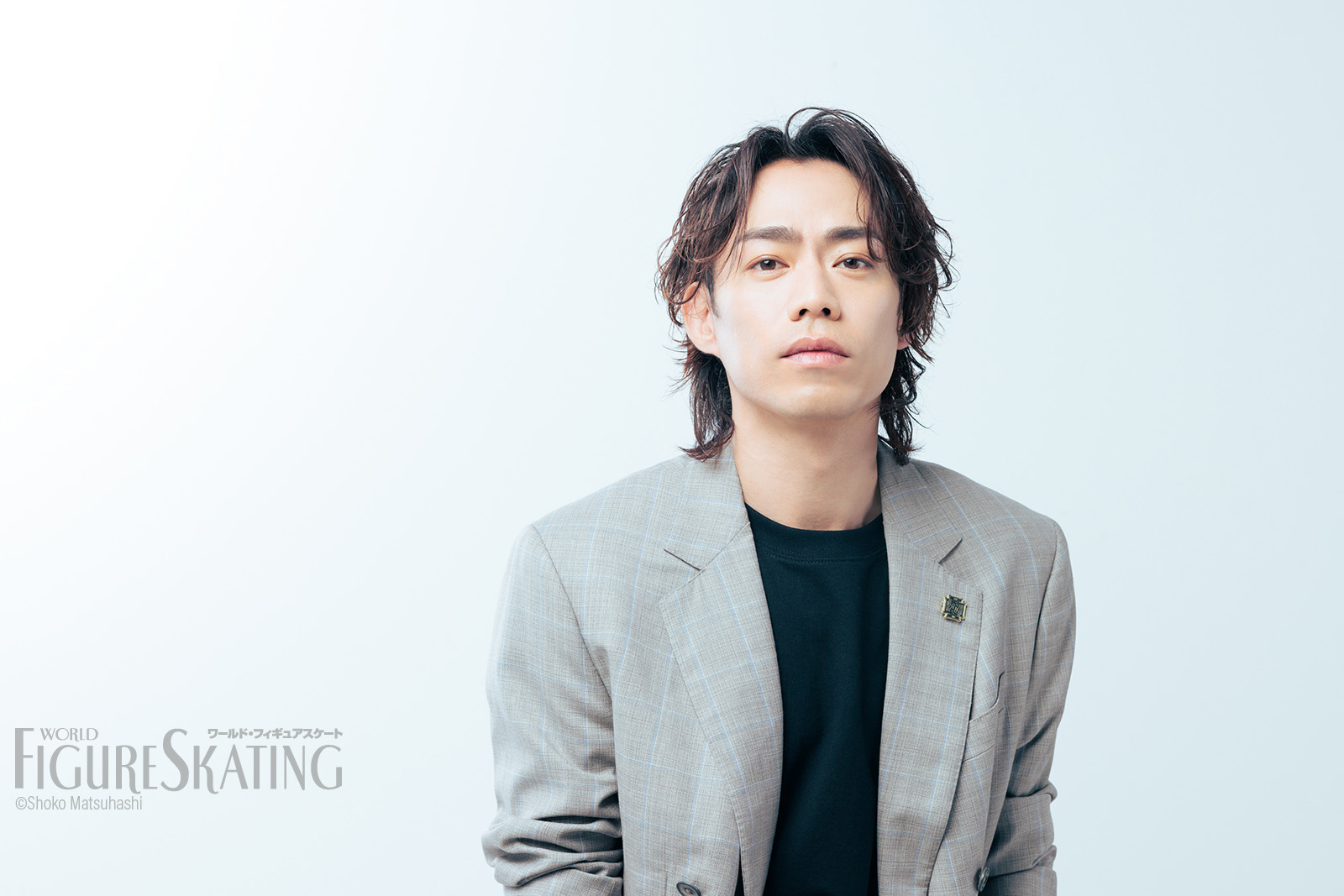
Former world figure skating champion Daisuke Takahashi (39) makes his film debut in the highly anticipated film “The Tales of Kurashiki” (directed and written by Emiko Hiramatsu), which will be released nationwide on 22 August at Shinjuku Piccadilly and other theatres. Set in the scenic district of Kurashiki City, Okayama Prefecture, where Takahashi was born, the film tells the story of three high school friends who struggle to keep a promise to their friend's autistic brother to “set off fireworks from a small hill”. Takahashi delivers a compelling performance as Kojo Rokuro, a museum curator who supports the three with a warm heart.
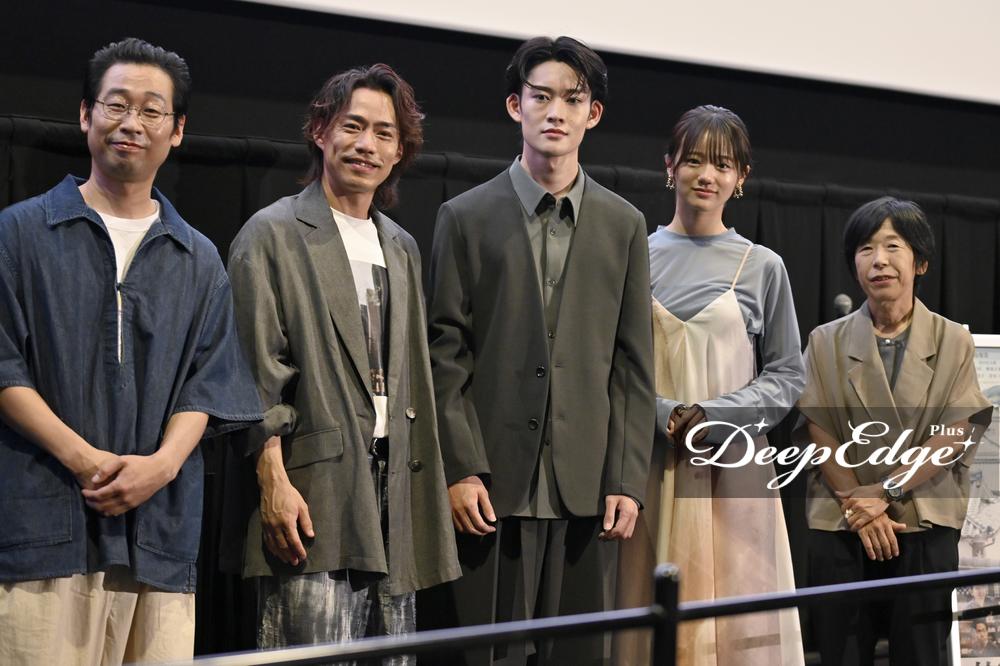
He accepted an offer to star in the film from director Emiko Hiramatsu, who has long served as an assistant director to renowned Japanese filmmaker Yoji Yamada, and decided to take on his first acting role on the big screen. Takahashi is expanding his career to the big screen. Along with Sōma Santoki (20) and Runa Nakashima (18), who co-starred in the film, he gave an interview, sharing insights into the film's highlights and behind-the-scenes stories. (Interviewer: Masashi Inoue)
*We will present autographs from all three cast members (Sōma Santoki, Runa Nakashima, and Daisuke Takahashi) and autographs from Daisuke Takahashi alone to two annual members. Please apply using the application form at the end of the article. The deadline is 31st August (Sun).
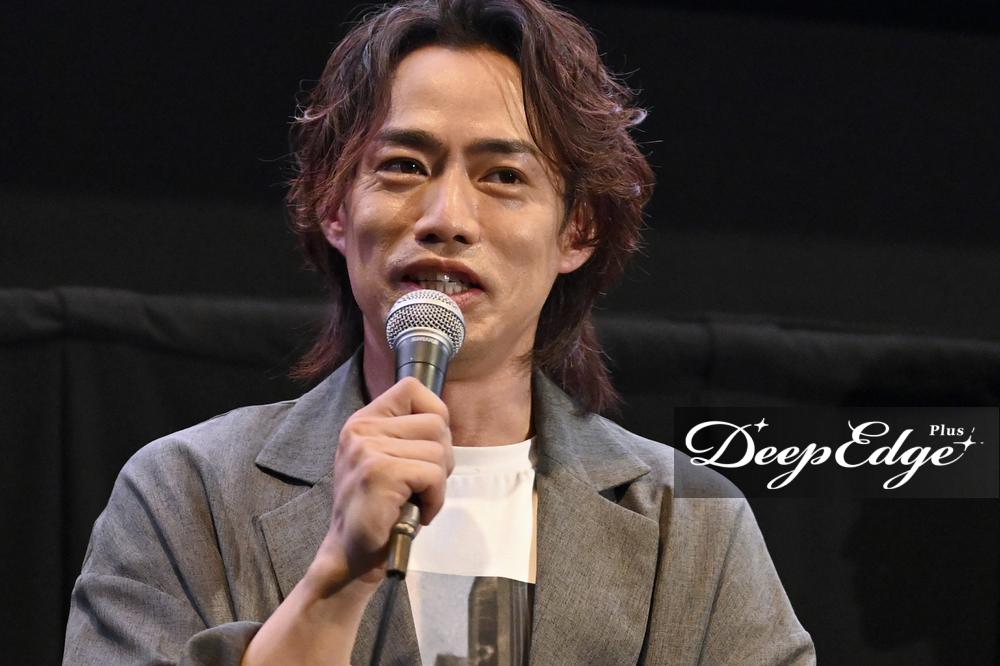
With the nationwide release approaching, Takahashi says, ‘I'm nervous.’
—How do you feel now that the nationwide release is approaching?
Nakashima Runa (hereinafter referred to as Nakashima): ‘I'm happy. We spent three weeks filming intensively in Kurashiki, so everyone has their own feelings about it.’
Takahashi Daisuke (hereinafter referred to as Takahashi): ‘Especially the two of them, they've been together all along.’
Nakashima: ‘That's right.’
Santoki Sōma (hereinafter referred to as Santoki): ‘(At the advance screening in) Kurashiki, it was sold out, and I really felt that we were warmly welcomed and supported.’
Takahashi: ‘I'm nervous. It's truly a wonderful, beautiful film, so I really hope many people will see it.’
―This is a film about the connection between people, which is only complete when the audience is there. Now that it has been released, do you feel that the theme has reached the audience?
Nakashima: ‘Yes, I do. There is a professor at my university who is from Kurashiki, and he said, “This film made me want to return to Kurashiki,” which made me feel that the message had really gotten through, and I was very happy. I felt it deeply.’
Santoki: "I do too. Recently, during the advance screening in Kurashiki, we held various events like a balloon release, and people said things like, “Welcome back” or “It was great.” It felt like they had planned it in advance. But seeing the applause and expressions on everyone's faces, I felt that the message was getting through."
―The phrase ‘Welcome back’ is heartwarming.
Santoki: ‘It's heartwarming. I'm from Tokyo, but I feel like Kurashiki has become my second home.’
―How do you feel when you actually see customers entering the cinema?
Takahashi-san: ‘I feel really proud of the beautiful scenery and charm of my hometown, Kurashiki. I think the film will make people who aren't from Kurashiki want to “return” to their own hometowns. I think many people will want to share the charm of their hometowns after watching the film. In that sense, I think watching the film will inspire a growing love for one's hometown.’
—What is it like to appear in a film set in your hometown?
Takahashi: ‘It's wonderful. There are places I know, and there are scenes where I've always taken them for granted, but when I see them on film, I think, “They look so beautiful,” and there are so many scenes that give me a new perspective. When you look at your hometown from different perspectives, it looks different. I felt that very strongly.’
—The film is about human connections. Did the cast members form connections with each other through filming?
Nakashima: ‘During meals, even though everyone is of different ages, by talking a lot, I felt the distance between us gradually closing, and we were really connecting.’
A scene where teamwork deepened...
—Do Santoki-san and Nakajima-san know about Takahashi-san's days as an athlete?
Takahashi-san: "You probably don't know (laughs)."
Santoki-san: ‘No, no, I know. Of course I know.’
Takahashi-san: ‘I think you don't know. People in their 20s don't know.’
Santoki-san: ‘No, no. I know.’
Takahashi: ‘But you know, we would never have talked about it otherwise. If it weren't for the film.’
Nakashima: ‘That's right, if it weren't for the film.’
Takahashi: "Thanks to this film, we were able to meet and talk with people we wouldn't normally interact with, and I learned a lot regardless of age. Such experiences are truly valuable. This is my first film appearance, but everyone is truly wonderful and kind. They're so natural, down-to-earth, and kind... At first, I was very nervous, but they talked to me normally, so I thought, “It's okay, this is a kind set.”"
Santoki: "That's thanks to the adults. I think the “wall between children and adults” is an important part of this work, but I think it's because they welcomed us without making us feel that wall. There's also the scene at the community centre (where three high school students and museum curator Kojo have a heated debate with the adults of the scenic district over the fireworks display). That was a scene everyone was really struggling with, but after a full day of filming, everyone felt like they'd given their best performance, and there was a sense of teamwork deepening, like, “It's over,” 'We did our best.“ That left an impression of 'connection.”"
Takahashi: ‘That's amazing (laughs).’
Santoki: ‘No, no, no (laughs).’
―From your perspective, Takahashi-san, what did you find impressive about their performances?
Takahashi-san: "Everything. The scene at the community centre was particularly impressive, but both of them were crying in that scene, and I'm not allowed to cry. But I felt like I was going to cry for real, and I thought, “I can't cry” (wry smile). It was so real, and it really came across powerfully. Even though we were talking casually like this, the way they switched gears was so professional."
Santoki: ‘Because we were actually hitting each other with cushions. They told us to go all out, so we did.’
Takahashi: ‘Even while they were going all out, they maintained a calm composure, and that made me think, “They're professionals. It's not about age. They're amazing because they've been doing this as a job, as actors, for so long.”’
—How did you two feel about Takahashi-san's acting in his first film appearance?
Nakashima-san: ‘He spoke so sincerely that it didn't feel like his first time, and I felt like he had a really good time.’
Takahashi-san: ‘Really? That's great (laughs).’
Santoki-san: "I think he's used to performing in front of people, so that was also a learning experience for me. There were a lot of long lines, so he practised them constantly. I also had trouble with my diction at times, so we practised together."
Takahashi: ‘You gave me advice.’
Santoki-san: ‘No, it wasn't advice. He practised his lines constantly, so I thought, “I can't make a mistake either,” and practised with him.’
‘I'm nervous and shy, but I become a different person when it comes to the actual performance.’
—What kind of mindset do you approach acting with?
Nakashima-san: ‘When acting, I try to respond with the same feelings I receive from the other person in the conversation at that moment. For this role as Beniko (a high school girl with an autistic older brother), I think her expressions change significantly toward the end, so I aimed to convey not only through words but also through her emotional changes as a human being.’
Santoki-san: ‘I do have the awareness of aiming to strike the hearts of those watching through the camera. Being conscious of the camera during filming is part of that, but I also focus on how much of my expressions are visible to the audience and how much of my emotions reach them. At the same time, acting is a dialogue between people, so I strive to find the perfect balance between these two aspects.’
—Takahashi-san, who mentioned being interested in acting, referred to the two of you as ‘seniors.’ What is the appeal of acting for such senior actors?
Nakashima-san: ‘The ability to experience things that you couldn't in real life through this set or a film is amazing. That's what makes it appealing. In this case, I can learn about Beniko's life, and in another role, I can learn about that person. Thinking about it that way, it's really fun.’
Santoki-san: ‘That's true, you can become all kinds of people. After all, through social media, I've received comments like, “You saved me,” or “I want to try my best too,” and the fact that I'm able to save someone gives meaning to what I'm doing. It's rare to be alive and have a positive influence on someone else, and there's nothing happier than that. That's where I find meaning.’
—What is it like to act in a film?
Takahashi: ‘I'm someone who tends to keep a distance from others, so being able to overcome that and perform in that moment is something I can do. I'm nervous and shy around people, but when it comes to the actual performance, I become a different person. That deep connection is something I can't experience in everyday life.’
Santoki-san: ‘If I get a role as a skater, I'll have Takahashi-san teach me directly.’
Takahashi: ‘I'll give you a really strict lesson, taking full advantage of the opportunity (laughs).’
—By the way, do you have any skating experience?
Nakashima: ‘A little bit (laughs).’
Santoki-san: ‘I do. Probably about five or six times in my life. But I forget how to do it after about a year. My sense of balance gets dull. But if I do it for about 30 minutes, I get used to it again. The muscle soreness is intense, though. (Skaters are) amazing, aren't they? I wonder what muscles they use.’
—Have you ever watched an ice show?
Santoki-san: ‘Not in person.’
Nakashima-san: ‘No.’
Takahashi-san: ‘You're busy, aren't you? Please come watch if you have time. I'm almost 40, and I'm still doing my best."
Nakashima: "I'd love to go."
Santoki: "But honestly, I first met him as an actor, so it's the opposite."
Takahashi: "Does it feel more strange to see me as a skater?"
Santoki: "I think it would probably be a strange feeling to see Takahashi from that world in person."
Takahashi: "If you have time, please come and see it."
Santoki: "I'd love to come."
‘Learning new things, discovering new things—that's what I look forward to.’
—There's no right answer in acting, and there are no gold, silver, or bronze medals. What kind of mentality do you have in striving for the top, for your ideal?
Takahashi: ‘I don't aim for the top, because there are so many people. But I think it's exciting to learn new things and make discoveries. No, but I'm not an actor, so I don't like talking in front of these two people (laughs).’
—But were you satisfied with how this role was created?
Takahashi: "No, no, no. I'm not at all convinced. I look back and think, 'I should have done it a little better.'"
Santoki: "That's true." [As in "I can relate."]
Nakashima: "That's true." [As in "I can relate."]
Takahashi: "It was totally not good. I worked hard, but I was desperately trying."
—Do you have your own method for interpreting a role?
Nakashima: ‘I played the role of a girl, who has a brother with autism, so I reread the manga “With the Light...” that I've been reading since I was in elementary school. Also, since the high school girl character is an artist, I briefly joined the art club, so I tried to remember what I learned back then while acting.’
Santoki: "It's like creating a character, isn't it? I think it's really about how many times I read the script. How well I can understand it. If I can't understand the emotions or the environment, I'll read other works or books for reference, but my goal is to read the entire script and get a solid grasp of the big picture. This time, there were a lot of scenes with a lot of dialogue and a lot of appearances, so I was conscious of things like, 'This scene has this kind of role. Since we shoot each scene separately, if I don't keep that in mind, it can look very unnatural. I'm currently focusing on imagining how the scenes will connect when they're edited together."
—This was your first experience with shooting scenes separately and then editing them into one work.
Takahashi: "It was my first time. I was like, “This is how it works!” Since I couldn't see the scenes I wasn't in, I had read the script and understood the story, but I was surprised to see, 'Oh, this is how it looked.' It was interesting to see how it differed from what I had imagined in my head."
‘If you truly love something, you can overcome even the most difficult challenges.’
—In Takahashi's dialogue, there was a line that said, ‘Talent is about maintaining passion and love for something.’ I felt that this perfectly resonated with Takahashi Daisuke the skater.
Takahashi: "I don't have that kind of passion, though (laughs). It just happened without me realising it. But I think that if you truly love something, you can overcome even the most difficult challenges. Continuing to do something you don't feel passionate about is extremely difficult. I feel that way, and I think the two of you do too. Because we are doing what we love, we can enjoy the challenges. I sometimes feel that continuing to do something is the most difficult thing, and that maintaining passion is challenging. If you simply like something and decide to quit because it's no longer fun, I don't think that's passion. Overcoming that is what passion is all about, and that power is something that can't be beaten by anything else. I think having passion means not giving in to hardship.
—Have you ever thought about quitting skating?
Takahashi: ‘Yes, I have.’
—When did you feel like giving up?
Takahashi: ‘Well, during puberty. I wanted to play! But now, I don't feel like quitting anymore, even though there are times when it's tough.’
—Have either of you ever thought about quitting?
Santoki: "Yes. I was born in Tokyo, but from first to sixth grade, I lived in Fukuoka, and then I moved back to Tokyo. At that time, I thought about quitting. Maybe it was because I treated it like a hobby. I didn't think of it as work, and I was doing soccer and karate at the same time, so I felt the same way he did about skating and wanted to quit. But after coming here (to Tokyo) and joining the agency, and getting to know the seniors, my mindset toward work changed, and even as a first-year middle school student, I thought, “I wish I could keep doing this as a job.”"
—What makes you think, “This is my passion,” or conversely, what makes you feel like giving up?
Nakashima-san: ‘I've only been acting for about four years, so there are more things I can't really say yet, but right now, I'm doing it with a sense of enjoyment.’
—It must have been a great set.
Nakashima-san: ‘Everyone was so kind, and it was truly a fun set. Thank you.’
The beauty of Kurashiki, my hometown, as I felt it through photography
―Did you get any inspiration from the scenery of Kurashiki?
Nakashima: ‘The sky felt very wide, and I may have felt a little bit of freedom.’
Santoki: ‘It feels good to be outside. The air is clean too.’
Nakashima: ‘It feels good. Since it's mostly sunny, it's really bright. I thought, “I shouldn't use this for the conflicted Kōko,” but it made me feel really bright and happy.’
Santoki: "Especially in the scene where fireworks go off in the video, the buildings are low, so they look really beautiful, and it feels like you're looking up at them. (Co-star) Maeno Tomoya mentioned that there's meaning in watching fireworks at the cinema. I thought that's because it's Kurashiki, so the fireworks in the footage are also really beautiful."
—After appearing in the film, what do you think about Kurashiki?
Takahashi: "Kurashiki has a lot of sunny days, so there are a lot of cheerful and open-minded people. At first, the adults were against the fireworks display, but the atmosphere really brought that out, and the old townscape, the fields, the sky, and the natural elements were all beautifully depicted."
Santoki: ‘That's right. There's a scene where I ride a bicycle through the rice fields and farmland, and it felt great.’
Takahashi: ‘It was so ordinary to me that I didn't notice it, but now I realise how beautiful it is.’
―The mayor of Kurashiki also appeared in the film.
Takahashi: ‘I was surprised to see the mayor. I thought, “The mayor is in this film!” I've known her since I was a child, so even though we're not related, it was interesting as a Kurashiki resident to see so many familiar faces in the film.’
―What lines or scenes left an impression on you?
Santoki: ‘The scene with Kyon-kun (the autistic brother)?’
Nakashima: ‘It was memorable. At first, when eating dinner with the family, I would sprinkle furikake on his food for him, but in the scene where the mayor goes to pick him up at the station, his brother can come home on his own and eat without my help. It was a scene that showed his growth and left a strong impression on me.’
Santoki: ‘(Showing the dining table) It was the same angle.’
Nakashima: ‘Yes, it was the same angle.’
Santoki: ‘It's very clear. It was a scene that made me tear up a bit.’
Nakashima: ‘Yes.’
Santoki: ‘I... (the actor playing the bearded man) Hashizume (Kou). It felt like I saw something truly precious. At the end, he says, “Do it, do it with all your might.” That one line really hit me hard. It felt like I saw a true master at work. Seeing such a seasoned veteran, I felt that way.’
Takahashi: "The three (high school students), or rather Kiichi played by Sakurai Kento and Aoi (Santoki), really exist, don't they? (laughs) You can find them in every region, they have a really exquisite balance, and I really like them. They're really comforting. There are some dark stories, but it's precisely because the two of them always maintain a good balance that they feel comforted. That's why I felt like I came all the way there!"
―The curator played by Takahashi and Shirakami Beniko played by Nakajima had a delicate relationship at first, revolving around Beniko's mother, played by MEGUMI. How did you portray the process of them coming to understand each other?
Nakashima: "He took her mother away. But then, in the scene where the bell rings at sea, (Kojo Rokuro, played by Takahashi) takes her to a woman who tells her about her mother, and she realises, 'Oh, this person didn't just take my mother away, but was someone who was working hard for my mother,' and I think that's when she realised and understood, and a feeling of gratitude began to grow in her."
Takahashi-san: "I also felt a delicate sense of distance (in the film), so I was careful not to talk too much (to Nakajima). There were many scenes where I was rejected. In the sea scene (after they had come to understand each other), their relationship had changed dramatically, so I ran over, and watching Kyon made me feel so happy and heartwarming, and I thought to myself, when the walls between people start to peel away like this, the impression you get is so different.
Santoki-san: ‘That's one of the good things about character development, isn't it?’
Nakashima-san: ‘I was also able to take photos with them after that scene. It was such a beautiful place.’
【Annual Membership Exclusive】To commemorate the nationwide release of the film ‘The Tales of Kurashiki,’ we are giving away one signed poster each from the three cast members (Santoki Sōma, Nakajima Runa, and Takahashi Daisuke) and one signed poster from Takahashi Daisuke, for a total of two winners, exclusively for annual members.
Please apply via the following form. The deadline is Sunday, 31 August. Winners will be notified by mail.
Daisuke Takahashi
Competed in three Winter Olympics in men's figure skating. He won a bronze medal at the 2010 Vancouver Olympics, and his victories at the 2002 World Junior Championships and 2010 World Championships were both firsts for Japanese men. He retired in 2014 but made a comeback in 2018. He switched to ice dancing in 2020 and won his first All-Japan Championships title with Kana Muramoto in 2022. He finished second at the 2022 Four Continents Championships and 11th at the 2023 World Championships, both of which were the highest rankings for Japanese dance couples. He announced his retirement in May 2023 and is now active in ice shows. He graduated from Kansai University. Born on 16 March 1986, he is 39 years old and hails from Kurashiki City, Okayama Prefecture.
Soma Santoki
He began his entertainment career at the age of five and made his acting debut in 2016 with ‘Yuzu no Ha Yurete.’ Recent works include the films ‘From Lager with Love’ (2022), ‘How Will You Live?’ (2023), ‘Who Is That Girl?’ (2024), and ‘Under Ninja’ (2025), as well as the dramas ‘The Best Teacher: A Year Later, I Was

️ by My Students’ (2023/NTV) and ‘Minou R’ (2024/EX). Born on 6 June 2005, she is 20 years old and hails from Tokyo.
Runa Nakashima
In 2021, she won the Grand Prix at the Shochiku Group's audition ‘Shochiku JAPAN GP GIRLS CONTEST Supported by BookLive’ and made her debut. Her works include ‘But, Chikihara-kun is Too Sweet’ (23), ‘Onibei Hankacho: Blood Battle’ (24), ‘Ninety Years Old. What's So Wonderful?’ (24), and ‘I'm Sorry About My Brothers’ (24). She is also an exclusive model for Seventeen (Shueisha). She is currently appearing in the 2025 NHK Taiga drama ‘Berabou ~Tsuta Shige no Yume Banashi~.’ Born on 10 October 2006, she is 18 years old and hails from Kumamoto Prefecture.
Background of the Work
"I want to bring smiles and hope to those who are striving to live their lives."
The strong wishes of the high school students draw in the people of the town,
and eventually become a great hope...
‘It's a promise. I'll set off a big, beautiful fireworks display in this town.’ A promise that slipped out of his mouth on the spur of the moment to encourage a young man with autism and a classmate who was about to give up on her dreams. Those words set off an unexpected ripple effect in the town!
Even if they are laughed at for their reckless plan, even if they are tempted to give up in the face of harsh reality, they press on with unwavering determination. Their strong desire eventually draws in the adults and grows into a great hope.
The inspiration for this story came from the ‘Surprise Fireworks’ events held in approximately 300 cities across Japan during the COVID-19 pandemic that began in 2020. Fireworks filled with various emotions—gratitude for essential workers working in harsh conditions, encouragement for children deprived of joy, and hopes for reunions with those they cannot meet now—lit up the night sky, bringing bright smiles and hope to people. And in 2025, a ‘supporting fireworks display’ for everyone living in the present will light up the screen alongside a refreshing summer story of youth!



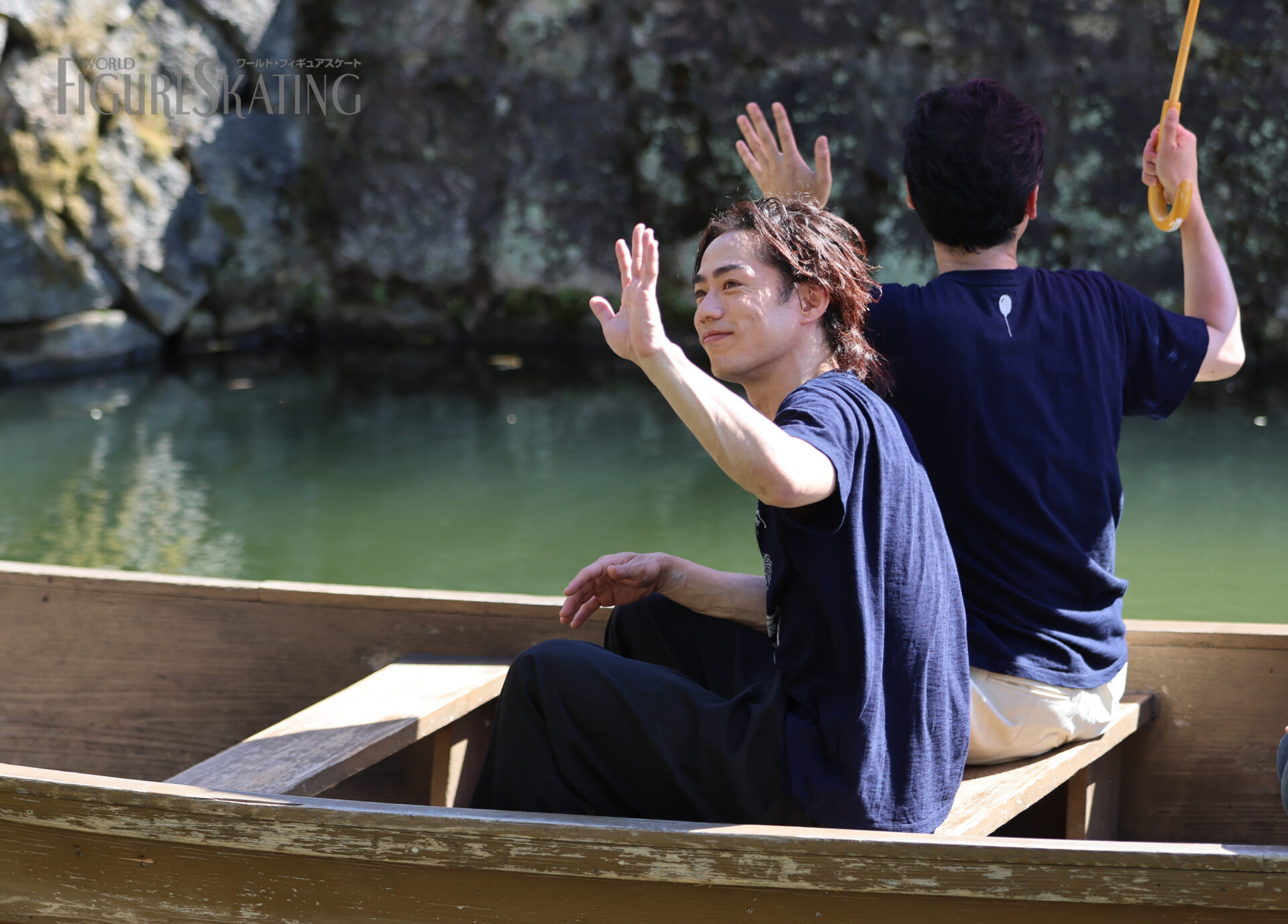
River Boat Parade to be held
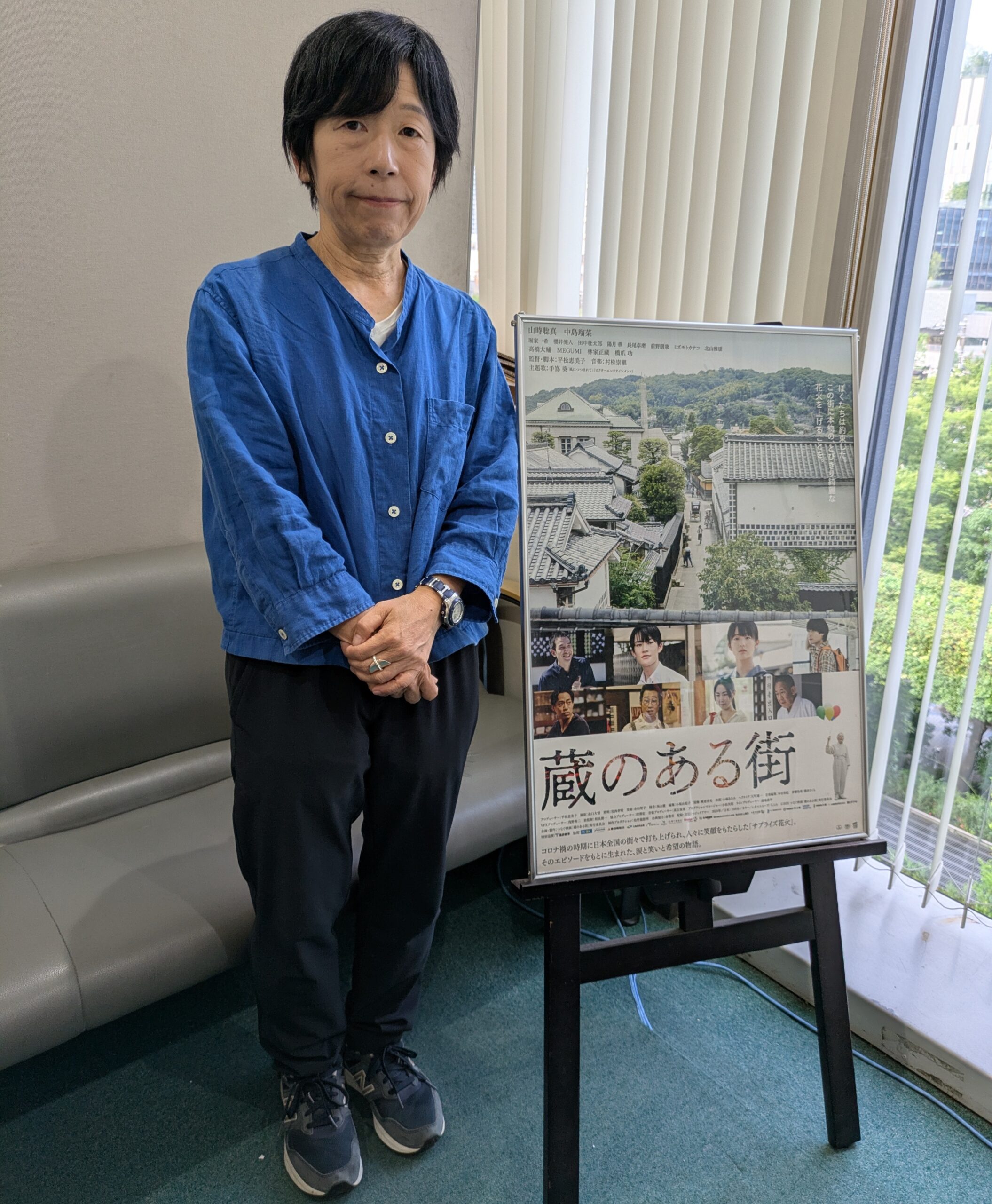
15:00-15:20 River Boat Parade●Speakers (planned):#Santoki Soma #Nakajima Runa #Takahashi Daisuke #Maeno Tomoya#Director Hiramatsu EmikoA train wrapped around the theme of the movie #KuranoAruMachi will be in operation!
Enjoy a ride on the #MizushimaRinkaiRailway, the filming location, and feel like a character in the movie
Operation period: 7/24/2025 - 4/30/2026
Departure ceremony: 7/24 (Thu) 14:50-
◎Location: Mizushima Rinkai Railway, Kurashiki Station※The cast of this film will not be attending
 So the following is by no means comprehensive, just some of the highlights (starting with yesterday's train launch (there are actually two trains with different designs), which, as was reported before, the cast didn't attend - however, director Emiko Hiramatsu and Kurashiki mayor, Kaori Ito, attended the ceremony).
 (btw, according to reports it was impossibly hot in Kurashiki today):
 ):
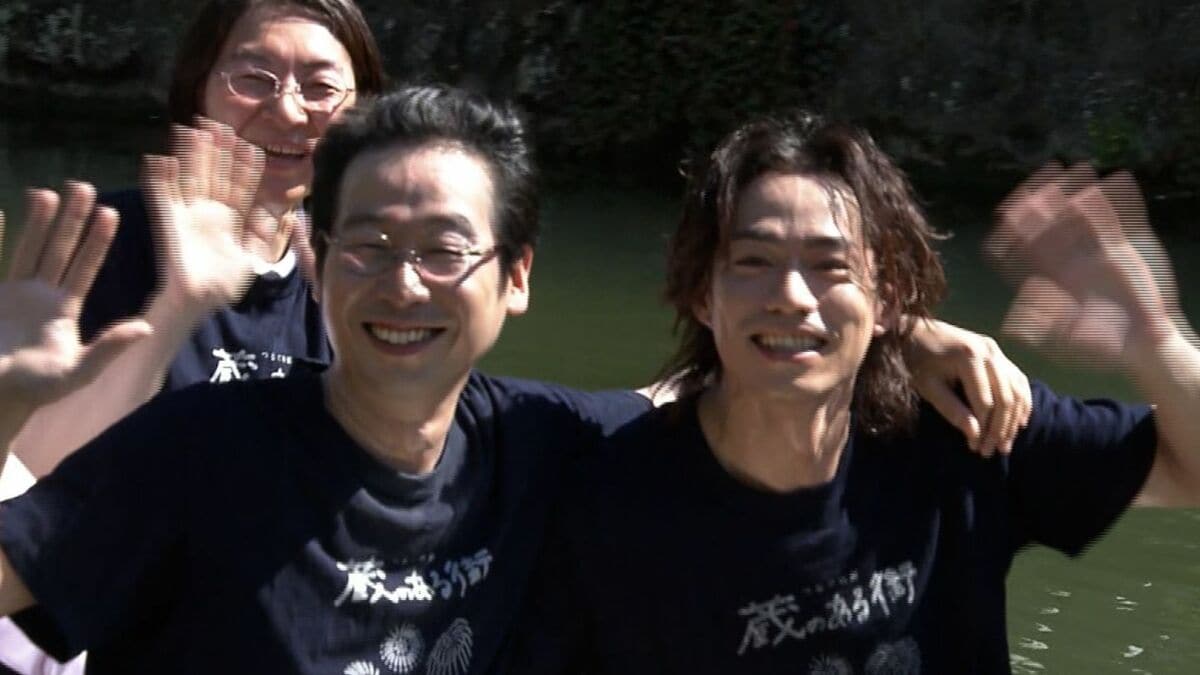
):
 newsdig.tbs.co.jp
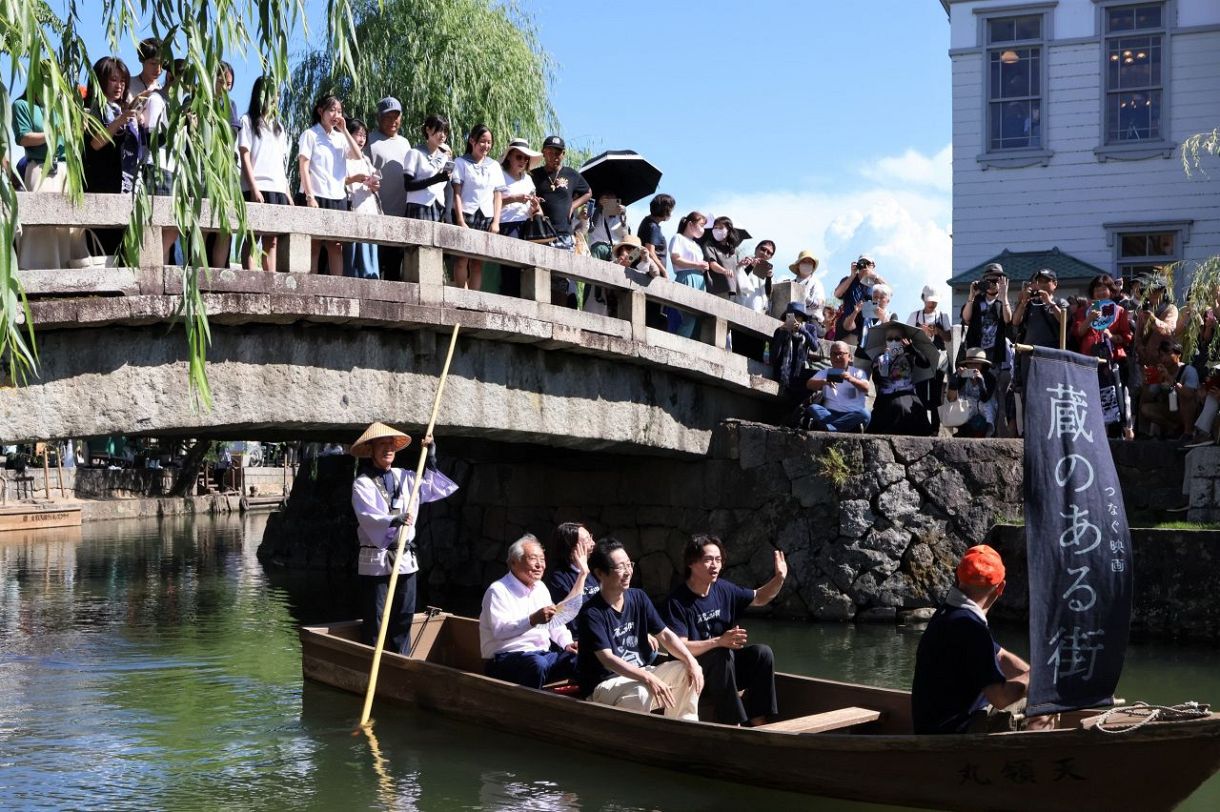
 www.sanyonews.jp
 www.youtube.com
 : https://x.com/purplearashi/status/1948721755696120206
 : https://x.com/creayang_crea/status/1948746934254247939
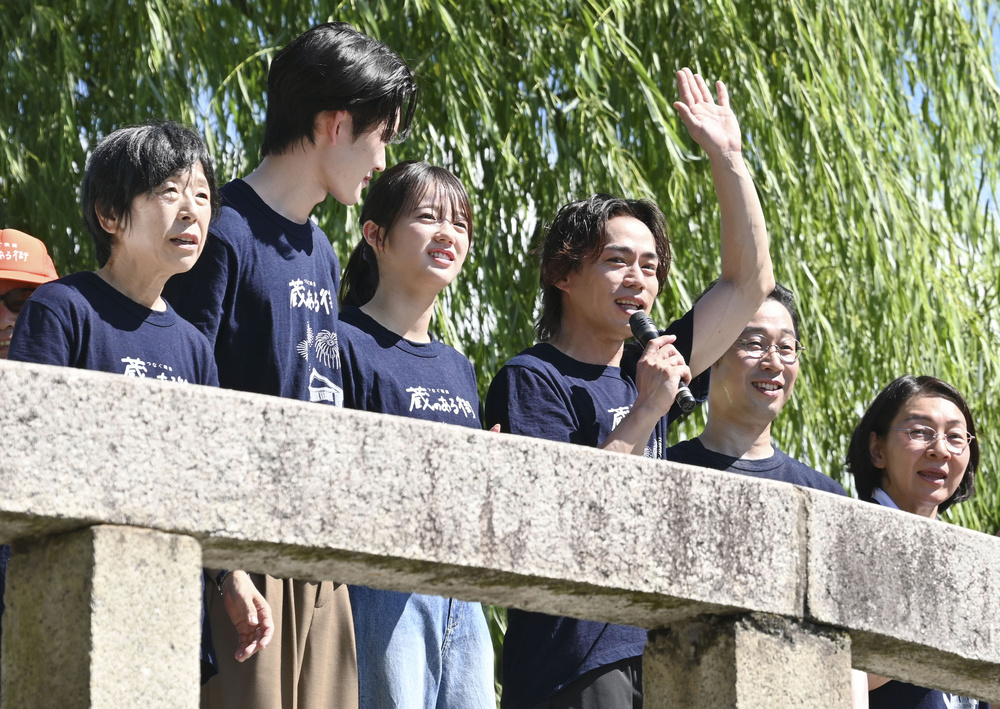

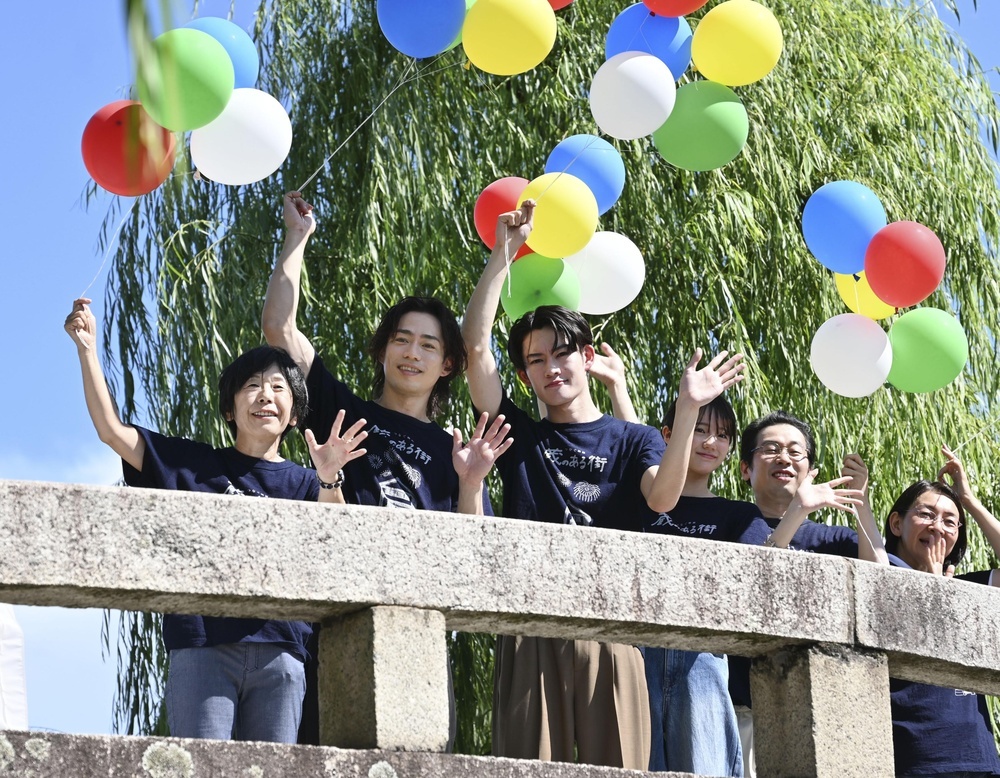
 ):
):



 Sorry, only two pieces of media can be directly embedded in one post (click on the pictures to start the videos):



 ]. Jun even made him switch between cold and hot baths several times in a row, because he had read that this prevents muscle fatigue, even though Dai said he hates cold baths. Jun said he felt kinda guilty after learning that Dai usually doesn’t like to go and that he probably only agreed out of kindness towards him.
 (please, activate the automatic translation feature):


 ▼ Read the article here: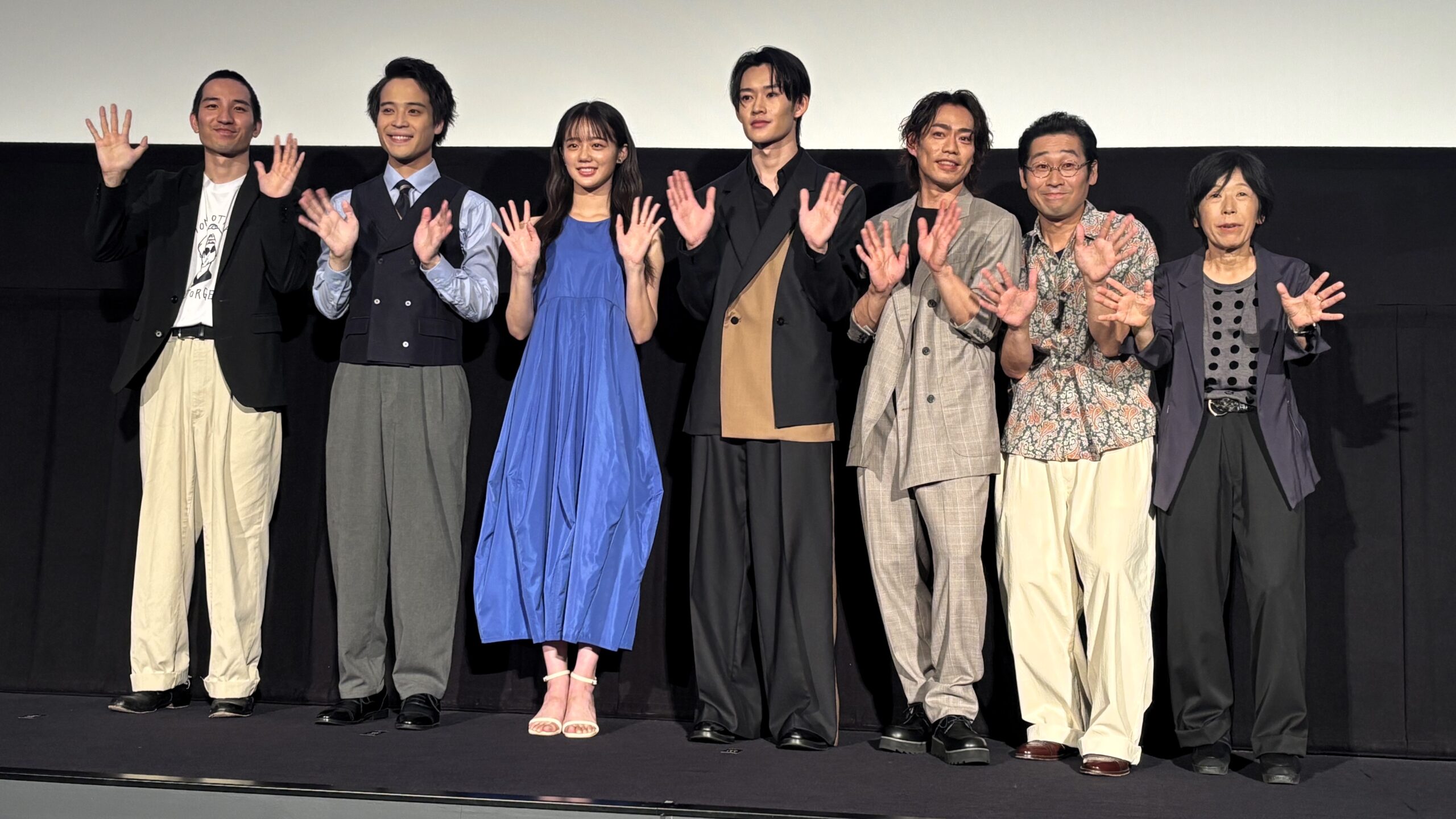










 :
: :
: For more details









 ⛸
⛸

 Please experience the special moment where legends intersect at the venue

 Notice to all elementary school students in Kurashiki


 :
:

 What stands out is how many people report that they got misty eyed or started outright crying during the movie due to the emotional story and that they were particularly moved by Beniko's (played by Runa Nakajima) character arc.







 :
:




 『#TownWithWarehouses』


 )
) Collaboration with the film “The Tales of Kurashiki”, set in Kurashiki
 Crowdfunding campaign offering exclusive gift vouchers redeemable at local shops and shopping streets!
 Follow us and let's make Kurashiki's winter sparkle together!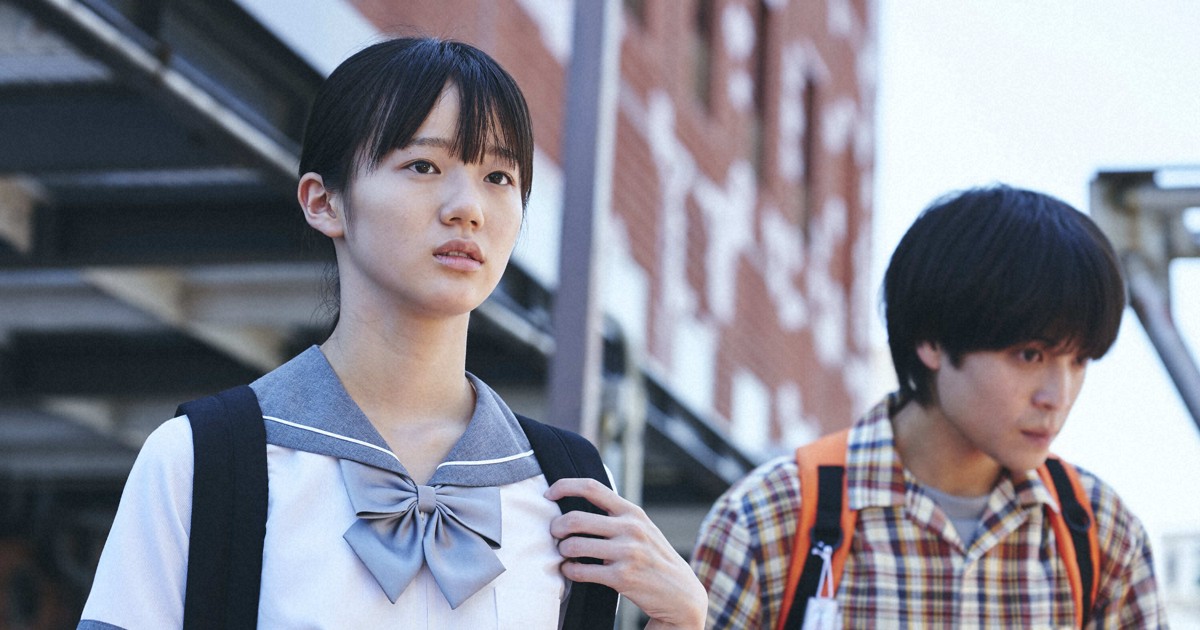




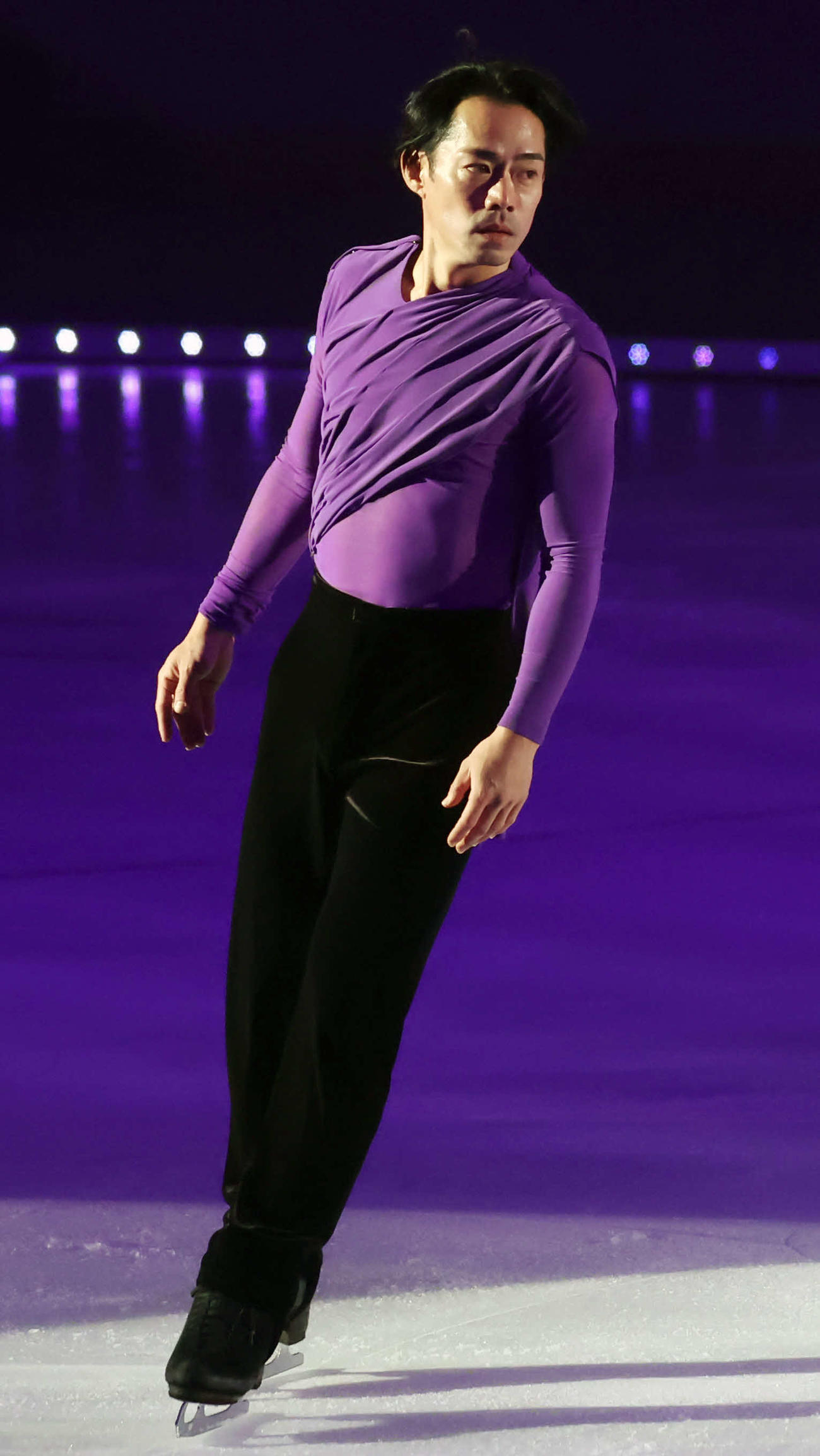

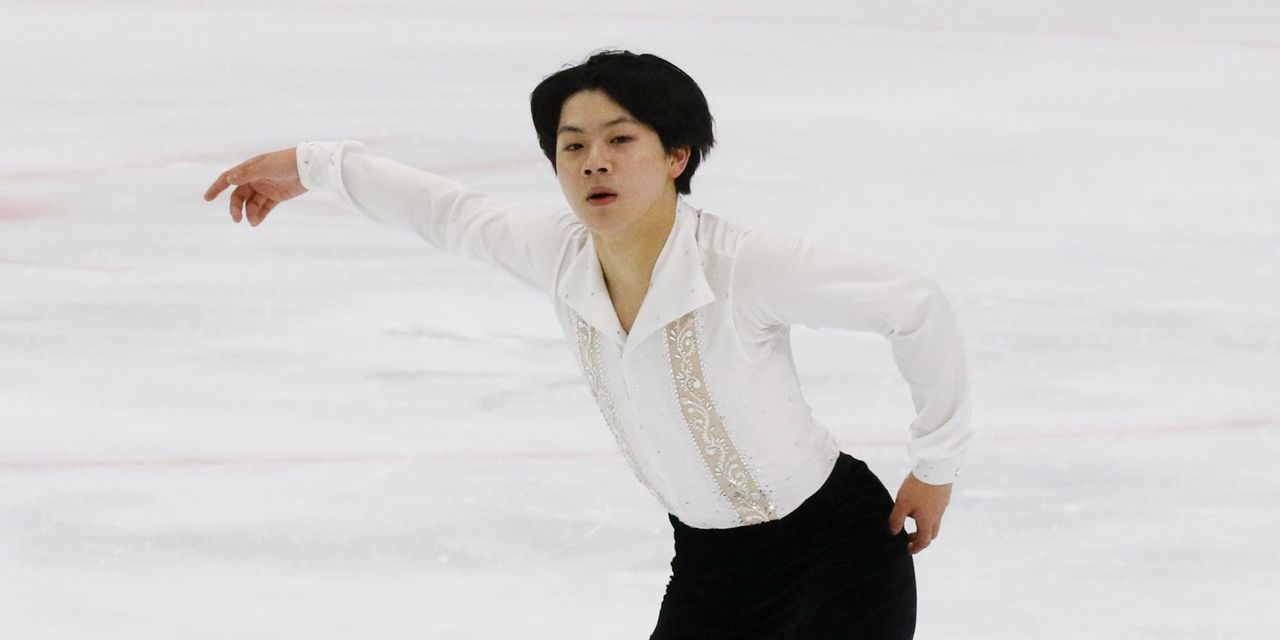
 At the beginning of the program, he entered with a 3Lz. I could feel the air of determination as if he was saying, 'I will definitely land this!' I couldn't stop shaking. It was truly a beautiful jump


