
Navigation
Install the app
How to install the app on iOS
Follow along with the video below to see how to install our site as a web app on your home screen.
Note: This feature may not be available in some browsers.
More options
You are using an out of date browser. It may not display this or other websites correctly.
You should upgrade or use an alternative browser.
You should upgrade or use an alternative browser.
ISU Congress: Age limit to gradually increase to 17
- Thread starter sissyfritz
- Start date


- Joined
- Jan 23, 2017
Someone will always be getting short-changed/screwed. If they do it based on being of age at the time of the competition off the top of my head here are situations that would come up of athletes being screwed by the age limit
- Athletes only qualify based on their birthday for 1 GP event so they can't get the GPF
- Athletes age-eligible for Worlds or the Olympics based on their birthday but not able to go to a competition in time to get their TES minimums to go to Worlds/Olympics
- Theoretically speaking if the minimum is set by competition date then the age maximum should as well - an athlete could compete all season as a junior and miss junior worlds due to their age
Also athletes whose birthday fall in the middle of a competition can make it messy. Which happens a dozen times at any large weekend USA Swimming age group meet where you have a couple hundred athletes entered. USAS uses age on first day of the meet to determine which age category you enter for the whole meet and there have been times when you’d have a scenario where someone entered as a 13-14 turned 15 on the second day of the meet, and then be entered in a 13-14 event on day 3 of the meet, swim a national are group record for 14& unders but IIRC it then didn‘t count as a NAG because that was no longer the athlete’s age even though that was their competition age group.
Too young to do a senior short program but then old enough to do a senior long program on the same weekend seems rather awkward for skating.


- Joined
- Mar 3, 2014

Also athletes whose birthday fall in the middle of a competition can make it messy. Which happens a dozen times at any large weekend USA Swimming age group meet where you have a couple hundred athletes entered. USAS uses age on first day of the meet to determine which age category you enter for the whole meet and there have been times when you’d have a scenario where someone entered as a 13-14 turned 15 on the second day of the meet, and then be entered in a 13-14 event on day 3 of the meet, swim a national are group record for 14& unders but IIRC it then didn‘t count as a NAG because that was no longer the athlete’s age even though that was their competition age group.
Too young to do a senior short program but then old enough to do a senior long program on the same weekend seems rather awkward for skating.
I am not seeing this as particularly an issue with skating.
Many skaters are not rushing to leave juniors the minute that they can, and do junior long programs at a "senior age" for years (my fav Andrew T. comes to mind).
The issue would be if a skater stayed junior "too long" and aged out before the LP. But presumably the skater is smart enough to figure that out and go senior that year.


- Joined
- Mar 14, 2007
It was an overwhelming vote.
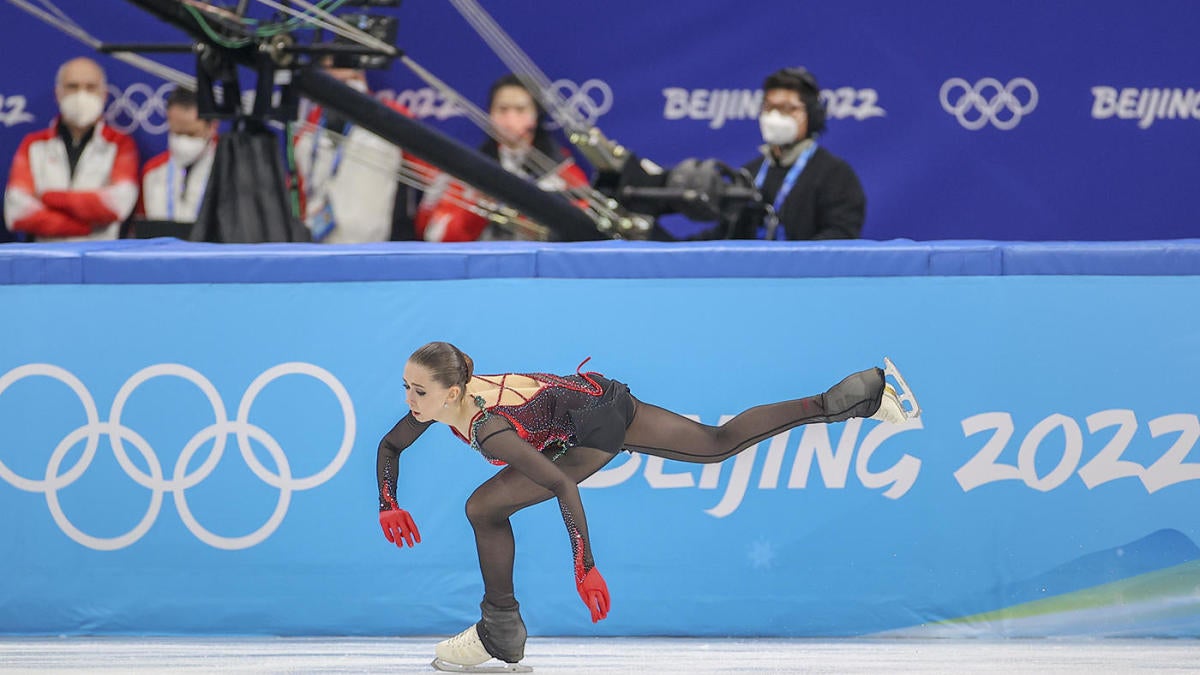
 www.cbssports.com
Figure skating minimum age raised to 17 for 2026 Olympics in light of Kamila Valieva scandal
The change was reportedly scheduled to take place even before Valieva's positive test
www.cbssports.com

- Joined
- Sep 22, 2019
Good point, I hadn't thought about the effect on pairs with large age gaps.The same senior age minimums will apply in those disciplines.
There are many fewer male skaters who are ready for seniors before 17 in any of those disciplines, let alone who have already peaked.
For pairs that have relied on a large age difference in order to have a large enough size difference while learning the difficult lifts etc., there will be a longer period of time when teams will not be able to compete at senior level because of female partner's age. A team with a >4-year age difference will have at least one year when they won't be eligible for either junior or senior competition; under the old rules, that only affected teams with >6 year age differences.
Men and ice dance are my favourite disciplines, so I guess nothing much changes for me then

Interesting to see how this will affect the ladies skating. This will take a toll on Eteri pre-pubescent champions the most but with the Russian ban already in place, its hard to see its effect. Had a wonder at how this age limit would have affected previous skaters major tournament medals and the effects are:
Julia - nothing
Evgenia - Olympic silver, Worlds bronze, Euro silver (although with Alina out of the picture she would have easily had olympic gold)
Alina - nothing
Alena - nothing
Anna - Olympic gold, Euro silver
Alexander - Olympic silver, Euro bronze
Interestingly the only Worlds medal Eteri would have had would be Elizabet 2019 silver although it would have been gold because Alina would have been too young.
Julia - nothing
Evgenia - Olympic silver, Worlds bronze, Euro silver (although with Alina out of the picture she would have easily had olympic gold)
Alina - nothing
Alena - nothing
Anna - Olympic gold, Euro silver
Alexander - Olympic silver, Euro bronze
Interestingly the only Worlds medal Eteri would have had would be Elizabet 2019 silver although it would have been gold because Alina would have been too young.

- Joined
- Oct 20, 2017
GOOD!!!...no more 15 or 16 year old Russians dominating ladies with programs that look the same...honestly, they should have made it 18...17 is a weird number...
If you are old enough to compete, you should be old enough to take responsibility and suffer consequences...
If you are old enough to compete, you should be old enough to take responsibility and suffer consequences...
Last edited:

GOOD!!!...no more 15 or 16 year old Russians dominating ladies with programs that look the same...
lol, raising the age limit isn't really all that likely to stop Russian domination. Only 3 skaters on their senior national team (main & reserve) last year were under 17 years old. Russia ladies won 12 of 18 available medals in last years GP series, that number drops only to 7 if we take out the under 17 skaters - and that's working under the theory that the 17+ year old Russian that would have been at the event in lieu of the 15/16 year old wouldn't have medaled.


- Joined
- Dec 4, 2004
I think the Russians themselves have stopped ISU domination. Watch for a Soviet Skating Union.lol, raising the age limit isn't really all that likely to stop Russian domination. Only 3 skaters on their senior national team (main & reserve) last year were under 17 years old. Russia ladies won 12 of 18 available medals in last years GP series, that number drops only to 7 if we take out the under 17 skaters - and that's working under the theory that the 17+ year old Russian that would have been at the event in lieu of the 15/16 year old wouldn't have medaled.


- Joined
- Nov 12, 2013
Halelujah. Somebody who thinks the same as me, that it should be done on an event by event basis, rather than having an arbitrary date for each season.
That is the way it is done in motorbike racing. You have to have reached the minimum age for your class on the day of qualifying. For example, back in 2002, Jorge Lorenzo (ESP) missed the first 2 rounds of the 125GP World Championship because he was underage (he was 14, and the minimum age was 15). But, he was able to join for Round 3, the Spanish Grand Prix, because his 15th birthday was on qualifying day. And because they have since raised the minimum age, he will forever hold the record for the youngest ever grand prix rider.
When the 2-stroke 125cc bikes were replaced by 4-stroke 250cc bikes in 2012, the minimum age was raised to 16. So, taking an example from this season, David Muñoz (ESP) missed the first 7 rounds of the Moto3 World Championship because he was 15. But was able to join the championship at the 8th round, the Italian Grand Prix. His 16th birthday was actually on race day for Round 7, the French Grand Prix, but he could not race because he was underage the previous day when qualifying was held.
The last time I suggested this for figure skating, somebody replied that it wouldn't work, because the different requirements for the levels would mean preparing 2 sets of programmes, and because the minimums for Juniors don't carry over to Seniors. Well, there are simple answers to that:
- Skaters moving from Juniors to Seniors keeping their previous season's Junior programmes and just preparing new programmes for Seniors.
- The ISU changing the rules for the minimums so that Junior records count for Seniors.
But, this is the ISU. They won't change the rules to make things more user-friendly.
It is the skaters that are born during July, August and September that I feel most sorry for. They have reached the minimum age by the time the Senior season starts in earnest in the autumn, but they have to remain in Juniors for another full year because they were not that age at a date during the off-season.
No, doing it event by event is much fairer on everybody.
CaroLiza_fan
This sounds very reasonable, I support this criteria.
Raising the age limit sounds like a good idea. Post-puberty women now get more chance to fight for medals, and I am hoping coaches adjust their methods accordingly to make their juniors fit to compete past 17.
I have nothing against raising the age minimum, but I don't think it will improve anything regarding doping, abuse of minor skaters, injuries, eating disorder ....
The competition and pressure for juniors is imho on the same level as for seniors. And the only problem I have with the decision of the ISU congress is that they think they sufficiently adressed the things I mentioned and so we won't see any change for some more years. And that's just a shame.
The competition and pressure for juniors is imho on the same level as for seniors. And the only problem I have with the decision of the ISU congress is that they think they sufficiently adressed the things I mentioned and so we won't see any change for some more years. And that's just a shame.
- Joined
- Mar 2, 2014
Why raise the limit by 2 years, why not just 1 to prevent a repeat of the Valieva situation? I don't get it.
- Joined
- Mar 24, 2018
Not that I know of, but there were a few countries that raised concerns at the Session who almost certainly voted against the resolution (Israel, Russia). Interestingly, there were several (surprising) nations like Austria, the USA, Serbia, Poland, Armenia, etc. that spoke up in favour of changing the age to 16 instead of 17, but that doesn't necessarily mean that they voted against the resolution. Arguably the most dramatic moment of the debate came when a different spokesperson for Austria stood up and basically made it clear that they were not in agreement with their colleague.do we have a list of those Members who woted against or abstained?
- Joined
- Mar 3, 2014
Eric Radford (elected skater rep from pairs ETA:and singles) evidently spoke passionately in favor of the amendment.
So much for the skaters themselves feeling put upon or hurt by the raising of the age. Or that skaters who were world champions would not want to raise the age.
ETA: Can't embed the quote without the OP, not posting for the remarks about Kamila, just quotes from Eric.
Eric also apparently asked for open, not secret, balloting. The skaters knew what they were doing when they elected him
So much for the skaters themselves feeling put upon or hurt by the raising of the age. Or that skaters who were world champions would not want to raise the age.
ETA: Can't embed the quote without the OP, not posting for the remarks about Kamila, just quotes from Eric.
Eric also apparently asked for open, not secret, balloting. The skaters knew what they were doing when they elected him
Last edited:
- Joined
- Mar 24, 2018
I know he's not everyone's favourite skater, but he was very eloquent at yesterday's session. He came prepared with facts and figures from the recent study that had been done in order to assess the views of the skating community with regards to this resolution. The results of which were, frankly, not debatable at all. Thousands of participants (skaters, coaches, trainers, etc.) responded in favour of this change. Specifically, 86% of all respondents.Eric Radford (elected skater rep from pairs) evidently spoke passionately in favor of the amendment.
So much for the skaters themselves feeling put upon or hurt by the raising of the age. Or that skaters who were world champions would not want to raise the age.
Eric also apparently asked for open, not secret, balloting. The skaters knew what they were doing when they elected him
His plea for open balloting, despite receiving perhaps the biggest cheer of the day, fell upon deaf ears. The ISU Congress went straight to a secret ballot.
Similar threads


- Replies
- 0
- Views
- 379
- Replies
- 11
- Views
- 2K

- Sticky
- Replies
- 0
- Views
- 205