Enigma: Bolero by Kamila Valiyeva (part 3)
Part 1: Bolero: Enigma
Part 2: Enigma Bolero: Bejart's ballet, Costner and other programs
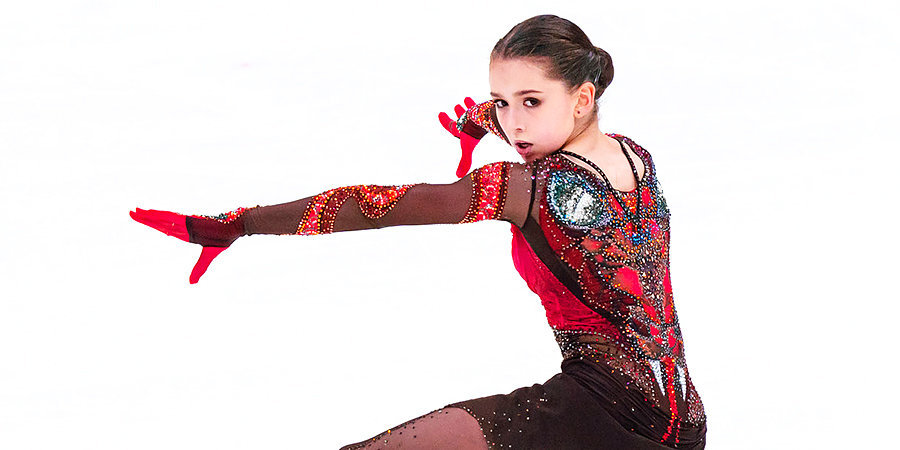
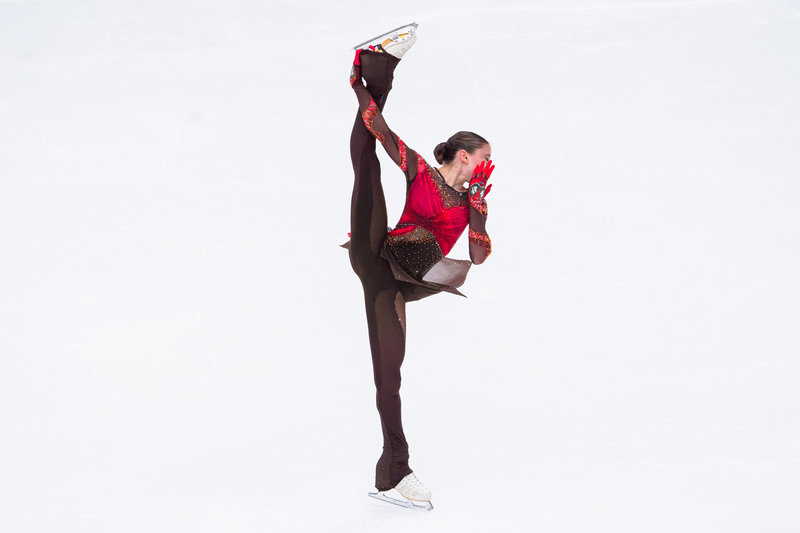
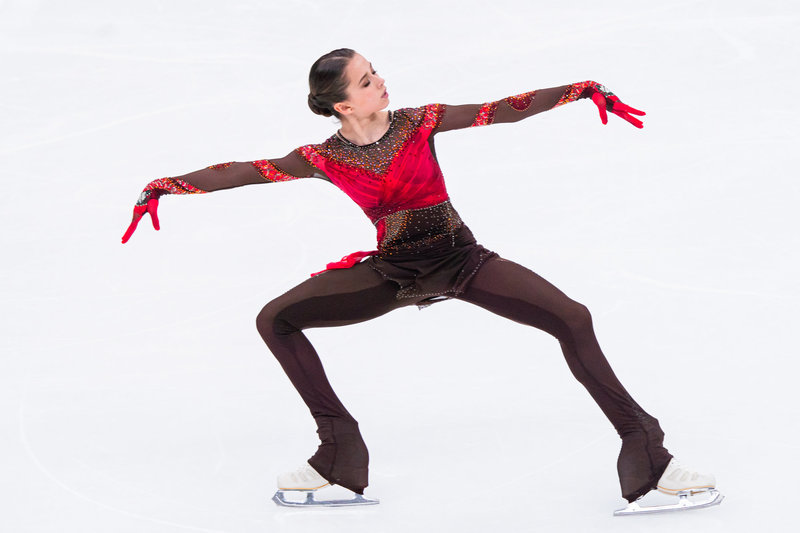
Let's start with Kamila's costume. I really like it. This is the most wonderful costume I've seen lately. I would very much like to think that the time will come and it will enter the unofficial treasury of figure skating rarities, like Alina's red tutu. For all its colourfulness, it is very thoughtful and ambiguous.
It is often said that "Bolero" is a textbook for schoolchildren on composition for the orchestra, since all instruments are involved in the composition. But every musical instrument in the orchestra has its own timbre and the melody can be perceived in a certain sound coloration.
Since "Bolero" is a rhythm and a melodic line, sounded by different instruments solo and together, when changing the instrument, the colour of the perception of sound changes. For example, according to V. Kandinsky's table "Parallels of colour and sound" ** light blue is a flute, green is a violin, and red (bright) is fanfare, etc. In my opinion, Kamila's costume reflects this 'relay race' of timbres, or sonic colours.
Her costume is not banal and laconic, as we would habitually think, remembering about Bejart's ballet, but "boleric", colourful and, I think, harmonises with the sounds and colours of the melody when moving from instrument to instrument. It can be said to visualize the 'flow' of the melodic line.
Moreover, it is aesthetically attractive (by Olga Ryabenko?), Especially in movement. And Kamila's movements should, as she herself said, "being so plastic as if to repeat the movements of a snake." And about the costume: "... if you look at my costume, you will understand everything".
Another meaning of Kamila's costume is a more unambiguous reference to the appearance of a snake, perhaps a dangerous, but also very, very beautiful snake. It can be mysterious, even fatal, but irresistibly enticing and hypnotizing. Even in children's cartoons, dancing snakes are often something of the most mysteriously attractive and frightening at the same time (remember "Mowgli" with music by Gubaidulina and a riot of colors).
If you've ever touched or stroked a live snake, you'll remember the smooth, silky feel of touching soft and warm (they are cold-blooded and therefore quickly heat up when touched). And if you observed them in nature, of course, you understand how light, silent, fluid and impetuous they are in movement, how quickly they can uncoil and involve in their deadly dance. And even just 'spicy' stories about exotic countries with the scent of tropical flowers, the viscous music of a flute in the hands of a fakir, and dancing snakes with mysterious spots on the skin can plunge you into a hypnotic enchanted dream full of bizarre visions. Exactly this is the music and magic of "Bolero".
And again, in a nutshell about the musical features of "Bolero".
On the one hand, it is a rhythm continuously beaten by a drum and a constant, strictly maintained moderate tempo. Nothing accelerates and for figure skaters this is an additional problem, you need to constantly feel this rhythm, live in it with all the technical super tasks. Especially in Kamila's program with its quadruple jumps, because until now none of the singles skated Bolero with ultra-s.
Isn't this a challenge? Why not all the jumps in the second half?
On the other hand, it is a change, addition and unification of all new instruments (from flute to clarinet, then to bassoon, to oboe, etc.)
The most dramatic build-up of tension with an orchestral crescendo. For skaters, the increase in sound and power when all instruments are turned on means a gradual change and strengthening of the choreographic language, dramatization of movement (not flickering or "waving" hands).
If executed correctly, this program will have the same addictive effect of inevitable involvement in the flow of the serpentine dance. It won't be Carolina's melancholy-detached and enchanted midday tale or the gradual and inspired ascent to the top of the mountain and destiny, as in Torvill-Dean. And, of course, it will not be a bravura-sudden, non-musical, not at all 'Ravel's' triumph, like Plyushchenko's. And I like that, apart from some reminiscences of Bejart's choreography, Kamila's program does not strive to reflect the ballet-Bezharov's growth of passion (M. Plisetskaya) or the intensification of ecstatic exhaustion of feelings (H. Donn).
It will be a magnetic dance, subtly thought out, almost mathematically calculated, as in real snake attacks. This beautiful, mysterious snake inexorably and skillfully draws you in this, only known to her, plan, beckons and does not let go, checks and holds. It can be a fascinating maze of chains of steps, gestures, rotations at the beginning of the program, which gradually, as the crescendo builds up, turn into wider movements, arcs, a stringy cantilever, kicks (I don’t know if that’s what it should be called).
The tension is growing steadily. Remember that snakes heats up when touched? So this colour-sound amplification is transmitted to the viewer when carmine-red fanfare and dark-burgundy saxophones sound. And Kamila curls in a whirlwind of her costume's colours and her incomparable, indescribable spins and sequences.
A beautiful and skillful snake that knows its strength, appreciates the art of withstanding long intense confrontations, able to hypnotize and plunge into a trance. A beautiful divination - both strange and delightful.
"Bolero" by Kamila and Team Tutberidze will still be honed - both technically and choreographically. But even now, even with all the flaws, the program makes you fantasize, review and admire.
Of course, this is not some cheap dance hall, and therefore Urmanov's commentary is not entirely clear: “A complex program, the musical accompaniment to it is complex. Maybe it's too early for Kamila, I don't know. I'm not sure yet if she understands what she's skating to. " If he was referring to a dancer in a tavern, then Bolero is not only a ballet by Bejart, but also a favourite orchestral work by conductors, the interpretations of which can be many, not necessarily adult-passionate.
There are also cartoons (thanks to the commentators for the links)
Harry Bardeen
https://www.youtube.com/watch?v=HDT5QTP57MM
Ivan Maksimov
https://www.youtube.com/watch?v=L6DFGSY05IQ.
Dear E.A. Tchaikovskaya also said that Kamila is flying, and the music of Bolero is hammering. In my perception, this is not entirely true, since Bolero is about reaching a climax, which can be understood in different ways: it can gradually (there-there-there) "nail", but it can also lead to complete devastation or liberation, and elevation, and being pulled into a mysterious pool of secrets.
** Vassiliy Kandinsky's table: yellow - high loud sounding of a trumpet, blue light shade - flute, dark blue - cello, dark colours - double bass, organ (low tones), green - calm, stretched violin sounds green to yellow - rising violin tones, green to blue - viola with a mute, red (bright) - a strong fanfare, red of a cold tint - middle and low sounds of a cello, red pink tint - a pipe, orange - viola, purple - an English horn, purple saturated shade - oboe, low bassoon sounds
----
From:
https://www.sports.ru/tribuna/blogs/taniaseren/2842309.html



 Have you noticed that it has over half a million views on Youtube already. The last Saturday one I mean. Easily surpassing Sasha's new program numbers or Anya's at the first stage of Kubok Rossii. And at the moment even surpassing Medvedeva's test skate numbers. And judging by all the feedback, people love this program and adore Kamilchik!

 It seems to me they have a similar character on the ice (a champion's character!) and style. They're both excellent at technical elements like spins and jumps and they can express a lot with their body movements.