

So are you saying that because the woman who made claims of sexual abuse did not report it to the police then that invalidates the truthfulness of her story?That's all I had to read to dismiss anything that followed as something to be taken seriously. In my country, you get away from the perpetrator as fast as you can and go to the police. End of story. They would have located and picked him up so fast it would have made his head spin.

Navigation
Install the app
How to install the app on iOS
Follow along with the video below to see how to install our site as a web app on your home screen.
Note: This feature may not be available in some browsers.
More options
You are using an out of date browser. It may not display this or other websites correctly.
You should upgrade or use an alternative browser.
You should upgrade or use an alternative browser.
Papadakis publishes book; Cizeron challenges claims
- Thread starter BlissfulSynergy
- Start date


- Joined
- Jun 21, 2003
I believe that this claim is factually incorrect. In our country 2/3 of sexual assaults are never reported.In my country, you get away from the perpetrator as fast as you can and go to the police.
There are many reason why this is the case, the main one being that victims suffer more from reporting this type of crime than the criminals do.


So are you saying that because the woman who made claims of sexual abuse did not report it to the police then that invalidates the truthfulness of her story?
Ridiculous.
Well, that was an unfortunate response. I was asking the question to try to gain understanding of why you raised the question of whether the person contacted the police? With your dismissive response, I'm still unclear about your rationale.Ridiculous.


At the time of the incident, NS was not famous, and I doubt if he had many fans. It was only later, when he was more successful and well-known, that the incident was reported.It's a documented fact that it takes enormous courage, more than most of us have and certainly more than any of those 'fans and some of the fraternity' have, to try and stand up alone and isolated as they are made and speak up against someone with fame on their side. And sometimes it takes time.
In our country 2/3 of sexual assaults are never reported.
If no one knows something exists, it sure as heck can't be quantified.

- Joined
- Apr 23, 2018

People do all the time. It's blinkered and complacent, given that in every single Western country (let alone much of the rest of the world with somewhat laxer views of women's and minors' rights) there are many many instances, even now, of victims doing just that, going to the police (or as children telling their parents) and being flat out called liars or law enforcement dragging their feet and dismissing the complaint, and lawyers being paid to drag the victims through the mud and destroy them. Again, the Coughlin case showed exactly how figure skating reacts to girls, minors, trying to speak up.So are you saying that because the woman who made claims of sexual abuse did not report it to the police then that invalidates the truthfulness of her story?
And this will be my last look at this thread. It never ends other than in ugliness.
Last edited:
Well, this is a fallacious point. The fact that people don't report assaults to the police does not mean that they don't share their stories with anyone.If no one knows something exists, it sure as heck can't be quantified.
I was asking the question to try to gain understanding of why you raised the question of whether the person contacted the police.
Common sense question on my part. The police are used to handle crimes. It's their job. The fact that some may not choose to report a crime doesn't make my question any less common sense.
If a formal database is built to quantify X by including "stories," we're all in trouble in my country. Big trouble.Well, this is a fallacious point. The fact that people don't report assaults to the police does not mean that they don't share their stories with anyone.


- Joined
- Mar 3, 2014

If a formal database is built to quantify X by including "stories," we're all in trouble in my country. Big trouble.
And if the amount of sexual assault in my country is determined only by those reported to the authorities, we are in trouble. Big trouble.
Although since my country is not France, what this has to do with a French person writing a book published in France about her own experiences, is less clear.

- Joined
- Sep 1, 2020
Gracie filed a complaint at the time of the incident. U.S.figsk and Safesport were fully aware but dithered and dallied and did absolutely nothing. This is part of the problem with Safesport. The problems go deep; Safesport is still currently being investigated by Congress for financial irregularites, questionable hiring practices, inconsistent and suspect handling of cases affecting athletes in many sports, etc.Quite possibly the victim was well aware of how 'fans and some of the fraternity' react at such things. See the way 'fans and too many of the fraternity' reacted to the Coughlin incident and attacked the victims - to the point for some of those girls of destroying what was left of their lives - and have gone on patting themselves on the back for being such a wholesome and all good sportspeople community. Including several who recently have been lauded by 'fans and some of the fraternity' here and on other forums.
It's a documented fact that it takes enormous courage, more than most of us have and certainly more than any of those 'fans and some of the fraternity' have, to try and stand up alone and isolated as they are made and speak up against someone with fame on their side. And sometimes it takes time. Ask Ashley. Ask Gracie.
It took Gracie writing a book years later, simply to honestly tell the full story of her career, for Safesport and U.S.figsk to get rattled and then start trying to save face, ending up in more harm, inconsistencies, and chaos. The person who had harmed Gracie had been allowed to compete at the same competitions where she was entered in the aftermath of the incident.
 After Gracie's book was released, Safesport finally pulled the case out of their inactive backlog and banned the perpetrator, without having investigated or done a thing at the time of the initial report or at any point. Much less did they try to protect Gracie. The banning of Gracie's attacker happened three years after he had retired, only because of the revelations in Gracie's book.
Gracie also brought some sense of closure and three-dimensionality to the John Coughlin story. Safesport had simply dropped the claims against Coughlin after his death. They cared absolutely nothing about the women Coughlin had harmed. Nothing was done to provide assistance or counseling to them. Ashley said nothing at the time she was abused (age 17) because she knew her career would have been over before it started.
Meanwhile, U.S.figsk and people in skating, including fans, seem to believe Safesport is the answer and the remedy, when it is not. Again, there is an atmosphere of fear and silence, triggered online shaming and blaming without factual information, cyberbullying, and the lumping of every incident together. No one is challenging Safesport for accountability, nor providing leadership that focuses on awareness, prevention, and especially effective reporting, immediate investigation, liaising with law enforcement when necessary, full and timely resolution of claims, guarding against false claims, and providing reliable resources for athletes in need.
Last edited:
And if the amount of sexual assault in my country is determined only by those reported to the authorities, we are in trouble. Big trouble.
Although since my country is not France, what this has to do with a French person writing a book published in France about her own experiences, is less clear.
The sexual assault conversation stemmed from Nik Sorensen's name being brought up. Sorensen's connection to Cizeron and his new partner as well as Cizeron's reaction to what Sorensen was accused of affected everyone - including the author and of course affecting her experiences surrounding the break with Cizeron.
- Joined
- Jun 21, 2003
That is not so clear. Law enforcement, government agencies, scholars who study such phenomena, even people like school officials have legitimate ways of obtaining information. They don't just make these numbers up.If no one knows something exists, it sure as heck can't be quantified.
Anyway, the point is that me telling the victim of a sexual assault that he or she ought to report it to the police no matter what the consequences might be -- that is not very useful to the victim who must actually face those consequences.
The victim faces being assaulted twice. Once by the perpetrator and then by society, public opinion, loss of job, being called a liar. etc. I can see where some victims dread the second ordeal, and often wait years before they say anything, if ever. They would rather bear the ills they have than fly to others that they know not of.
That is not so clear. Law enforcement, government agencies, scholars who study such phenomena, even people like school officials have legitimate ways of obtaining information. They don't just make these numbers up.
I searched my way rather than accept the word "stories" as a previously posted answer. Result here:
Anyway, the point is that me telling the victim of a sexual assault that he or she ought to report it to the police no matter what the consequences might be -- that is not very useful to the victim who must actually face those consequences.
I didn't see anyone suggesting it in this thread. The choice an individual makes is their business. Having said that, a simple question of whether or not someone went to the police regarding a crime isn't uncommon. A yes or no would have sufficed, if anyone even knew. There are a slew of people who follow these cases in skating and I thought someone may have known.
The victim faces being assaulted twice. Once by the perpetrator and then by society, public opinion, loss of job, being called a liar. etc. I can see where some victims dread the second ordeal, and often wait years before they say anything, if ever. They would rather bear the ills they have than fly to others that they know not of.
The Me Too movement had teeth, did it not? Look at the high-profile men who went to jail.


- Joined
- Jul 26, 2003
Not in the USA.That's all I had to read to dismiss anything that followed as something to be taken seriously. In my country, you get away from the perpetrator as fast as you can and go to the police. End of story. They would have located and picked him up so fast it would have made his head spin.
I live an hour or so from Hartford, CT, where the assault occurred.
I believe that this claim is factually incorrect. In our country 2/3 of sexual assaults are never reported.
There are many reason why this is the case, the main one being that victims suffer more from reporting this type of crime than the criminals do.
Whatever the percentage of people reporting a rape is, the fact is, in Hartford, CT, USA, that only 2.0% of REPORTED cases lead to a conviction.If no one knows something exists, it sure as heck can't be quantified.
https://www.nbcnews.com/specials/sex-assault-convictions/
"From crime to conviction
A small fraction of the violent sex crimes reported in cities across the U.S. end in conviction.This bar chart shows the percentage of violent sex crimes that end in a conviction in cities across the U.S. In Los Angeles it’s 1.4%; Chicago, 2.0%; In Hartford, Conn., and Philadelphia, for rape, it's 3.6%; Dallas, 3.7%; San Francisco, 5.1%; Boston, 5.8%; and San Diego County, 7.7%.
Los Angeles."
And what is it like to be interviewed reporting a rape?
Unfounded Sexual Assault: Women’s Experiences of Not Being Believed by the Police - PMC
One in four women will experience sexual assault in their lifetime. Although less than 5% of sexual assaults are reported to law enforcement, one in five cases reported to police are deemed baseless (by police) and therefore coded as “unfounded.” ...
 pmc.ncbi.nlm.nih.gov
And what happens in the case of the unlikely conviction of an apparently nice, white athlete? Consider the case of Brock Turner, Stanford swimmer, who was witnessed by two passers by assaulting an unconscious woman.The women in this study who experienced a sexual assault and reported the assault to police were hopeful that police would help them and justice would be served. Instead, these women were faced with insensitivity, blaming questions, lack of investigation, and lack of follow-up from the police, all of which contributed to not being believed by the institutions designed to protect them. The findings from this research demonstrate that police officers must gain a deeper understanding of trauma and sensitive communication with survivors of sexual assault.
He got six months in jail. It was California, so there was public outrage at the short sentence, but sad to say, it is not a surprising outcome in the US.
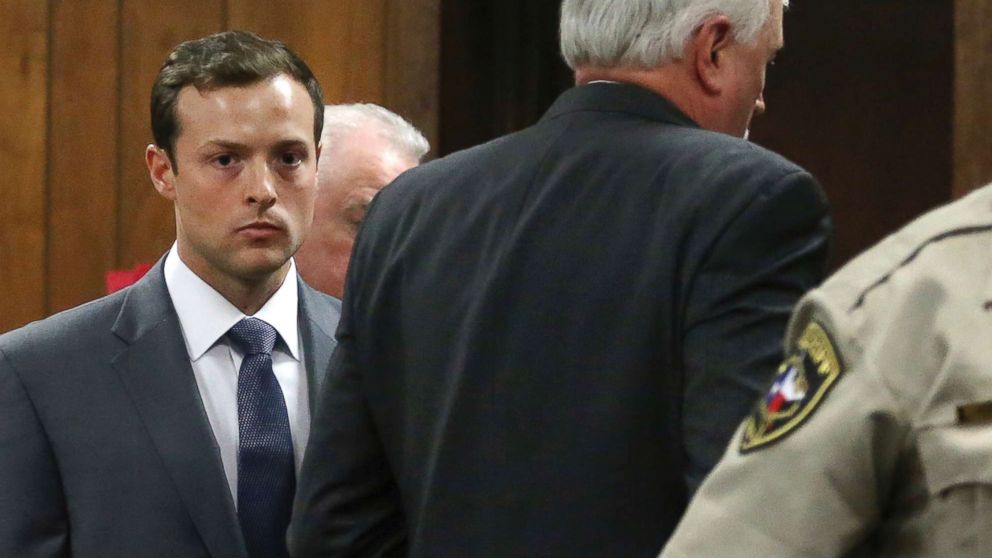
'Inappropriately light sentences' in sexual assault cases can hurt reporting of future crimes: Experts
Light sentences can impact the way the public views sexual assault cases, experts say.
 abcnews.go.com
It is surprising anyone has the courage to report sexual assaults in this country.
Common sense question on my part. The police are used to handle crimes. It's their job. The fact that some may not choose to report a crime doesn't make my question any less common sense.
I think we're having a language issue here. The point of my statement was that there are other ways of obtaining that information, which your own research confirmed. Your comment implied that if the incident was not reported to the police then there would be no way of being aware of the instances of assault that have occurred.If a formal database is built to quantify X by including "stories," we're all in trouble in my country. Big trouble.
I think we're having a language issue here. The point of my statement was that there are other ways of obtaining that information, which your own research confirmed. Your comment implied that if the incident was not reported to the police then there would be no way of being aware of the instances of assault that have occurred.
Let me make this clear, since you made this unusual comment/question: "So are you saying that because the woman who made claims of sexual abuse did not report it to the police then that invalidates the truthfulness of her story?"
I care about one thing: People who have been assaulted being safe from harm. Calling the police after getting assaulted will get an officer to come to your home or location of attack. He/She will more than likely ask if you want a PFA: Protection from abuse. And do you want to file charges. Crystal clear. No communication problem. Now, how do you know whether or not a victim didn't call the police - or was it a hypothetical on your part? I was not commenting on anything hypothetical. I was commenting on the situation regarding Sorensen. The person who started this thread brought up Sorensen and I simply asked a routine question: Was the police contacted? Since many people have mentioned this guy for years, it stands to reason someone might know the answer to my question that merely needed a yes or no answer, rather than a "So you are you saying this? Are you saying that?" I'm not saying anything. I was asking something. A statement has a period at the end of the sentence. A question has a question mark at the end of a sentence.
Thank you for your clarification. Hope you continue to be well.Let me make this clear, since you made this unusual comment/question: "So are you saying that because the woman who made claims of sexual abuse did not report it to the police then that invalidates the truthfulness of her story?"
I care about one thing: People who have been assaulted being safe from harm. Calling the police after getting assaulted will get an officer to come to your home or location of attack. He/She will more than likely ask if you want a PFA: Protection from abuse. And do you want to file charges. Crystal clear. No communication problem. Now, how do you know whether or not a victim didn't call the police - or was it a hypothetical on your part? I was not commenting on anything hypothetical. I was commenting on the situation regarding Sorensen. The person who started this thread brought up Sorensen and I simply asked a routine question: Was the police contacted? Since many people have mentioned this guy for years, it stands to reason someone might know the answer to my question that merely needed a yes or no answer, rather than a "So you are you saying this? Are you saying that?" I'm not saying anything. I was asking something. A statement has a period at the end of the sentence. A question has a question mark at the end of a sentence.


