


- Joined
- Aug 16, 2018
A little part of Shoma's talk show held on 28 April:
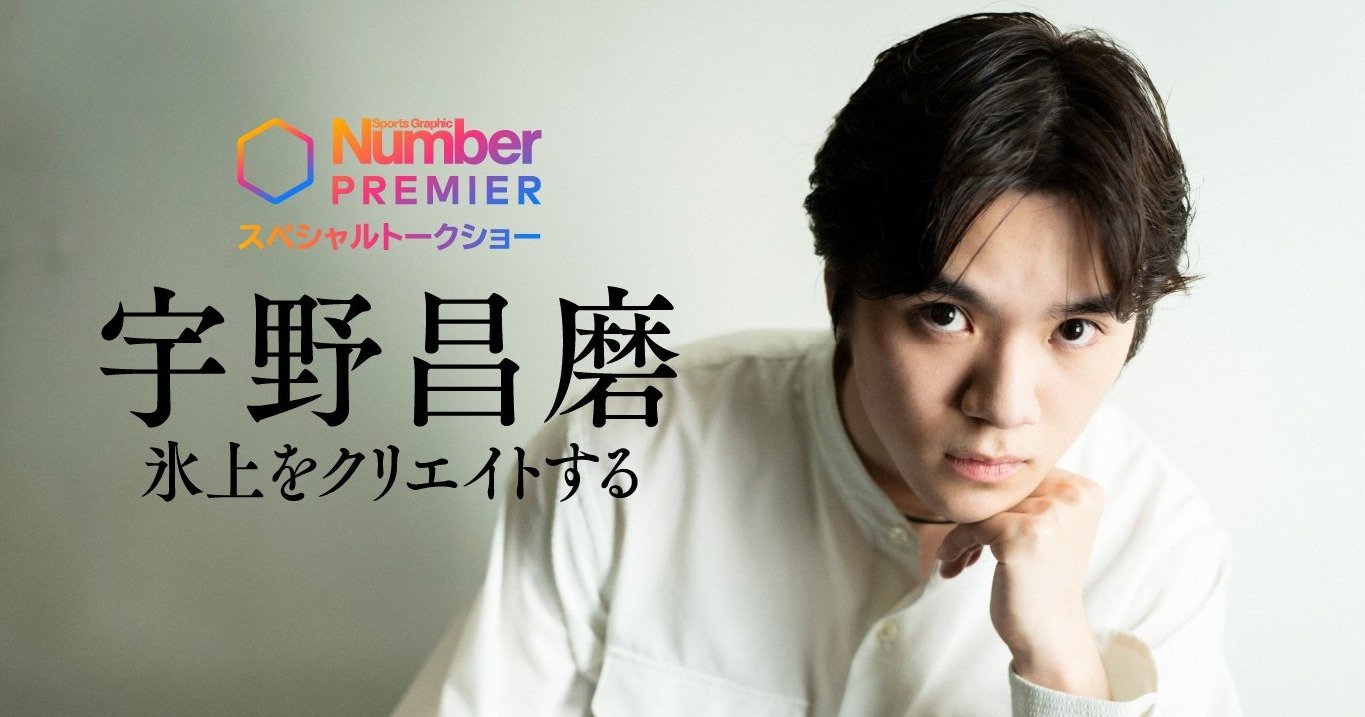
 number.bunshun.jp
What Shoma thinks about his strengths as a skater and performer:
"When I set out to create a show, the first thing I considered was: What sets me apart from Dai-chan (Daisuke Takahashi), Mao-chan (Mao Asada), and Yuzu-kun (Yuzuru Hanyu)? As I went through the process of selecting the show's setlist, the powerful performances remained, and that made me realize that those are the types of performances I have confidence in."
Why Shoma thinks his strength lies more in power, despite being known of his ability to skate expressively to gentle, emotional music:
"During my competitive career, whenever I was asked, 'What is your strength?' I would answer, 'I don't have any weaknesses.' I never really explained my image in terms of expression. In reality, I didn’t think about it much—I was simply continuing what I had developed through daily repetitive training. But recently, I've started to reflect on why my dancing conveys certain emotions the way it does, and I’ve begun channeling the energy I once devoted to jumps into my artistry instead. As a result, it's become easier to articulate my approach to others. At the same time, I’ve been able to differentiate between what I lack and what my true strengths are."
On working with a cast / team for the show:
"Everything is a new experience for me, and since communication isn’t my strong suit, I’ve struggled a bit. But I think I’m starting to get the hang of it. I’ve begun to understand the role of an ice show producer—what needs to be done and how far I should go. Teaching the cast has also made me discover aspects of my own dancing that I had been doing unconsciously. This process has helped me think about how I can apply those insights to future choreography, which makes it really enjoyable."
(asked whether he scolds the cast skaters if they haven't memorized the choreography)
"Not at all. I don’t think I could do that, but I do believe that some level of strictness is necessary to create something great. In my case, I call on Kussy (Kazuki Kushida), who is the easiest for me to talk to, and say, 'Hey, if you could do this part, the others skating with you—and even I—would feel like we have to step up as well. Would you mind doing it?' Since I can’t say it directly."
"I want to keep pushing it higher and higher. With this show, first and foremost, I want it to be a meaningful experience for us. Beyond that, I hope to share it with a wider audience, and I want those who come to feel like they've witnessed something truly special."
On whether to expect jumps in the show:
"There aren't many solo performances, but there are a few. For programs that hold special memories, I want to make sure the signature jumps are included. That said, I’ll definitely skip the quadruple flip—it led to injuries even during my competitive years."
On his worry about Stephane Lambiel, his former coach who is the oldest in the cast:
"Right now, that’s my biggest concern. Stéphane has quite a few appearances, and if he were to get injured, it would be a problem. Figuring out how to adjust things is a challenge. There’s a strong anticipation of seeing what his performance in this number would look like, so we can’t remove it from the setlist. Part of it is that I personally want to see it, and part of it is thinking, ‘Wow, we really made him do this tough program!’ (laughs). But I’ve told Stéphane that it’s up to him, so I don’t know what he’ll come up with. I’m looking forward to it."
「僕の強みって何だろう?」羽生結弦でも高橋大輔でもなく…宇野昌磨が“初プロデュースのアイスショー”について語ったこと「今、一番心配なのは…」(藤森三奈(Number編集部))
現役引退から1年、いよいよこの6月から、宇野昌磨の新しい姿を再び氷上で見ることができる。先日開催されたNumberPREMIERスペシャルトークショーにて、アイスショー「Ice Brave」のプロデューサーとしての顔を披露。全国から集まった2
number.bunshun.jp
What Shoma thinks about his strengths as a skater and performer:
"When I set out to create a show, the first thing I considered was: What sets me apart from Dai-chan (Daisuke Takahashi), Mao-chan (Mao Asada), and Yuzu-kun (Yuzuru Hanyu)? As I went through the process of selecting the show's setlist, the powerful performances remained, and that made me realize that those are the types of performances I have confidence in."
Why Shoma thinks his strength lies more in power, despite being known of his ability to skate expressively to gentle, emotional music:
"During my competitive career, whenever I was asked, 'What is your strength?' I would answer, 'I don't have any weaknesses.' I never really explained my image in terms of expression. In reality, I didn’t think about it much—I was simply continuing what I had developed through daily repetitive training. But recently, I've started to reflect on why my dancing conveys certain emotions the way it does, and I’ve begun channeling the energy I once devoted to jumps into my artistry instead. As a result, it's become easier to articulate my approach to others. At the same time, I’ve been able to differentiate between what I lack and what my true strengths are."
On working with a cast / team for the show:
"Everything is a new experience for me, and since communication isn’t my strong suit, I’ve struggled a bit. But I think I’m starting to get the hang of it. I’ve begun to understand the role of an ice show producer—what needs to be done and how far I should go. Teaching the cast has also made me discover aspects of my own dancing that I had been doing unconsciously. This process has helped me think about how I can apply those insights to future choreography, which makes it really enjoyable."
(asked whether he scolds the cast skaters if they haven't memorized the choreography)
"Not at all. I don’t think I could do that, but I do believe that some level of strictness is necessary to create something great. In my case, I call on Kussy (Kazuki Kushida), who is the easiest for me to talk to, and say, 'Hey, if you could do this part, the others skating with you—and even I—would feel like we have to step up as well. Would you mind doing it?' Since I can’t say it directly."
"I want to keep pushing it higher and higher. With this show, first and foremost, I want it to be a meaningful experience for us. Beyond that, I hope to share it with a wider audience, and I want those who come to feel like they've witnessed something truly special."
On whether to expect jumps in the show:
"There aren't many solo performances, but there are a few. For programs that hold special memories, I want to make sure the signature jumps are included. That said, I’ll definitely skip the quadruple flip—it led to injuries even during my competitive years."
On his worry about Stephane Lambiel, his former coach who is the oldest in the cast:
"Right now, that’s my biggest concern. Stéphane has quite a few appearances, and if he were to get injured, it would be a problem. Figuring out how to adjust things is a challenge. There’s a strong anticipation of seeing what his performance in this number would look like, so we can’t remove it from the setlist. Part of it is that I personally want to see it, and part of it is thinking, ‘Wow, we really made him do this tough program!’ (laughs). But I’ve told Stéphane that it’s up to him, so I don’t know what he’ll come up with. I’m looking forward to it."


 love the outfit for this one, and I think the parts included here was also in the article I posted the translation of.
 His tweet said: "I once thought that having characters start talking in my head while reading manga was my own special ability."


