
Navigation
Install the app
How to install the app on iOS
Follow along with the video below to see how to install our site as a web app on your home screen.
Note: This feature may not be available in some browsers.
More options
You are using an out of date browser. It may not display this or other websites correctly.
You should upgrade or use an alternative browser.
You should upgrade or use an alternative browser.
Shoma Uno
- Thread starter rabidline
- Start date
More options
Who Replied?


Keep on dreaming guy. He has and wants to earn money, now. No free content any more.Are we ever going to get a full video of at least one of Sho’s number or the Legends duet with Stephane. This overseas fan is feeling deprived

- Joined
- Aug 16, 2018
Also Shoma with the Street Fighter professional gamer, Daigo Umehara at the RC REJECT gaming team headquarters...new project?
LOL immediately today the first video is released, the premise is Shoma's gonna learn how to play Street Fighter 6 with Umehara san... okay I know this is a gaming video but it's mostly an interview with both, and at the beginning there is this segment of Shoma being interviewed while on hair & makeup chair..... and he's so gorgeous, wow.
Last edited:
- Joined
- Aug 16, 2018
2 parts of interview with Sportiva released today, this was done after the announcement of Ice Brave 2 one week ago. There is another part to be released tomorrow. Great photos as well. Will machine translate only the interview parts:
_________________________________________________________
Part 1:
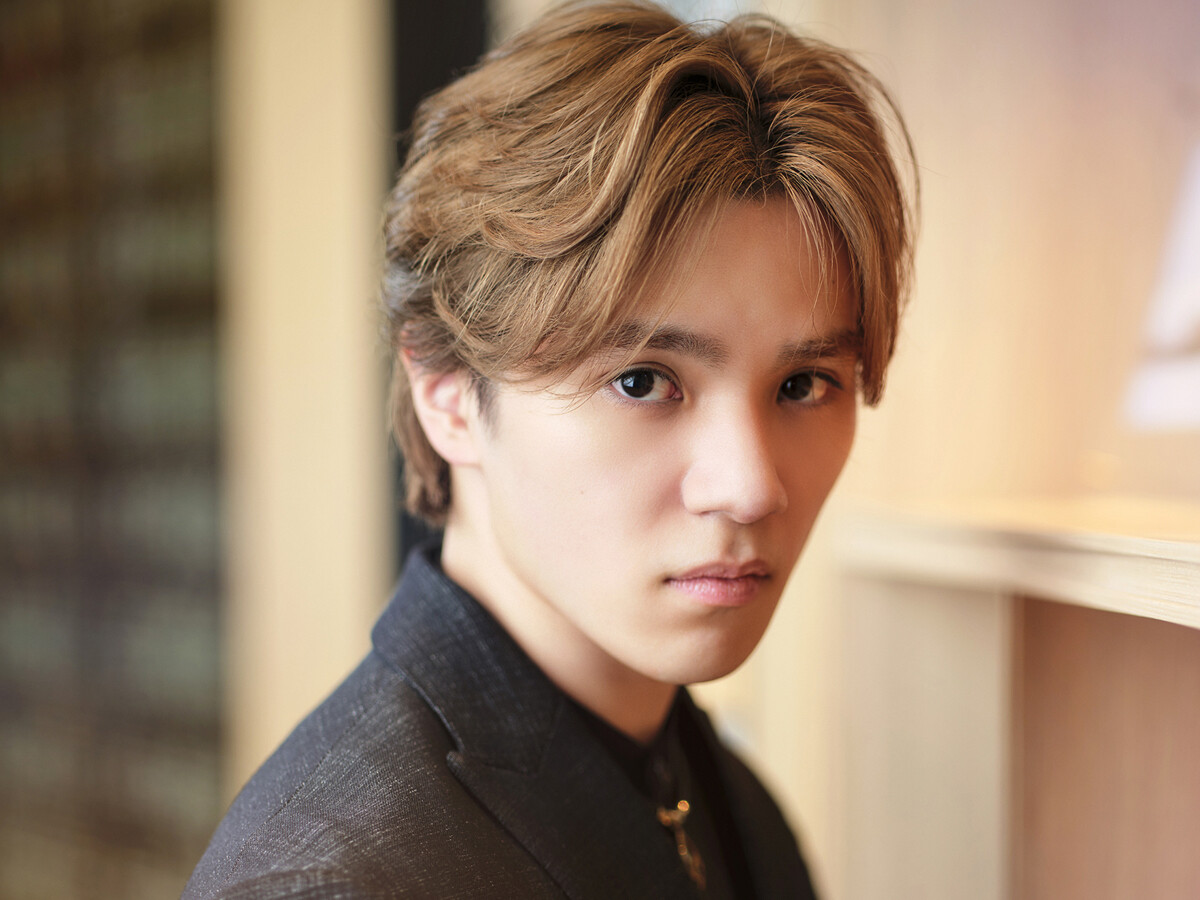
 sportiva.shueisha.co.jp
— It has been announced that “Ice Brave 2” will be held from this November through January next year, with performances scheduled nationwide in Kyoto, Tokyo, Yamanashi, Shimane, and Miyagi. New cast members will also be joining. This is undoubtedly thanks to the success of the first “Ice Brave.” Congratulations.
Thank you very much.
— You mentioned before that “Ice Brave” is only complete when the audience is present, and that really came through — you could feel the shared energy with the audience. Their enthusiasm elevated the stage and helped create an incredible performance.
Even when I was still competing, there were moments when the support of the crowd gave me strength. During competitions, that support could be direct and timely encouragement, but at the same time, it could also add pressure. With ice shows, however, the bigger the support, the more the skaters’ energy rises.
It feels like we get an “answer” from the audience — that what we’re creating is something they enjoy. When the audience cheers, it makes the show better, and that makes us want to give even more. It’s a cycle of energy that really builds up the performance.
— At the beginning of the show, during “Great Spirit,” it was striking to see you charge toward the fans at rinkside and strike a pose with a pointed finger. The whole venue’s excitement spiked — it felt like you were staging a moment right from the start.
Unlike competitions, these shows are for the fans. I just want the people who come to the venue to enjoy themselves, even just a little. When we deliver a great performance and receive huge applause, a sense of unity fills the space, and we feel like, “Yeah, that was a great show.” That’s why I keep saying, “It’s all thanks to you.”
— Personally, I believe figure skating holds an incredible, almost boundless power. When I lived in Barcelona and covered Mao Asada’s Grand Prix Final in 2005, I was moved to tears. Back then, I didn’t know anything about figure skating or its background — yet it hit me deeply. How are you trying to channel that kind of emotional power into entertainment?
In my case, even when I was an active skater, I didn’t quite blend into the figure skating world completely (laughs). It’s hard to put into words, but I might be closer to the version of myself that I show on social media. I’m more often moved not by the skating itself, but by the effort or story behind it.
That’s why now, as a professional, what I want to figure out is: how can I move people? Because I think being emotionally moved is the ultimate reaction. So how do we make that happen? For me, it’s not so much about hard work, but about pouring in as much passion as possible — I think the more energy you give, the more it connects to emotion.
Maybe that doesn’t quite answer your question about the “power of figure skating,” but... Sports are something we create, yet they’re not artificial. It’s in those moments when you catch a glimpse of someone’s effort or passion — that’s when people are moved. I want to create that kind of show. I’m thinking about incorporating that perspective into “Ice Brave 2” as one of the elements.
— “Ice Brave” managed to balance both figure skating and entertainment, and I felt that having Stéphane Lambiel — your former coach — among the young and energetic cast added a sense of gravity to the entire show. His skating had a mature allure, which I think was one of the reasons for the show's popularity. Unfortunately, he won’t be part of “Ice Brave 2” due to his coaching commitments...
Honestly, I can’t really imagine a replacement for Stéphane. He’s more than just a coach — our relationship is something special, isn’t it? I mean, there aren’t many coaches who can still skate like that (laughs). Right now, I have a few ideas for new challenges I want to try, but with Stéphane out of the show, I need to think carefully, as the producer, about how we can make people feel that this version is even better than the first.
— Personally, I found Lambiel’s performances of “Gravity” and “Timelapse” in this show to be in the realm of art — almost like a living inspiration. Even though slow pieces tend to reveal any technical flaws, his skating was flawless and captivating.
Back in my competitive days, “Gravity” was actually choreographed by Stéphane. Even during rehearsals, I remember thinking, “This guy would definitely skate it better than me” (laughs). So when it came time for “Ice Brave,” I thought it made perfect sense for him to perform “Gravity.” Honestly, I wasn’t surprised — of course he’s better than me!
There were even some ideas about doing “Gravity” as a duet, and we considered a few options. But in the end, it made sense for him to skate it solo.
_________________________________________________________
Part 2:
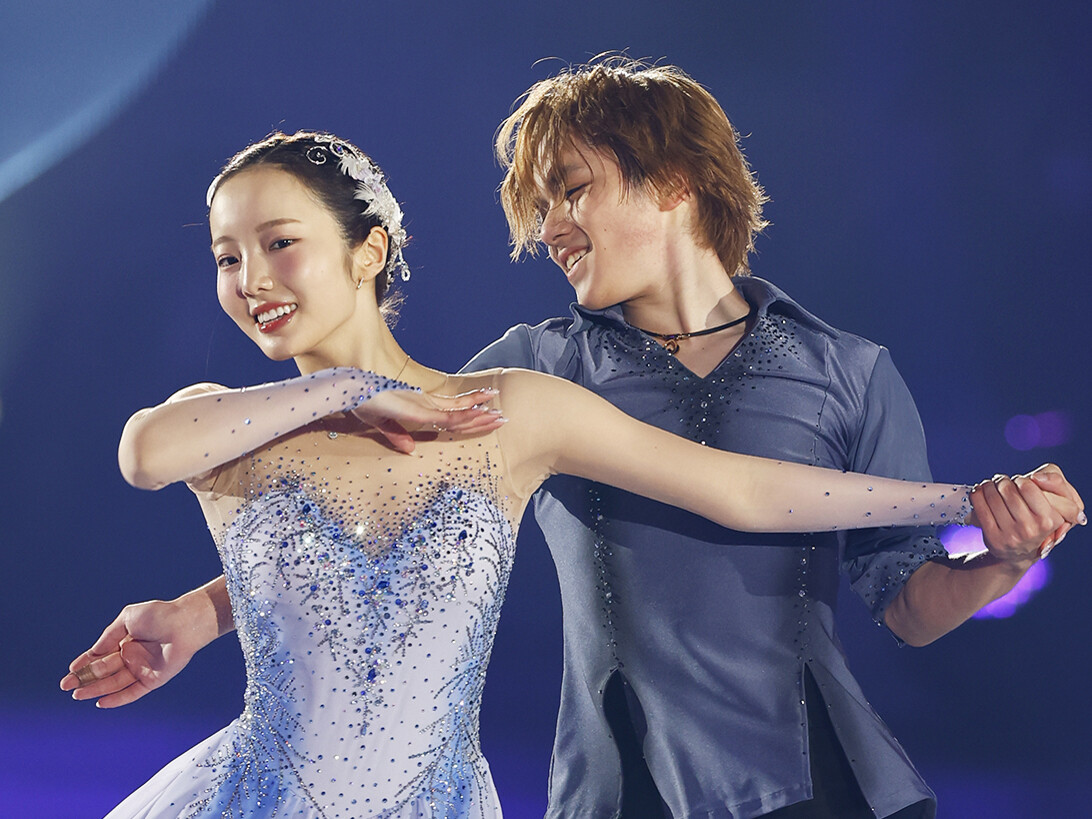 sportiva.shueisha.co.jp
— In an interview before the Ice Brave shows held in June and July, you mentioned: “The show comes as a result of what we’ve built up. That kind of show naturally carries emotion, and I believe it can truly move the fans who come to see it.” In that sense, your challenge in ice dance felt deeply emotional — almost symbolic of the whole show. The level was incredibly high right from the first performance. Can you reflect on your experience with ice dance?
At first, I felt like I couldn’t do it nearly as well as I’d imagined. This isn’t necessarily something I need to explain to everyone, but ice dance is a lot harder than it looks (laughs). With singles, I can skate and spin on my own just fine. But skating as a pair — that’s on a whole other level of difficulty. I didn’t want people to think we were just dabbling in it, so I knew I had to aim for something beyond what I had originally envisioned. In the beginning, it was just about pushing myself.
— When Daisuke Takahashi transitioned to ice dance, he said in an interview, “Twizzles aren’t hard alone, but synchronizing with a partner is really tough.”
Exactly. It’s incredibly hard to figure out how to adjust and match your partner. Actually, our twizzles were most off during the final performance. I accidentally spun five times instead of four at the start, and that threw the whole thing off...
— Still, the quality of the first performance was stunning.
You covered both the first and the final shows, right? For the first performance, since we’d been training up to that point, I told myself, “Don’t aim to go beyond practice. Even if you perform below your practice level, it’ll still be good enough.” I had confidence that we had created something solid that people would enjoy, so I was very calm doing the twizzles. But by the final performance, our choreographer Kenji Miyamoto told us, “Try to skate a little closer to each other here, and have one of you follow the other.” Once I started focusing on all that, I got totally confused (laughs).
— That’s such an interesting phenomenon.
Right? At the morning rehearsal of the final day, we actually fixed it and felt great about it. Marin Honda and I were skating really close, and we both felt like, “Yes, this is it!” Then during the actual show, I over-rotated (laughs). That moment really shows how difficult ice dance is. When you match timing and stay close together, it looks amazing — even though it’s incredibly hard. It made me realize just how impressive it is when two skaters spin in perfect sync. It sounds simple, but it’s actually an incredible feat.
— How did you even start ice dance in the first place?
I was a complete beginner, so we just started by holding hands and skating together. We also watched performances by great skaters like Daisuke Takahashi and some of the world’s best ice dancers. In singles, the axis of rotation is in the center of your own body, right? But in ice dance, that axis shifts to somewhere between the two of you. And when you’re on the outside of a spin, you need a lot of speed.
From a skater’s perspective, it feels insanely fast. From the outside, maybe it doesn’t look that way (laughs), but at first I was totally thrown off. Still, I realized again how much I love the process of turning something I can’t do into something I can. That moment of growth is something I really enjoy.
— Even during your competitive career, you seemed to thrive by putting yourself in tough situations and then turning things around. Do you get energy from pushing yourself like that?
No, no (laughs). If something outside of skating becomes too hard, I quit pretty quickly. Even in skating, I’ve learned that beginners grow a lot at first, but eventually you hit a plateau. I think going through difficult periods is the same no matter what field you’re in — even in gaming, which I love (laughs).
— Marin Honda, your partner in this ice dance, had about half a year of prior experience. Was that an advantage?
It should’ve been, but honestly, I was holding us back too much (laughs). I couldn’t remember the choreography, and I had no idea where I was supposed to be on the ice. Skating as a pair was so hard. Trying not to get in her way while staying close — I kept wondering, “Where should I be? Where shouldn’t I be?” I was constantly overthinking it and had no clue what I was doing (laughs).
— Takahashi went through a physical transformation for ice dance. You also look a bit bigger than before — was that from training?
I didn’t do any special training, but I think lifting (my partner) just naturally made me stronger. We chose lifts that weren’t dangerous, but I still wanted to present something that looked like real ice dance. That said, the show had so many programs, and we had to perform when we were already exhausted, so we made sure the lifts were safe. For a first attempt at ice dance, I think the content was quite satisfying. Still, with “Ice Brave 2” coming up, I want to show clear growth beyond what we did in “1.”
_________________________________________________________
_________________________________________________________
Part 1:
宇野昌磨が『Ice Brave』で得た手ごたえ「感動って最高のリアクションだと思う」 11月から『2』も開催決定
宇野昌磨『IceBrave2』インタビュー前編(全3回) 7月18日、東京都内。宇野昌磨はアイスショー『Ice Brave2』開催に関する取材を受けるため、昼過ぎには東京ミッドタウン日比谷内にある「LEXUS MEETS」のラウンジに入っ…
sportiva.shueisha.co.jp
— It has been announced that “Ice Brave 2” will be held from this November through January next year, with performances scheduled nationwide in Kyoto, Tokyo, Yamanashi, Shimane, and Miyagi. New cast members will also be joining. This is undoubtedly thanks to the success of the first “Ice Brave.” Congratulations.
Thank you very much.
— You mentioned before that “Ice Brave” is only complete when the audience is present, and that really came through — you could feel the shared energy with the audience. Their enthusiasm elevated the stage and helped create an incredible performance.
Even when I was still competing, there were moments when the support of the crowd gave me strength. During competitions, that support could be direct and timely encouragement, but at the same time, it could also add pressure. With ice shows, however, the bigger the support, the more the skaters’ energy rises.
It feels like we get an “answer” from the audience — that what we’re creating is something they enjoy. When the audience cheers, it makes the show better, and that makes us want to give even more. It’s a cycle of energy that really builds up the performance.
— At the beginning of the show, during “Great Spirit,” it was striking to see you charge toward the fans at rinkside and strike a pose with a pointed finger. The whole venue’s excitement spiked — it felt like you were staging a moment right from the start.
Unlike competitions, these shows are for the fans. I just want the people who come to the venue to enjoy themselves, even just a little. When we deliver a great performance and receive huge applause, a sense of unity fills the space, and we feel like, “Yeah, that was a great show.” That’s why I keep saying, “It’s all thanks to you.”
— Personally, I believe figure skating holds an incredible, almost boundless power. When I lived in Barcelona and covered Mao Asada’s Grand Prix Final in 2005, I was moved to tears. Back then, I didn’t know anything about figure skating or its background — yet it hit me deeply. How are you trying to channel that kind of emotional power into entertainment?
In my case, even when I was an active skater, I didn’t quite blend into the figure skating world completely (laughs). It’s hard to put into words, but I might be closer to the version of myself that I show on social media. I’m more often moved not by the skating itself, but by the effort or story behind it.
That’s why now, as a professional, what I want to figure out is: how can I move people? Because I think being emotionally moved is the ultimate reaction. So how do we make that happen? For me, it’s not so much about hard work, but about pouring in as much passion as possible — I think the more energy you give, the more it connects to emotion.
Maybe that doesn’t quite answer your question about the “power of figure skating,” but... Sports are something we create, yet they’re not artificial. It’s in those moments when you catch a glimpse of someone’s effort or passion — that’s when people are moved. I want to create that kind of show. I’m thinking about incorporating that perspective into “Ice Brave 2” as one of the elements.
— “Ice Brave” managed to balance both figure skating and entertainment, and I felt that having Stéphane Lambiel — your former coach — among the young and energetic cast added a sense of gravity to the entire show. His skating had a mature allure, which I think was one of the reasons for the show's popularity. Unfortunately, he won’t be part of “Ice Brave 2” due to his coaching commitments...
Honestly, I can’t really imagine a replacement for Stéphane. He’s more than just a coach — our relationship is something special, isn’t it? I mean, there aren’t many coaches who can still skate like that (laughs). Right now, I have a few ideas for new challenges I want to try, but with Stéphane out of the show, I need to think carefully, as the producer, about how we can make people feel that this version is even better than the first.
— Personally, I found Lambiel’s performances of “Gravity” and “Timelapse” in this show to be in the realm of art — almost like a living inspiration. Even though slow pieces tend to reveal any technical flaws, his skating was flawless and captivating.
Back in my competitive days, “Gravity” was actually choreographed by Stéphane. Even during rehearsals, I remember thinking, “This guy would definitely skate it better than me” (laughs). So when it came time for “Ice Brave,” I thought it made perfect sense for him to perform “Gravity.” Honestly, I wasn’t surprised — of course he’s better than me!
There were even some ideas about doing “Gravity” as a duet, and we considered a few options. But in the end, it made sense for him to skate it solo.
_________________________________________________________
Part 2:
本田真凜とのアイスダンスは「僕が足を引っ張りすぎだった(笑)」 宇野昌磨が明かす初挑戦の舞台裏
宇野昌磨『IceBrave2』インタビュー中編(全3回) 7月18日、宇野昌磨は東京ミッドタウン日比谷にある「LEXUS MEETS」で、アイスショー『Ice Brave2』についてインタビューを受けている。「すごくカッコいい写真!」「…
sportiva.shueisha.co.jp
— In an interview before the Ice Brave shows held in June and July, you mentioned: “The show comes as a result of what we’ve built up. That kind of show naturally carries emotion, and I believe it can truly move the fans who come to see it.” In that sense, your challenge in ice dance felt deeply emotional — almost symbolic of the whole show. The level was incredibly high right from the first performance. Can you reflect on your experience with ice dance?
At first, I felt like I couldn’t do it nearly as well as I’d imagined. This isn’t necessarily something I need to explain to everyone, but ice dance is a lot harder than it looks (laughs). With singles, I can skate and spin on my own just fine. But skating as a pair — that’s on a whole other level of difficulty. I didn’t want people to think we were just dabbling in it, so I knew I had to aim for something beyond what I had originally envisioned. In the beginning, it was just about pushing myself.
— When Daisuke Takahashi transitioned to ice dance, he said in an interview, “Twizzles aren’t hard alone, but synchronizing with a partner is really tough.”
Exactly. It’s incredibly hard to figure out how to adjust and match your partner. Actually, our twizzles were most off during the final performance. I accidentally spun five times instead of four at the start, and that threw the whole thing off...
— Still, the quality of the first performance was stunning.
You covered both the first and the final shows, right? For the first performance, since we’d been training up to that point, I told myself, “Don’t aim to go beyond practice. Even if you perform below your practice level, it’ll still be good enough.” I had confidence that we had created something solid that people would enjoy, so I was very calm doing the twizzles. But by the final performance, our choreographer Kenji Miyamoto told us, “Try to skate a little closer to each other here, and have one of you follow the other.” Once I started focusing on all that, I got totally confused (laughs).
— That’s such an interesting phenomenon.
Right? At the morning rehearsal of the final day, we actually fixed it and felt great about it. Marin Honda and I were skating really close, and we both felt like, “Yes, this is it!” Then during the actual show, I over-rotated (laughs). That moment really shows how difficult ice dance is. When you match timing and stay close together, it looks amazing — even though it’s incredibly hard. It made me realize just how impressive it is when two skaters spin in perfect sync. It sounds simple, but it’s actually an incredible feat.
— How did you even start ice dance in the first place?
I was a complete beginner, so we just started by holding hands and skating together. We also watched performances by great skaters like Daisuke Takahashi and some of the world’s best ice dancers. In singles, the axis of rotation is in the center of your own body, right? But in ice dance, that axis shifts to somewhere between the two of you. And when you’re on the outside of a spin, you need a lot of speed.
From a skater’s perspective, it feels insanely fast. From the outside, maybe it doesn’t look that way (laughs), but at first I was totally thrown off. Still, I realized again how much I love the process of turning something I can’t do into something I can. That moment of growth is something I really enjoy.
— Even during your competitive career, you seemed to thrive by putting yourself in tough situations and then turning things around. Do you get energy from pushing yourself like that?
No, no (laughs). If something outside of skating becomes too hard, I quit pretty quickly. Even in skating, I’ve learned that beginners grow a lot at first, but eventually you hit a plateau. I think going through difficult periods is the same no matter what field you’re in — even in gaming, which I love (laughs).
— Marin Honda, your partner in this ice dance, had about half a year of prior experience. Was that an advantage?
It should’ve been, but honestly, I was holding us back too much (laughs). I couldn’t remember the choreography, and I had no idea where I was supposed to be on the ice. Skating as a pair was so hard. Trying not to get in her way while staying close — I kept wondering, “Where should I be? Where shouldn’t I be?” I was constantly overthinking it and had no clue what I was doing (laughs).
— Takahashi went through a physical transformation for ice dance. You also look a bit bigger than before — was that from training?
I didn’t do any special training, but I think lifting (my partner) just naturally made me stronger. We chose lifts that weren’t dangerous, but I still wanted to present something that looked like real ice dance. That said, the show had so many programs, and we had to perform when we were already exhausted, so we made sure the lifts were safe. For a first attempt at ice dance, I think the content was quite satisfying. Still, with “Ice Brave 2” coming up, I want to show clear growth beyond what we did in “1.”
_________________________________________________________
- Joined
- Aug 16, 2018
Part 3 of interview with Sportiva released today, with machine translate for only the interview parts, and Shoma's opening quotes:
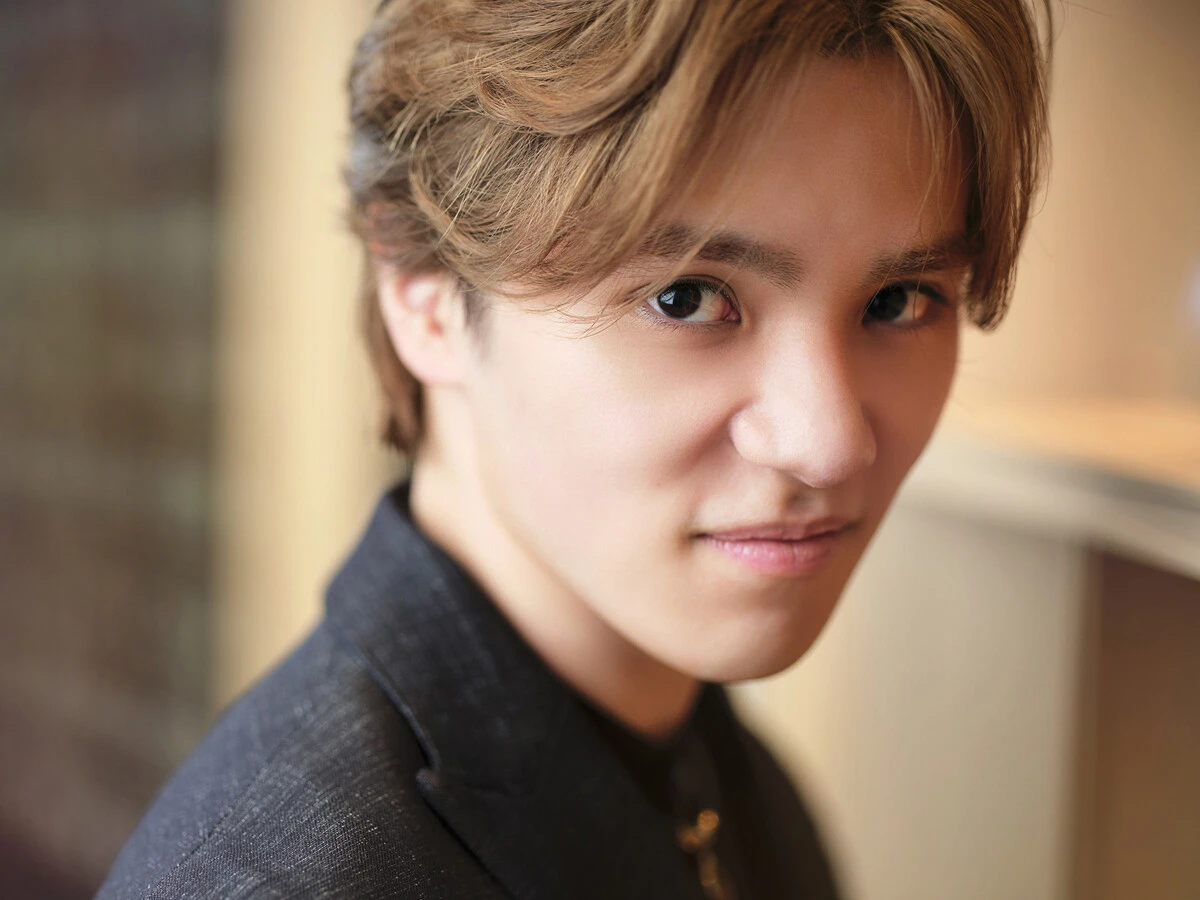 sportiva.shueisha.co.jp
Shoma Uno “Ice Brave 2” Interview – Part 3 of 3
July 18, Hibiya, Tokyo.
Shoma Uno sat down on a sofa in the lounge at "LEXUS MEETS" and gently placed his hands on his knees.
The interview was held in light of the announcement that the ice show Ice Brave 2 would be staged. Uno's characteristic, thoughtful way of speaking was as sharp as ever. He has never answered questions in formulaic ways, even during his competitive career. He always thinks things through, puts them into his own words, and tries to communicate them sincerely. Now, as a professional skater, that approach has become a powerful asset.
After all, on stage, your ability to convey emotion is what’s tested.
Uno said, his professionalism as a producer shining through.
— Ice Brave 2 is something to look forward to, but from a creator’s perspective, the bar must be even higher compared to the first.
Leaving a stronger impact than the first show is really tough. Stéphane (Lambiel) isn’t involved this time either, since he’s focused on coaching. But the eight of us have more time to rehearse. We want to experiment through trial and error and surprise the audience.
— Ice Brave felt like a “victory” achieved by you drawing out the full potential of the cast as a producer. In Daisuke Takahashi’s Kassōya, young skaters were also inspired and showed growth. Your skating stood out as well. For instance, Kazuki Kushida was playfully teased during the final show, and the good vibes really came through.
Kushida—or “Kussy”—gets full of himself if we don’t tease him (laughs). He might look flashy, but he’s serious and dedicated. And teasing him actually helps bring out his best. When he cried during the mid-show mic segment on the final day, we weren’t prepared for it emotionally and couldn’t fully share in the moment with him (laughs).
(Yoji) Nakano—I think he’s an incredible pro. He knows how to excite the crowd, and I feel like he’s made for shows.
Then there’s Tsunecchi (Tsunehito Karakawa). He’s usually quiet, but once you hand him a mic on stage, he always does something great. I’ve always thought he was a strong skater, and the more we practice together, the better he gets. We’re similar in height and build, and even our skating styles are close. We performed a duet again this time. It just happened by chance, but I had a feeling it would work with Tsunecchi—and it ended up being the piece that required the least work to complete.
— The show had really high energy and felt non-stop. Which part was the most physically demanding for you?
That would definitely be Narco—right after I performed the solo piece Loco (Buenos Aires Hora Cero). Narco is a collaboration with three male skaters. When I watched the footage later, I realized I was going all-out—like 130% effort (laughs). I’d been wondering why it felt so exhausting, and then it hit me: I was the only one giving it everything! I was like, “Come on guys, you’ve got more in you!” (laughs).
— Marin Honda in her flamenco costume gave a striking performance of Stairway to Heaven, a Spanish guitar piece you once skated to. It really emphasized the beauty and elegance of figure skating, and more than anything, its essence as storytelling.
I totally get that! Marin has something I don’t—she’s able to express the music flowing through her in her own unique way. Her performances make it feel like she’s stepping into the story the music is telling. Even when the song doesn’t have a clear narrative, she manages to hint at one. That’s something I’m still lacking and feel I need to master. Stéphane has always been great at that too, right from the start.
— Lastly, it’s been just a year since your retirement from competition. Looking back, how do you feel about how far you’ve come as a professional?
It’s strange... hard to explain. I’d heard people say, “You end up training more as a pro than you did when competing,” and now I really understand that.
Maybe it’s also because I was given the big responsibility of being a producer this time, but that common phrase, “You gain more freedom as a pro,”—it really rings true now.
In competitions, sometimes I felt like, “I don’t really want to do this, but I have to because it’ll get me points.” But as a pro, I can focus entirely on perfecting the art of entertaining people. That freedom means there’s no limit to what you can work on, and it’s incredibly fulfilling.
Wanting to improve is something I always felt during my competitive career too, but I used to hold back—like, “This won’t score points, so maybe I shouldn’t.” That kind of hesitation is now gone. So, while saying “I’m glad I retired” sounds wrong, I really do feel like I’m glad I became a professional.
_____________________________________________
Note: Shoma mentioned the duet he did with Tsune(hito Karakawa), and while the biggest stories out of Ice Brave were Shoma and Marin skating together (understandable) and also Shoma and Stephane skating together (also understandable) the part that Shoma did with Tsune is actually one of my favorite moments in the show- they did Tanguera mirroring each other and the tension was so thick I can cut it with a knife. That they are of a similar build adds to the staging too.
宇野昌磨が語る「プロになってより自由になった」理由 本田真凜の「僕にはないもの」も明かす
宇野昌磨『IceBrave2』インタビュー後編(全3回) 7月18日、東京・日比谷。宇野昌磨は「LEXUS MEETS」のラウンジにあるソファに腰かけると、ゆっくりと膝に手を置いた。 アイスショー『Ice Brave2』の開催決定を受け…
sportiva.shueisha.co.jp
Shoma Uno “Ice Brave 2” Interview – Part 3 of 3
July 18, Hibiya, Tokyo.
Shoma Uno sat down on a sofa in the lounge at "LEXUS MEETS" and gently placed his hands on his knees.
The interview was held in light of the announcement that the ice show Ice Brave 2 would be staged. Uno's characteristic, thoughtful way of speaking was as sharp as ever. He has never answered questions in formulaic ways, even during his competitive career. He always thinks things through, puts them into his own words, and tries to communicate them sincerely. Now, as a professional skater, that approach has become a powerful asset.
After all, on stage, your ability to convey emotion is what’s tested.
“There’s really no ‘break’ in Ice Brave. Every moment is worth watching, and we devoted a lot of time to every part of it. Everyone in the cast plays a main role—there are no supporting characters. It’s an ensemble we created together as a team,”
Uno said, his professionalism as a producer shining through.
“Whether it’s a competition as an athlete or a performance as an artist, people buy tickets to come watch skating. But I think the process leading up to that is important too. For example, people often say, ‘Even if you do well in practice, it doesn’t mean anything if you can’t perform in competition.’ But I don’t think that’s true. I believe the work you put into practice naturally comes through in the atmosphere of the performance. That’s something I want to value as a team in Ice Brave.”
— Ice Brave 2 is something to look forward to, but from a creator’s perspective, the bar must be even higher compared to the first.
Leaving a stronger impact than the first show is really tough. Stéphane (Lambiel) isn’t involved this time either, since he’s focused on coaching. But the eight of us have more time to rehearse. We want to experiment through trial and error and surprise the audience.
— Ice Brave felt like a “victory” achieved by you drawing out the full potential of the cast as a producer. In Daisuke Takahashi’s Kassōya, young skaters were also inspired and showed growth. Your skating stood out as well. For instance, Kazuki Kushida was playfully teased during the final show, and the good vibes really came through.
Kushida—or “Kussy”—gets full of himself if we don’t tease him (laughs). He might look flashy, but he’s serious and dedicated. And teasing him actually helps bring out his best. When he cried during the mid-show mic segment on the final day, we weren’t prepared for it emotionally and couldn’t fully share in the moment with him (laughs).
(Yoji) Nakano—I think he’s an incredible pro. He knows how to excite the crowd, and I feel like he’s made for shows.
Then there’s Tsunecchi (Tsunehito Karakawa). He’s usually quiet, but once you hand him a mic on stage, he always does something great. I’ve always thought he was a strong skater, and the more we practice together, the better he gets. We’re similar in height and build, and even our skating styles are close. We performed a duet again this time. It just happened by chance, but I had a feeling it would work with Tsunecchi—and it ended up being the piece that required the least work to complete.
— The show had really high energy and felt non-stop. Which part was the most physically demanding for you?
That would definitely be Narco—right after I performed the solo piece Loco (Buenos Aires Hora Cero). Narco is a collaboration with three male skaters. When I watched the footage later, I realized I was going all-out—like 130% effort (laughs). I’d been wondering why it felt so exhausting, and then it hit me: I was the only one giving it everything! I was like, “Come on guys, you’ve got more in you!” (laughs).
— Marin Honda in her flamenco costume gave a striking performance of Stairway to Heaven, a Spanish guitar piece you once skated to. It really emphasized the beauty and elegance of figure skating, and more than anything, its essence as storytelling.
I totally get that! Marin has something I don’t—she’s able to express the music flowing through her in her own unique way. Her performances make it feel like she’s stepping into the story the music is telling. Even when the song doesn’t have a clear narrative, she manages to hint at one. That’s something I’m still lacking and feel I need to master. Stéphane has always been great at that too, right from the start.
— Lastly, it’s been just a year since your retirement from competition. Looking back, how do you feel about how far you’ve come as a professional?
It’s strange... hard to explain. I’d heard people say, “You end up training more as a pro than you did when competing,” and now I really understand that.
Maybe it’s also because I was given the big responsibility of being a producer this time, but that common phrase, “You gain more freedom as a pro,”—it really rings true now.
In competitions, sometimes I felt like, “I don’t really want to do this, but I have to because it’ll get me points.” But as a pro, I can focus entirely on perfecting the art of entertaining people. That freedom means there’s no limit to what you can work on, and it’s incredibly fulfilling.
Wanting to improve is something I always felt during my competitive career too, but I used to hold back—like, “This won’t score points, so maybe I shouldn’t.” That kind of hesitation is now gone. So, while saying “I’m glad I retired” sounds wrong, I really do feel like I’m glad I became a professional.
_____________________________________________
Note: Shoma mentioned the duet he did with Tsune(hito Karakawa), and while the biggest stories out of Ice Brave were Shoma and Marin skating together (understandable) and also Shoma and Stephane skating together (also understandable) the part that Shoma did with Tsune is actually one of my favorite moments in the show- they did Tanguera mirroring each other and the tension was so thick I can cut it with a knife. That they are of a similar build adds to the staging too.
Last edited:
- Joined
- Aug 16, 2018
Shoma went viral again on Twitter (as per usual) for some random pondering moment:
"When I’m about to be late, I start thinking of weird stuff like, ‘If this whole road suddenly turned to ice, maybe I could make it on time,’ while also trying to come up with how I’m going to apologize."
_________
Fuku Suzuki quoted him with their photo at Ice Brave Niigata, and cackling at him saying Shoma was very cool and princely at the show that it's hard to think that this is the same person constantly getting viral on Twitter for his funny tweets:
Fuku Suzuki is an actor and he's costarring in a new horror movie in Japan with Marin.
Also Shoma was quoted by.... the official account of Hell Teacher Nube now what is this blast to the past, I used to read the manga when I was in elementary school.
"When I’m about to be late, I start thinking of weird stuff like, ‘If this whole road suddenly turned to ice, maybe I could make it on time,’ while also trying to come up with how I’m going to apologize."
_________
Fuku Suzuki quoted him with their photo at Ice Brave Niigata, and cackling at him saying Shoma was very cool and princely at the show that it's hard to think that this is the same person constantly getting viral on Twitter for his funny tweets:
Fuku Suzuki is an actor and he's costarring in a new horror movie in Japan with Marin.
Also Shoma was quoted by.... the official account of Hell Teacher Nube
now what is this blast to the past, I used to read the manga when I was in elementary school.
- Joined
- Aug 16, 2018
Wow, Shoma went viral on Twitter... again... this time it's because of other people tweeting about his quotes and deeds in the past.
______________________________
Aside from being pretty good at skating, Shoma does have his own unique sense of kindness. It got him into some trouble in the past but it's nice to see normal people finding out about them.
Shoma Uno often gets seen as just a funny guy, but during his competitive days, when he was asked in an interview, “Did you learn anything from Hanyu’s injury?”, he dismissed it outright, saying, “I don’t want to think about something like that when someone is suffering from an injury.”
He also once performed a sudden tribute for an international senior skater who tragically passed away young after being caught in an incident.
There are so many heartwarming stories—like when a rinkmate who placed second at Nationals wasn't chosen for the national team, and he expressed dissatisfaction at the press conference, saying, “The selection criteria are unclear.”
Or when he offered new laces and tape to a junior skater whose skate laces broke right before their performance.
It's exactly because of his usual down-to-earth nature and genuineness that those actions shine even more.
You can tell he's not doing it for popularity—he's the kind of person you naturally want to cheer for.
______________________________
Aside from being pretty good at skating, Shoma does have his own unique sense of kindness. It got him into some trouble in the past but it's nice to see normal people finding out about them.
Last edited:
- Joined
- Aug 16, 2018
4 months, a bunch of viral tweets and a lot of new Twitter followers later... Shoma has finally completed his Nintendo Switch2 journey.
And Shoma did see the viral tweet above and responded in his very own way:
I have decided to withdraw from the Switch2 auditions.
Looking back, it's no exaggeration to say that this audition process helped me grow tremendously.
There were times of hardship and struggle, but what supported me during those moments were your screams of despair and cries of misfortune.
I look forward to seeing your continued success in the future.
___________________________And Shoma did see the viral tweet above and responded in his very own way:
It's not that I have a good personality — it's that I think the world is kind and wonderful when people see my words and actions and say I'm kind or that they respect me.
I mean, I just lost in Street Fighter 6 to someone who only used Drive Impact, and I'm so pissed off my head feels like it's about to explode.
Last edited:
- Joined
- Aug 16, 2018
Shoma at TBS this morning for Ice Brave 2.... very curious about the outfit, probably filming something as well.
Translation of some of Shoma's comments:
Translation of some of Shoma's comments:
“Instead of being elegant and reserved, I want everyone to get excited and really enjoy the live energy. It’s turned into a super energetic ice show.”
Last edited:
- Joined
- Aug 16, 2018
This is probably the first time Shoma makes the TV news for his purely gaming-related job, the High School e-Sports tournament (STAGE: 0) he provided guest commentary for (specifically for the Clash Royale segment) is covered in Aichi TV and he was providing comments for the TV footage:
__________________
Shoma also did a public stream of Street Fighter 6 for the first time a couple days ago, and immediately his first opponent is rangasamy, who is like the best professional Honda player of SF6 right now Shoma was like... "wait why am I suddenly fighting the world's best now" and apparently rangasamy was fighting him from an AIRPORT after returning back from the US for a tournament (and losing his bag), but he took on Shoma pretty seriously which was cool.
I note that Shoma has been slowly adding back subscribers to his Youtube channel- he abandoned it for almost 3 years and have been quite random and sporadic in updating them after retirement, but it's now over 100k subscribers again. Now I just need him to open the Q&A for his membership again because I need to ask him (a Netflix enthusiast) on whether he's watched Glass Heart or not LOL.
__________________
Shoma also did a public stream of Street Fighter 6 for the first time a couple days ago, and immediately his first opponent is rangasamy, who is like the best professional Honda player of SF6 right now
Shoma was like... "wait why am I suddenly fighting the world's best now" and apparently rangasamy was fighting him from an AIRPORT after returning back from the US for a tournament (and losing his bag), but he took on Shoma pretty seriously which was cool.I note that Shoma has been slowly adding back subscribers to his Youtube channel- he abandoned it for almost 3 years and have been quite random and sporadic in updating them after retirement, but it's now over 100k subscribers again. Now I just need him to open the Q&A for his membership again because I need to ask him (a Netflix enthusiast) on whether he's watched Glass Heart or not LOL.
- Joined
- Aug 16, 2018
Very good long interview with Shoma by Hitoshi Kurosawa of Mainichi Shinbun, this was done back at the announcement of Ice Brave 2 (July 18, 2025). And a great gallery of photos by Kota Yoshida of course 
Machine translation of the interview:
– In the final performance on July 13, your comment about “wanting to improve more” was quite striking. Do you have a particular image of the kind of entertainer you want to become?
It's still a bit vague, but I think it’s about being able to perform with the same level of confidence I have in my jumps. When it comes to jumps, I have enough confidence to teach others. Not that I plan to teach anytime soon, but that’s how confident I am. I want to reach that same level of assurance in the expressive aspects as well.
This is just my personal opinion, but figure skating encompasses so many genres. Besides the technical elements like jumps and spins, skaters often change the genre of their programs each season. Ideally, there are experts in each of these genres. But doing something for a year doesn’t make you an expert—that’s just not how it works.
So I believe I need to pursue things more deeply. If I do that, I’ll become more well-rounded and versatile. I think that’s a key area where I need to devote more time.
– What’s the backstage like during a 90-minute, non-stop ice show?
Honestly, I kept thinking for the next show, we need to design it in a way that’s a bit less physically demanding (laughs). When I’m creating a show, I only think about how to make it better—like, “I want to be in this scene,” or “this part would be better if I appear”—so I just keep increasing my own stage time.
Even if I try to do everything I can, I’m not training non-stop all day. So, I end up creating every routine as if I’m at peak condition. Once everything is put together, it’s exhausting. We had oxygen canisters backstage, but I had never used inhalable oxygen before, and I was too scared to try it... It was extremely tough without it.
– Did you feel your legs getting heavy from lactic acid as the show progressed?
There was no time to even notice that. It’s more like, suddenly I realized my legs weren’t moving anymore. But just because I’m tired doesn’t mean I should let the audience see it. I need to plan the next show so that I don’t appear obviously worn out and keep it well-produced.
– If you had to identify areas for improvement from “Ice Brave,” what would they be?
This is a minor detail, but skating unison (synchronized movement) isn't usually that tight in skating. Compared to other performing arts, it doesn't match that precisely. That’s exactly why I want to push for even more unison—beyond what's typical. Since it’s not usually done in skating, doing it would make it stand out all the more.
Unison isn’t physically taxing—it just takes time and practice. The more you rehearse, the better it gets. Since this was my first time producing, I had a lot on my plate, so I just focused on doing what I could. But next time, I want to dive into those finer details.
Also, (former coach and guest performer) Stéphane Lambiel won’t be in “Ice Brave 2,” so I think that creates opportunities to do things differently. Practicing together with the full cast consistently is something we can do this time, and that’s a big change from “1” to “2.”
Besides that, I need to rethink how I distribute my own jump elements. For example, in my solo to Balada para un Loco, I did a double Axel. But maybe a different showcase element would make it feel more like a performance. That’s something I’m considering seriously—not just for myself, but something everyone can focus on for the next show.
– What did Stéphane Lambiel say after “Ice Brave 1”?
He kept saying, “It was truly a wonderful show.” Not just once, but repeatedly. That’s why he also said he was sad he couldn’t join the next one.
But I want to show him that even without him, the show can still be great. It shouldn’t be that Ice Brave can’t exist without Stéphane—that would be a disservice to him. By making “2” successful, I hope I can eventually welcome him back for a future project.
– After completing “Ice Brave 1,” do you feel more confident and motivated for “2” and beyond?
Absolutely. As long as there’s demand, I want to keep creating shows that only I can produce. Honestly, I know it’s difficult. It’s not like I can keep making shows endlessly just based on my name recognition and drawing power.
Back when I said “this might be the first and last one,” that mindset helped “1” become reality. But now I’ve been given the chance to do “2.” If I can make this a success, it will definitely lead to future opportunities. I think this “2” is the real test. Whether this truly ends or not depends entirely on “2.”
– As a producer, sometimes you probably have to give firm direction to the cast. You’re known to be kind—was that difficult for you?
I wouldn’t say I’m kind… but no, I really can’t give strong direction (laughs). That’s definitely one of the hardest parts for me. But I selected people who don’t need to be micromanaged—who take responsibility and do things on their own.
They know what I’m like. Especially the members from the Prince Ice World team—they’re true professionals in entertainment. Their professionalism has helped so much.
Of course, enjoying the show is fine, but before that, it’s crucial to make every effort so that the audience can enjoy it. That’s where the Prince skaters’ professional mindset has really supported us.
What I care about most is the team atmosphere. That comes down to everyone’s character. If personalities clash, it ruins the vibe. I believe creating a team where people want to practice and improve together is essential.
Skills matter, but so do personality and visual harmony. I’m not tall (157 cm), so I like pairing with people who match in silhouette. There are fewer women, but when someone like Rika Hongo or Marin Honda appears, their presence adds something to the more masculine overall vibe. They’re really great teammates.
– Your ice dance with Marin Honda in the show drew a lot of attention. Do you wish you'd started ice dance earlier?
Not really. Wishing I had started earlier implies I was doing something I didn’t enjoy, and only realized later what I really wanted. But for me, I completed my singles career fully, and only then did I feel ready to take a step into something new.
I had a lot of challenges—height, skating style, skills. I’m not naturally suited for ice dance. But as a producer of entertainment, I felt it was necessary.
I don’t want to rely forever on what I achieved in singles. Incorporating new things, constantly challenging myself and growing in ways people wouldn’t expect—that’s what I think it means to be authentically “Shoma Uno” for all the people who’ve supported me since my competitive days. I can’t settle—I have to keep moving forward to succeed as a show creator.
– On social media (like X/Twitter), your posts often go viral. Do you ever search for posts related to yourself?
I did when I started ice dance (laughs). When I was competing in singles, I had enough confidence that I didn’t feel the need to look up reactions. But when I’m unsure, that’s when I search.
As a beginner, I trained hard and kept raising the bar for myself. I felt like I wasn’t good enough. But from the audience’s perspective—especially those seeing ice dance for the first time—it was apparently really impressive. People seemed surprised by how seriously I approached it.
Even just through “text,” you can feel people’s surprise and excitement. In that sense, I think I’m using social media effectively. I rarely post about skating, but I enjoy using social media for fun.
– Is it a good way to unwind?
It’s not even about relaxing—I’m just goofing around, really. I want to maintain a healthy relationship with social media.
– Without giving too much away, what are you aiming for in “Ice Brave 2”?
I want people to feel it’s clearly better than before. Stéphane isn’t in this one, and his presence is huge. But I want people to say “Even without him, ‘2’ is way better.” I don’t want to rely on the success of “1.” “2” is a whole new challenge for me.
– Having gained confidence from “1,” are you feeling pressure going into “2”?
If anything, I have more confidence than pressure. Sure, there’s pressure to make it better than “1.” But that pressure is outweighed by the confidence I got from making “1” a success.
Before “1,” I had no experience—just vague ideas. I didn’t know how to schedule rehearsals, give direction, select programs, or what would or wouldn’t work. But now, I have at least some idea. That makes things a little easier this time.
___________________________________
Machine translation of the interview:
– In the final performance on July 13, your comment about “wanting to improve more” was quite striking. Do you have a particular image of the kind of entertainer you want to become?
It's still a bit vague, but I think it’s about being able to perform with the same level of confidence I have in my jumps. When it comes to jumps, I have enough confidence to teach others. Not that I plan to teach anytime soon, but that’s how confident I am. I want to reach that same level of assurance in the expressive aspects as well.
This is just my personal opinion, but figure skating encompasses so many genres. Besides the technical elements like jumps and spins, skaters often change the genre of their programs each season. Ideally, there are experts in each of these genres. But doing something for a year doesn’t make you an expert—that’s just not how it works.
So I believe I need to pursue things more deeply. If I do that, I’ll become more well-rounded and versatile. I think that’s a key area where I need to devote more time.
– What’s the backstage like during a 90-minute, non-stop ice show?
Honestly, I kept thinking for the next show, we need to design it in a way that’s a bit less physically demanding (laughs). When I’m creating a show, I only think about how to make it better—like, “I want to be in this scene,” or “this part would be better if I appear”—so I just keep increasing my own stage time.
Even if I try to do everything I can, I’m not training non-stop all day. So, I end up creating every routine as if I’m at peak condition. Once everything is put together, it’s exhausting. We had oxygen canisters backstage, but I had never used inhalable oxygen before, and I was too scared to try it... It was extremely tough without it.
– Did you feel your legs getting heavy from lactic acid as the show progressed?
There was no time to even notice that. It’s more like, suddenly I realized my legs weren’t moving anymore. But just because I’m tired doesn’t mean I should let the audience see it. I need to plan the next show so that I don’t appear obviously worn out and keep it well-produced.
– If you had to identify areas for improvement from “Ice Brave,” what would they be?
This is a minor detail, but skating unison (synchronized movement) isn't usually that tight in skating. Compared to other performing arts, it doesn't match that precisely. That’s exactly why I want to push for even more unison—beyond what's typical. Since it’s not usually done in skating, doing it would make it stand out all the more.
Unison isn’t physically taxing—it just takes time and practice. The more you rehearse, the better it gets. Since this was my first time producing, I had a lot on my plate, so I just focused on doing what I could. But next time, I want to dive into those finer details.
Also, (former coach and guest performer) Stéphane Lambiel won’t be in “Ice Brave 2,” so I think that creates opportunities to do things differently. Practicing together with the full cast consistently is something we can do this time, and that’s a big change from “1” to “2.”
Besides that, I need to rethink how I distribute my own jump elements. For example, in my solo to Balada para un Loco, I did a double Axel. But maybe a different showcase element would make it feel more like a performance. That’s something I’m considering seriously—not just for myself, but something everyone can focus on for the next show.
– What did Stéphane Lambiel say after “Ice Brave 1”?
He kept saying, “It was truly a wonderful show.” Not just once, but repeatedly. That’s why he also said he was sad he couldn’t join the next one.
But I want to show him that even without him, the show can still be great. It shouldn’t be that Ice Brave can’t exist without Stéphane—that would be a disservice to him. By making “2” successful, I hope I can eventually welcome him back for a future project.
– After completing “Ice Brave 1,” do you feel more confident and motivated for “2” and beyond?
Absolutely. As long as there’s demand, I want to keep creating shows that only I can produce. Honestly, I know it’s difficult. It’s not like I can keep making shows endlessly just based on my name recognition and drawing power.
Back when I said “this might be the first and last one,” that mindset helped “1” become reality. But now I’ve been given the chance to do “2.” If I can make this a success, it will definitely lead to future opportunities. I think this “2” is the real test. Whether this truly ends or not depends entirely on “2.”
– As a producer, sometimes you probably have to give firm direction to the cast. You’re known to be kind—was that difficult for you?
I wouldn’t say I’m kind… but no, I really can’t give strong direction (laughs). That’s definitely one of the hardest parts for me. But I selected people who don’t need to be micromanaged—who take responsibility and do things on their own.
They know what I’m like. Especially the members from the Prince Ice World team—they’re true professionals in entertainment. Their professionalism has helped so much.
Of course, enjoying the show is fine, but before that, it’s crucial to make every effort so that the audience can enjoy it. That’s where the Prince skaters’ professional mindset has really supported us.
What I care about most is the team atmosphere. That comes down to everyone’s character. If personalities clash, it ruins the vibe. I believe creating a team where people want to practice and improve together is essential.
Skills matter, but so do personality and visual harmony. I’m not tall (157 cm), so I like pairing with people who match in silhouette. There are fewer women, but when someone like Rika Hongo or Marin Honda appears, their presence adds something to the more masculine overall vibe. They’re really great teammates.
– Your ice dance with Marin Honda in the show drew a lot of attention. Do you wish you'd started ice dance earlier?
Not really. Wishing I had started earlier implies I was doing something I didn’t enjoy, and only realized later what I really wanted. But for me, I completed my singles career fully, and only then did I feel ready to take a step into something new.
I had a lot of challenges—height, skating style, skills. I’m not naturally suited for ice dance. But as a producer of entertainment, I felt it was necessary.
I don’t want to rely forever on what I achieved in singles. Incorporating new things, constantly challenging myself and growing in ways people wouldn’t expect—that’s what I think it means to be authentically “Shoma Uno” for all the people who’ve supported me since my competitive days. I can’t settle—I have to keep moving forward to succeed as a show creator.
– On social media (like X/Twitter), your posts often go viral. Do you ever search for posts related to yourself?
I did when I started ice dance (laughs). When I was competing in singles, I had enough confidence that I didn’t feel the need to look up reactions. But when I’m unsure, that’s when I search.
As a beginner, I trained hard and kept raising the bar for myself. I felt like I wasn’t good enough. But from the audience’s perspective—especially those seeing ice dance for the first time—it was apparently really impressive. People seemed surprised by how seriously I approached it.
Even just through “text,” you can feel people’s surprise and excitement. In that sense, I think I’m using social media effectively. I rarely post about skating, but I enjoy using social media for fun.
– Is it a good way to unwind?
It’s not even about relaxing—I’m just goofing around, really. I want to maintain a healthy relationship with social media.
– Without giving too much away, what are you aiming for in “Ice Brave 2”?
I want people to feel it’s clearly better than before. Stéphane isn’t in this one, and his presence is huge. But I want people to say “Even without him, ‘2’ is way better.” I don’t want to rely on the success of “1.” “2” is a whole new challenge for me.
– Having gained confidence from “1,” are you feeling pressure going into “2”?
If anything, I have more confidence than pressure. Sure, there’s pressure to make it better than “1.” But that pressure is outweighed by the confidence I got from making “1” a success.
Before “1,” I had no experience—just vague ideas. I didn’t know how to schedule rehearsals, give direction, select programs, or what would or wouldn’t work. But now, I have at least some idea. That makes things a little easier this time.
___________________________________

Similar threads


- Replies
- 34
- Views
- 3K


- Replies
- 1
- Views
- 387
