Shoma Uno | Page 89 | Golden Skate

Shoma Uno

Ice Brave 2 practice footage for Number Bunshun!! Sorry I was just back from a 2-week vacation and now find myself in the middle of a 5-day audit so I can't really go through the content right now:


Accompanied by 3-part article/interview by Yoshie Noguchi (again will try to find the content within the paywall later):

Part 1: https://number.bunshun.jp/premier/movies/19077
Part 2: https://number.bunshun.jp/premier/movies/19078
Part 3: https://number.bunshun.jp/premier/movies/19079

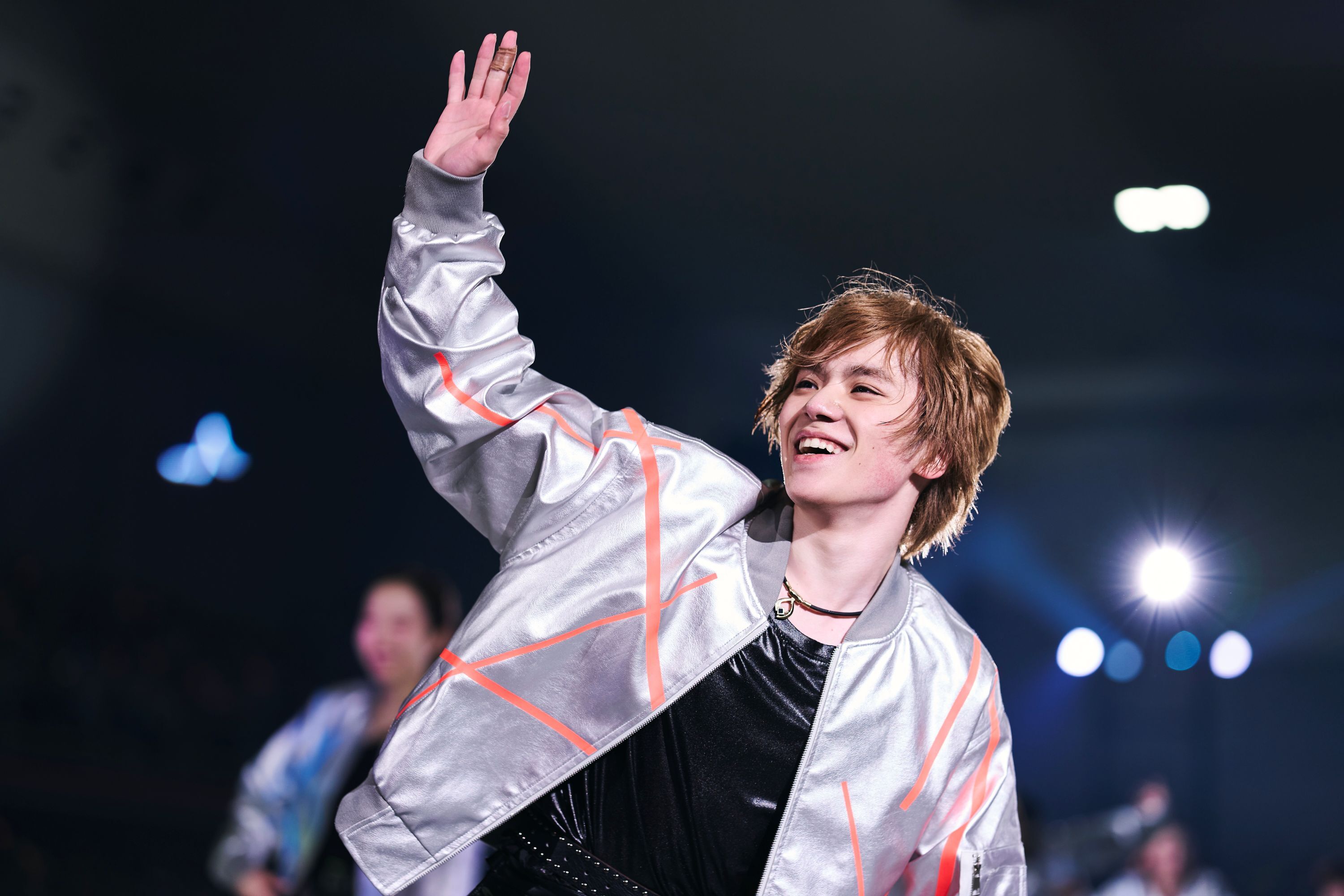
Also Ice Brave 2 posted about their updated program book, now with new photos (the cover is stunning) and backstage talk between Shoma and the guys.... kinda dying at Kussy's sassy pose in the photo, truly living his boygroup dreams lmaoooo.

 
A new fuller, free (!!!!) long interview between Spice (from the Eplus ticketing company) and Shoma about his professional skating career, skating with Stephane, skating with Marin, and of course Ice Brave 2. There are some parts that sounds familiar but the interview put it under one place, and I find it really easy to read.


Machine translation (using AI here):


The State Shoma Uno Has Reached:​

The Professional World He Saw Beyond “Hard Work Is Noble” — and the New Surprises Awaiting in Ice Brave 2, Already Set to Begin

Interview / Sports

October 23, 2025


After retiring from competition in 2024, former world champion Shoma Uno has set out on a new path as a professional skater. His first self-produced ice show, Ice Brave, which he personally oversaw from structure and choreography to music selection and casting, premiered in June. The 90-minute nonstop performance—composed of programs he once skated competitively—dazzled and thrilled audiences.

And now, the nationwide tour of Ice Brave 2 will kick off on November 1 in Kyoto. Featuring ice dance performances with Marin Honda, Uno promises new surprises in this sequel. In this exclusive interview with SPICE, he reflects on his new challenges, how his motivation on the ice has evolved, and what it means to skate as a professional.


“I Wanted to Fill It with Programs That Stir People’s Memories and Passion”​


—Did you always have the desire to produce your own ice show?
Not really. I never imagined that I could produce something, or that a show centered around me could even hold together. I didn’t have that kind of confidence. But people around me encouraged me, saying, “You should really do this,” and I felt a sense of responsibility to respond to their expectations. Once things started moving, there were all kinds of difficulties, but in the end, through trial and error, it became a show I could genuinely feel proud of.

—The structure, featuring your past competitive programs reinterpreted—was that your idea too?
Yes. Since this was my first show, I wanted to showcase my strengths as much as possible. What I’ve been doing for over 20 years is competitive figure skating, which is all about the drive to win. But this time, the focus was on gratitude toward the people who have supported me. So I wanted to include as many pieces as possible that would be meaningful and exciting both for me and for them.

At the same time, I wanted the show to be easy to enjoy even for those watching an ice show for the first time. So I chose music and performances that people could easily associate with me — that’s how the concept took shape.


“A Show Fueled by Full Power — and the Audience’s Energy”​


—The high-energy opening set the tone perfectly. Was the final product close to your ideal?
Yes. It was an unbelievably exhausting show, physically. But since my competitive days, I’ve always given my absolute all—sometimes too much—and I wanted that to come across first and foremost. When I stepped onto the ice and heard the cheers and applause, it was overwhelming. It made me realize that this ice show was completed through the audience.

To me, figure skating has always had a “quiet and beautiful” image. But since the cast was mostly men, I wanted to bring in a laser-lit, fast-paced, almost concert-like energy. Compared to traditional ice shows, ours had fewer skaters, but each one had a highlight moment — everyone was a teammate, part of one shared atmosphere. That’s what felt most “me.”


“The Speed at Which Ice Brave 2 Happened Is Incredible”​


I’m really grateful. When I made Ice Brave, I gave everything I had and assumed that would be the end. So to be able to continue into Ice Brave 2 feels like a blessing. I want every member to feel that this show made them grow, and that it was something truly fun.


“Skating Beside Stéphane Lambiel, I Thought — We’re Both So Selfish”​


—What was it like performing together as professionals with your former coach, Stéphane Lambiel?
When we skated side by side, I honestly thought, we’re both so self-centered (laughs). We’re both singles skaters, so we’re not used to synchronizing. I skate by feel, and Stéphane has his own very distinct artistic sensibility. But from the moment he joined rehearsals, he was the most energetic and clearly having the most fun. Even when I was competing, he always felt more like a friend than a “coach.”

—You also chose the pieces he performed?
Yes. I asked him to skate one program he originally choreographed for me, and another that I personally wanted to see him perform. He was, of course, incredible. I’ve always loved his skating, and he moved exactly as I imagined—actually, even better. He’s 40 now, but still moves so powerfully. It’s almost unheard of for a coach and student to skate together, so that was very special.

He won’t appear in Ice Brave 2 because of his coaching commitments, but I want to keep creating shows so good that he’ll always have a place to return to.


“As a Pro, I Even Want to Try Acrobatics—Safely, of Course”​


—We heard Ice Brave 2 will feature new members and major changes. How different is it?
Over 60% has changed. Almost nothing’s the same! About 70% of the music is reused, but the structure and performances are completely different. Everything I skate in “2” is new.

—What’s been your biggest new challenge?
Acrobatics, for sure.

—On ice?!
(Laughs) Yes, I’ve been practicing. I won’t risk my life over it, but if it can be done safely, I’d love to perform it live.

When I did ice dance for the first time in Ice Brave, I realized that being a pro skater means being able to do many things. And if I do something, I want to do it properly, not just “a little.” So I trained to really complete a proper ice dance routine, not just a collaboration.

Because it’s not just “two singles skaters skating together”—it’s about embodying a completely different discipline. Learning from scratch was difficult, but that’s also what made it so rewarding.


“Marin Honda Is Better Than Me at This”​


When it comes to the ice dance pieces, Marin is far better than me. I ask her for advice all the time — how to move my hands, how to express certain moments. She’s often called a “genius,” but I’ve learned that it’s not just talent — she’s been thinking deeply and practicing deliberately since childhood.

Honestly, I was struggling just to keep up (laughs). Ice dance requires the man to lead, but she ended up leading me most of the time. I’d lose track of direction or rotation in the dark. This time, I want to improve that. The contrast between my powerful numbers and our graceful dance adds a beautiful balance to the show.


“I’d Rather Surprise People with Visible Challenges”​


—Your quadruple flip is legendary. How do you view jumps in shows now?
To be honest, you can’t always tell whether a jump is a triple or a quad just by watching, right? (laughs) Even I can’t sometimes. And in a show, where there’s no score attached, that doesn’t really matter.

What matters more is impact. Something visibly amazing or visibly fun. So instead of obsessing over jumps, I want to take on new challenges that the audience can immediately see — like acrobatics.


“I Want to Make Shows That Burst with Energy”​


—You’ve drawn from many genres—street dance, musicals, ballet. What inspires you most?
I’ve seen overseas musicals, classical ballets, other skating shows... but personally, I feel closest to idol concerts. Rather than elegance or refinement, I want a show where the audience can explode with joy. That’s what excites me.


“I’ve Grown Up — Maybe Too Much”​


—Do your Olympic medals still feel like treasures to you?
They’re definitely a source of confidence. I’m proud that all the training paid off in results. But at the same time, those were moments of the past — they’re not “treasures” I hold onto. They’re convenient when people introduce me (laughs), but I value what I’m doing now more.


—Has your motivation changed since turning professional?
Yes, I guess you could say I’ve grown up — in that sense. My drive has shifted from competition to creation. I’m less focused on winning or losing, and more on making something that I personally find exciting, and giving my best when I’m needed.

I used to be fueled by frustration, but now I move based on how I feel in the moment. If I’m tired, I rest; if I’m upset, I train harder. It’s not about being a “hard worker” — I’ve just always done what I wanted to do.

Now, as a professional, I’m learning to balance freedom with responsibility. When you’re an athlete, it’s enough to focus on yourself. But when you’re producing a show, you’re offering something to others. That change has made me see things differently — things I’d never have felt if I’d stayed in competition forever.


“Beyond Effort — Seeing the World That Lies Ahead”​


—You’ve said, “Don’t get drunk on your own effort.” When did you realize that?
Toward the end of my competitive career. “Effort” is a wonderful word, but it can sound self-satisfied. When someone says, “You’ve worked so hard — good for you,” it can stop your progress right there.

Effort itself is important, of course, but thinking “I deserve something because I worked hard” — that’s not right. That realization came to me when I wasn’t getting the results I wanted.

At some point, I decided: if this is going to end, I want to end it with good memories. So instead of clinging to my past or current status, I told myself, let’s become the kind of skater who could be number one in the world a year or two from now. That’s when the way I practiced completely changed — from quantity to quality. And I improved rapidly after that.


“I Want My Show to Create Positive Ripples for Everyone Involved”​


As a producer, my goal is for Ice Brave to be something irreplaceable — for both the audience and the skaters. I hope this show can create all sorts of positive effects — opportunities for retired competitors, joy for audiences, teamwork and growth for everyone involved.

I want Ice Brave to be something that brings happiness and momentum to everyone — a win-win for all.


“Enjoy It However You Like — There Are No Rules”​


Finally, as the show’s producer, I just want people to enjoy it however they like. During Ice Brave 1, I was nervous, but the cheers and applause reminded me that I was being supported so strongly.

There are no rules for my show — you can shout, laugh, clap, whatever feels right. And we’ll give everything we have in return. I can’t wait to see everyone at the venue.


Interview & Text: Aki Onodera

 
A new fuller, free (!!!!) long interview between Spice (from the Eplus ticketing company) and Shoma about his professional skating career, skating with Stephane, skating with Marin, and of course Ice Brave 2. There are some parts that sounds familiar but the interview put it under one place, and I find it really easy to read.


Machine translation (using AI here):


The State Shoma Uno Has Reached:​

The Professional World He Saw Beyond “Hard Work Is Noble” — and the New Surprises Awaiting in Ice Brave 2, Already Set to Begin

Interview / Sports

October 23, 2025


After retiring from competition in 2024, former world champion Shoma Uno has set out on a new path as a professional skater. His first self-produced ice show, Ice Brave, which he personally oversaw from structure and choreography to music selection and casting, premiered in June. The 90-minute nonstop performance—composed of programs he once skated competitively—dazzled and thrilled audiences.

And now, the nationwide tour of Ice Brave 2 will kick off on November 1 in Kyoto. Featuring ice dance performances with Marin Honda, Uno promises new surprises in this sequel. In this exclusive interview with SPICE, he reflects on his new challenges, how his motivation on the ice has evolved, and what it means to skate as a professional.


“I Wanted to Fill It with Programs That Stir People’s Memories and Passion”​


—Did you always have the desire to produce your own ice show?
Not really. I never imagined that I could produce something, or that a show centered around me could even hold together. I didn’t have that kind of confidence. But people around me encouraged me, saying, “You should really do this,” and I felt a sense of responsibility to respond to their expectations. Once things started moving, there were all kinds of difficulties, but in the end, through trial and error, it became a show I could genuinely feel proud of.

—The structure, featuring your past competitive programs reinterpreted—was that your idea too?
Yes. Since this was my first show, I wanted to showcase my strengths as much as possible. What I’ve been doing for over 20 years is competitive figure skating, which is all about the drive to win. But this time, the focus was on gratitude toward the people who have supported me. So I wanted to include as many pieces as possible that would be meaningful and exciting both for me and for them.

At the same time, I wanted the show to be easy to enjoy even for those watching an ice show for the first time. So I chose music and performances that people could easily associate with me — that’s how the concept took shape.


“A Show Fueled by Full Power — and the Audience’s Energy”​


—The high-energy opening set the tone perfectly. Was the final product close to your ideal?
Yes. It was an unbelievably exhausting show, physically. But since my competitive days, I’ve always given my absolute all—sometimes too much—and I wanted that to come across first and foremost. When I stepped onto the ice and heard the cheers and applause, it was overwhelming. It made me realize that this ice show was completed through the audience.

To me, figure skating has always had a “quiet and beautiful” image. But since the cast was mostly men, I wanted to bring in a laser-lit, fast-paced, almost concert-like energy. Compared to traditional ice shows, ours had fewer skaters, but each one had a highlight moment — everyone was a teammate, part of one shared atmosphere. That’s what felt most “me.”


“The Speed at Which Ice Brave 2 Happened Is Incredible”​


I’m really grateful. When I made Ice Brave, I gave everything I had and assumed that would be the end. So to be able to continue into Ice Brave 2 feels like a blessing. I want every member to feel that this show made them grow, and that it was something truly fun.


“Skating Beside Stéphane Lambiel, I Thought — We’re Both So Selfish”​


—What was it like performing together as professionals with your former coach, Stéphane Lambiel?
When we skated side by side, I honestly thought, we’re both so self-centered (laughs). We’re both singles skaters, so we’re not used to synchronizing. I skate by feel, and Stéphane has his own very distinct artistic sensibility. But from the moment he joined rehearsals, he was the most energetic and clearly having the most fun. Even when I was competing, he always felt more like a friend than a “coach.”

—You also chose the pieces he performed?
Yes. I asked him to skate one program he originally choreographed for me, and another that I personally wanted to see him perform. He was, of course, incredible. I’ve always loved his skating, and he moved exactly as I imagined—actually, even better. He’s 40 now, but still moves so powerfully. It’s almost unheard of for a coach and student to skate together, so that was very special.

He won’t appear in Ice Brave 2 because of his coaching commitments, but I want to keep creating shows so good that he’ll always have a place to return to.


“As a Pro, I Even Want to Try Acrobatics—Safely, of Course”​


—We heard Ice Brave 2 will feature new members and major changes. How different is it?
Over 60% has changed. Almost nothing’s the same! About 70% of the music is reused, but the structure and performances are completely different. Everything I skate in “2” is new.

—What’s been your biggest new challenge?
Acrobatics, for sure.

—On ice?!
(Laughs) Yes, I’ve been practicing. I won’t risk my life over it, but if it can be done safely, I’d love to perform it live.

When I did ice dance for the first time in Ice Brave, I realized that being a pro skater means being able to do many things. And if I do something, I want to do it properly, not just “a little.” So I trained to really complete a proper ice dance routine, not just a collaboration.

Because it’s not just “two singles skaters skating together”—it’s about embodying a completely different discipline. Learning from scratch was difficult, but that’s also what made it so rewarding.


“Marin Honda Is Better Than Me at This”​


When it comes to the ice dance pieces, Marin is far better than me. I ask her for advice all the time — how to move my hands, how to express certain moments. She’s often called a “genius,” but I’ve learned that it’s not just talent — she’s been thinking deeply and practicing deliberately since childhood.

Honestly, I was struggling just to keep up (laughs). Ice dance requires the man to lead, but she ended up leading me most of the time. I’d lose track of direction or rotation in the dark. This time, I want to improve that. The contrast between my powerful numbers and our graceful dance adds a beautiful balance to the show.


“I’d Rather Surprise People with Visible Challenges”​


—Your quadruple flip is legendary. How do you view jumps in shows now?
To be honest, you can’t always tell whether a jump is a triple or a quad just by watching, right? (laughs) Even I can’t sometimes. And in a show, where there’s no score attached, that doesn’t really matter.

What matters more is impact. Something visibly amazing or visibly fun. So instead of obsessing over jumps, I want to take on new challenges that the audience can immediately see — like acrobatics.


“I Want to Make Shows That Burst with Energy”​


—You’ve drawn from many genres—street dance, musicals, ballet. What inspires you most?
I’ve seen overseas musicals, classical ballets, other skating shows... but personally, I feel closest to idol concerts. Rather than elegance or refinement, I want a show where the audience can explode with joy. That’s what excites me.


“I’ve Grown Up — Maybe Too Much”​


—Do your Olympic medals still feel like treasures to you?
They’re definitely a source of confidence. I’m proud that all the training paid off in results. But at the same time, those were moments of the past — they’re not “treasures” I hold onto. They’re convenient when people introduce me (laughs), but I value what I’m doing now more.


—Has your motivation changed since turning professional?
Yes, I guess you could say I’ve grown up — in that sense. My drive has shifted from competition to creation. I’m less focused on winning or losing, and more on making something that I personally find exciting, and giving my best when I’m needed.

I used to be fueled by frustration, but now I move based on how I feel in the moment. If I’m tired, I rest; if I’m upset, I train harder. It’s not about being a “hard worker” — I’ve just always done what I wanted to do.

Now, as a professional, I’m learning to balance freedom with responsibility. When you’re an athlete, it’s enough to focus on yourself. But when you’re producing a show, you’re offering something to others. That change has made me see things differently — things I’d never have felt if I’d stayed in competition forever.


“Beyond Effort — Seeing the World That Lies Ahead”​


—You’ve said, “Don’t get drunk on your own effort.” When did you realize that?
Toward the end of my competitive career. “Effort” is a wonderful word, but it can sound self-satisfied. When someone says, “You’ve worked so hard — good for you,” it can stop your progress right there.

Effort itself is important, of course, but thinking “I deserve something because I worked hard” — that’s not right. That realization came to me when I wasn’t getting the results I wanted.

At some point, I decided: if this is going to end, I want to end it with good memories. So instead of clinging to my past or current status, I told myself, let’s become the kind of skater who could be number one in the world a year or two from now. That’s when the way I practiced completely changed — from quantity to quality. And I improved rapidly after that.


“I Want My Show to Create Positive Ripples for Everyone Involved”​


As a producer, my goal is for Ice Brave to be something irreplaceable — for both the audience and the skaters. I hope this show can create all sorts of positive effects — opportunities for retired competitors, joy for audiences, teamwork and growth for everyone involved.

I want Ice Brave to be something that brings happiness and momentum to everyone — a win-win for all.


“Enjoy It However You Like — There Are No Rules”​


Finally, as the show’s producer, I just want people to enjoy it however they like. During Ice Brave 1, I was nervous, but the cheers and applause reminded me that I was being supported so strongly.

There are no rules for my show — you can shout, laugh, clap, whatever feels right. And we’ll give everything we have in return. I can’t wait to see everyone at the venue.


Interview & Text: Aki Onodera

This is a very good interview. For me, as a fan of Shoma, it’s a great joy to see what a wonderful person he is. It’s such a pleasure to read how maturely he makes his decisions and how he finds purpose in life surrounded by friends. I think his life path is a great example for young people of how to make the most of their potential without losing their own personality.
 
Shoma 🤣🤣🤣🤣 so typical of him to do this an hour before the premiere of Ice Brave 2 LOL.


The setlist of Ice Brave 2 had some new additions that I am curious about 👀 Shoma switched his solo programs from Loco to Gravity and Your Last Kiss (the other song in his Dancing on My Own program). Loco became an all-male group number, and I'm very curious about that ah ah ah.

Shoma also now skated to the MJ group number... it was one of my favorite programs in Ice Brave 1, I want to see 😭

And he debuted a new lift with Marin! The one where she stands on his thighs 😌 apparently they also have a different rotational lift than the one showed in the previous Ice Brave, which they did in the finale of the show. Shoma then jumped 4T and 3A in the finale of 2 shows today 🤣

 
Shoma 🤣🤣🤣🤣 so typical of him to do this an hour before the premiere of Ice Brave 2 LOL.


The setlist of Ice Brave 2 had some new additions that I am curious about 👀 Shoma switched his solo programs from Loco to Gravity and Your Last Kiss (the other song in his Dancing on My Own program). Loco became an all-male group number, and I'm very curious about that ah ah ah.

Shoma also now skated to the MJ group number... it was one of my favorite programs in Ice Brave 1, I want to see 😭

And he debuted a new lift with Marin! The one where she stands on his thighs 😌 apparently they also have a different rotational lift than the one showed in the previous Ice Brave, which they did in the finale of the show. Shoma then jumped 4T and 3A in the finale of 2 shows today 🤣


She stood on his thighs? Wow! That’s amazing to pull off. I hope the blades didn’t dig in deep because that hurts getting cut by a skating blade.
 
Back
Top