The sport is inherently very unwieldy and overall unsatisfying in terms of coverage. I think the small, local events are considered more interesting to friends and family members and perhaps to a few diehard fans who enjoy particular disciplines and who tend to follow lesser known up-and-coming skaters.
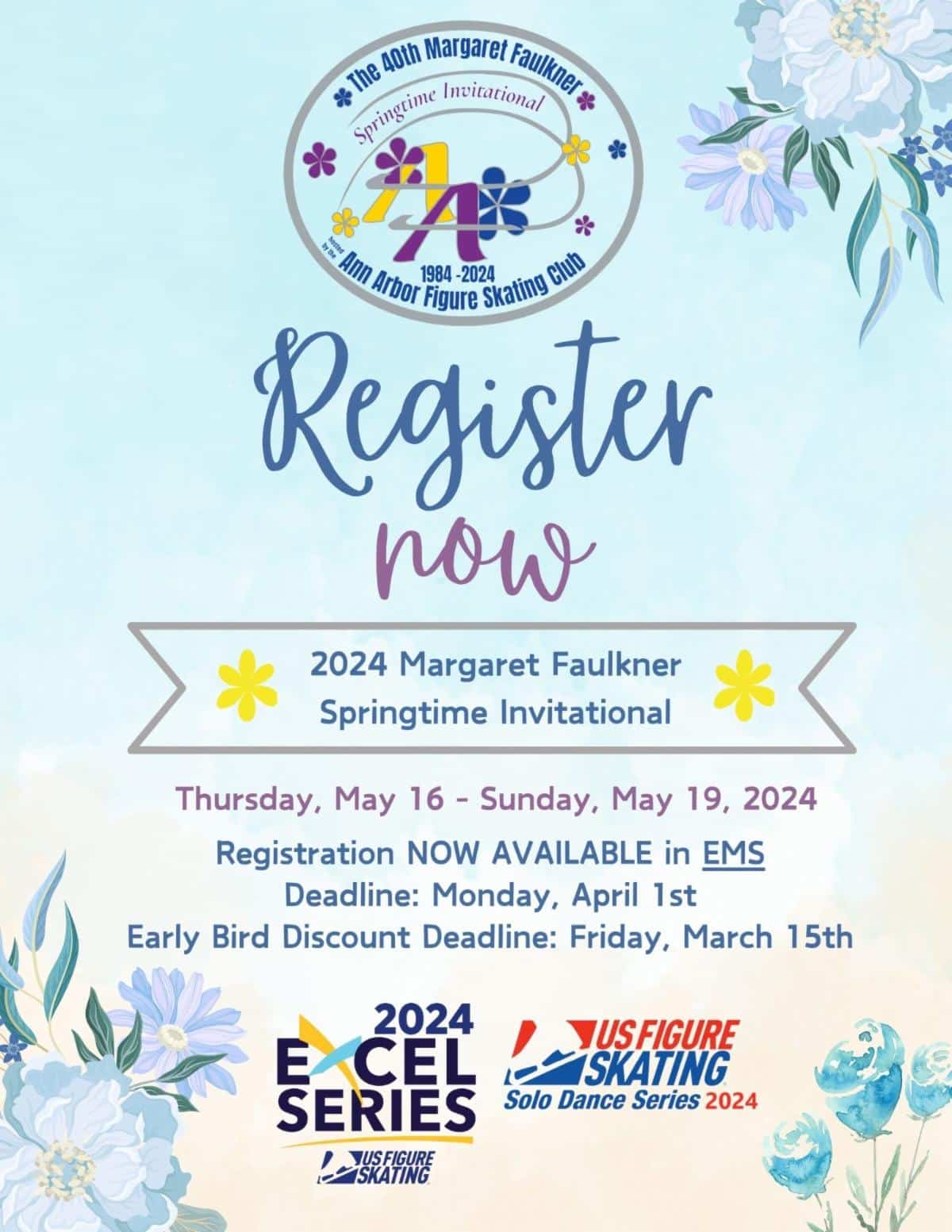
Ann Arbor and Fort Collins are warm-up events for the most part, organized for members of local and regional clubs. Clearly, when teams are the sole entry and they have no plans to compete both programs, these events are not on the radar for most fans, and not considered substantive enough to cover, or even to necessarily mention by sports bloggers/vloggers. At the club level, I'm sure these are very important events, and skaters have to begin somewhere.
I am a pairs aficionado, so I remember watching the U.S. Nationals junior pairs event in January.
Event Results for 2021 Toyota U.S. Figure Skating Championships
ijs.usfigureskating.org
Event Results for 2021 Toyota U.S. Figure Skating Championships
ijs.usfigureskating.org
The discipline at the lower levels in the U.S. particularly is always undergoing change, many transitional moments, and cycles when top juniors move to seniors. Finster/Nagy won in 2020 and then moved up to seniors prior to splitting. Deardorff/Johnson who looked good together as mirror partners are now kaput, as Johnson decided to move on to academics, with a medical school focus. The uncertainties around the pandemic definitely triggered a number of retirements. I enjoyed Deardorff in seniors with her former partner, veteran pairs skater, Max Settlage, who had to retire after a couple of seasons with Winter Deardorff (sadly for Winter and for their fans).
It's clear that so many of these current young skaters have a long way to go in their development. The partnering match-ups are not always the best, so that contributes to the constant musical chairs. Plus, there's likely an impatience by athletes to succeed, when the road to improvement is necessarily going to be slow, unless you come in with blazing skills like the Ukrainians turned prospective U.S. citizens, and now U.S. junior pairs champions, Smirnova/ Siianytsia.
A number of these young teams need more fundamental tech training and figures practice to develop better edge control, speed, and confidence on difficult elements. For 2021 U.S. juniors, the top two placements seemed assured. S/S have solid skills, and they are continuing to improve in all areas, including on-ice chemistry and presentation, which is usually an ongoing process throughout a career.
I've watched the second place, team, Martins/Bedard for many years. It's so nice to see them grow together and stay together. They seem to have a joy and passion for the sport, and hopefully a continuing loyalty and commitment to their partnership, under coaches, Berton/Brubaker, in Chicago. Martins used to be very tiny next to Bedard, but she's grown a lot in the last 2 years. It's nice that Bedard was much taller than her, so that now, even with her long legs and greater height, they still match well together. Their programs are looking very well packaged, and they have good chemistry and knowledge of each other. They really need to work on improving their twist. Plus, Martins does not get a lot of height on her jumps. Possibly, as she continues to mature, she will gain more strength so they can develop more explosive pop. They have good speed, but that aspect can always be further developed. Their throws are nice, and they have good lifts. But they need a lot of work on their sbs jumps as well as improving technique, timing, and height on their twist. A clip from Martins of their throw 3 loop:
https://www.instagram.com/p/CMXRBpMAdCD/ 
Teams who landed in 3, 4, and 5 overall had to battle, as they are generally equal in abilities, with some teams having greater strengths than others in particular areas.
I think Cooke/Bearinger are a relatively new team. I remember watching Cooke with former partners. I was pleasantly surprised by how well Cooke/Bearinger look together. They have excellent lines and elegant movement qualities. Their sp was a hit with the judges and they placed third in that segment. Unfortunately, their fp music and concept did not go over as well with the judges, as did their more lyrical sp. Personally, I was sold on Cooke/Bearinger altogether, so they remain memorable for me. I hope they can steadily improve their weaknesses and reach greater heights in the senior ranks. While I also enjoyed Rivers/Chapman very much in both programs, I'm not sure why the 6-point difference between their fp and that of Cooke/Bearinger. Yes, Cooke fell on a throw and Bearinger fell on a sbs jump, so they had miscues that can drop you in the standings. Still, C/B seem more polished overall than R/C. Plus, Rivers fell on sbs jumps and had a hand down on a throw. Rivers wore a lovely costume for the free program, and I think R/C's fp concept worked better for them than did C/B's fp in their black costumes. Cooke had worn a striking lavender costume for their lyrical sp where they placed third.
I was not overly impressed by Plazas, but her partner Fernandez has a lot of experience and it shows. I didn't find their fp that memorable. It was rather generic, but they are capable and they match well. I forget the names of Fernandez's former partners, but he's been training under Jim Peterson for awhile. It's nice for Fernandez to have placed 3rd in juniors prior to aging out, and moving up to seniors. I felt sad for Cooke/Bearinger, but they are a new pairing, and so with more time they hopefully will get their bearings and make enormous strides together in seniors. Rivers/Chapman are pleasant together and seem to have potential. But I'm not as drawn to their skating as much as I was to the elegant style and maturity of C/B.



 I guess Chelsea had been seen working in the Jenni & Todd group, so I wonder if they'll be training there.




 )
)