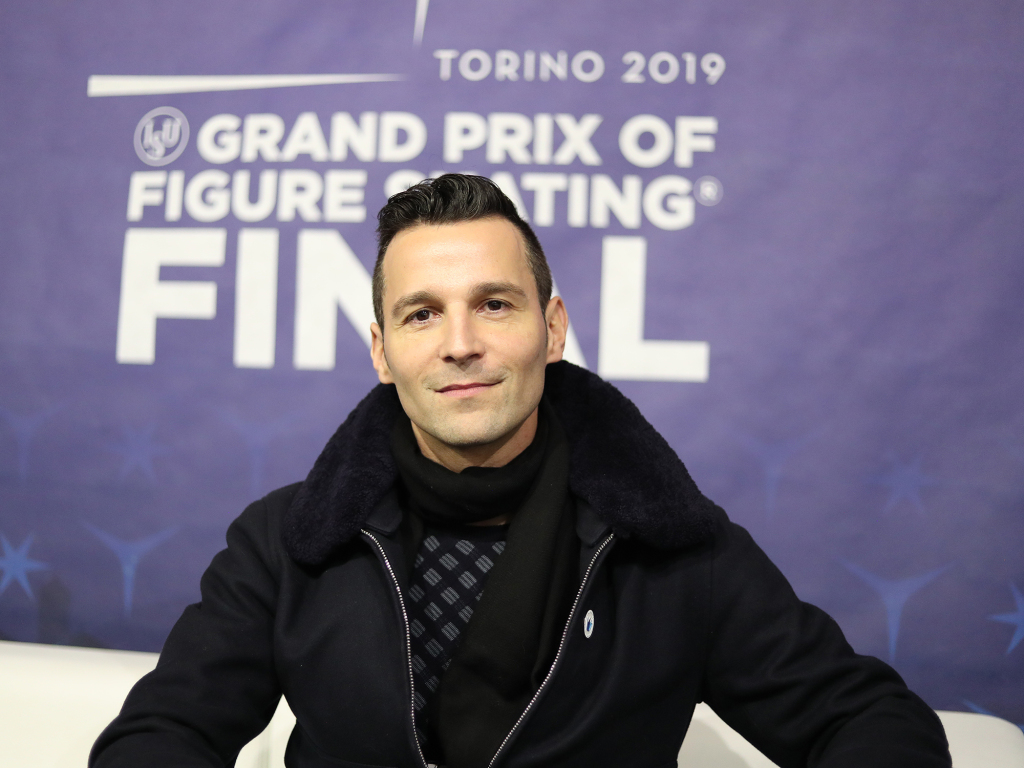
— Earlier in our talk, you mentioned the British judge who was highly suspicious of Lilah’s and Lewis’s disco choice; you also emphasized at the beginning that figure skating is a judged sport, which of course impacts many decisions. This may explain why figure skating in general remains an extremely conservative sport in terms of musical choices. Throughout the history of this sport, one finds dozens of programs that use the same «Carmen», «Swan lake» or other popular classical pieces. There are strict gender expectations, too, which are also part of this conservatism — expectations for women and men to skate in certain ways, and for pairs’ programs to be all about the relationships between men and women. There are still a lot of stereotypes of this sort. How are you dealing with this issue? Have you ever tried to break the rules or overcome certain boundaries, this frame — and how?
— It is difficult to answer your question — but I do agree with everything you said! I appreciate variety in skating. If all skaters start skating to popular songs, everyone will complain that they are all doing the same thing. Some skaters can bring more modern and experimental stuff to the table, but others might be just not in that stage of their careers yet. I did ‘Swan lake’ with my Chinese team, for instance — and why not? It gave them the opportunity to work on their lines. A classical program could help some of the skaters to do this important work. The choice that we have is at the same time wide and not so wide. The problem lies not so much in the choice itself as in the quality of execution. It would not be all that bad if we were to watch 10 Swan lakes or Don Quixotes, on condition that the quality is there, that they are performed really well.
Another problem is that when the Olympics arrive, people want to win, to do their best, and they want an Olympic performance — not just to skate clean and make all the elements, but also to touch people. And it is very difficult to touch people with the music they don’t know. Classical hits belong to the whole world, whereas even the best songs, say, in Russia, or France, or the US, would hardly touch so much people from different countries and with a different background. This limits the choice we have.
I think the leaders in each discipline have to push the boundaries, because everyone’s unconsciously following the leader — not necessarily copying, but definitely making choices that are influenced by the leaders. I often get complaints that Gabriella and Guillaume are doing the same thing over and over again. But it is true about every couple that follows their lead. Somehow, for them it is fine, whereas for the leaders it becomes a problem all of a sudden. The leaders are more vulnerable, too, and often get attacked for their choices. People expect them to do something demanding, something new — that puts a lot of pressure on them, a lot of expectations.
Another problem with figure skating as a form of art is that its main stage — the ice rink — is simply horrible for artistic creation: it is too white, there is so much light there, you have the audience sitting all around, so there is no real background, no depth. And the atmosphere is not quite suitable either — it’s the opposite of what you have in all the great theaters. This impacts the choice, too. This place has not been created for the appreciation of music and art. It is much easier to achieve in an exhibition number, when the lights are switched off and you can focus on the skater. It is not at all like that during the competition — it looks more like a hockey match!
Ultimately, as a coach, I have to take risks into account. At the end, we are not creating art for the humanity to enjoy — we want to win medals. For that, we need to make the right strategical decisions, including the choice of music. People know that with these classical hits you can win, because someone else won before you. This music speaks to the people. We made some riskier choices, too, particularly with Gabriella and Guillaume — for instance, in their last free dance («Find me»). Some loved it, some did not understand, and some thought that it was not music at all. I heard this from some judges: it is not music!
But then my natural response would be: define what is music! Because to me, if there is sound — there is music.