
Navigation
Install the app
How to install the app on iOS
Follow along with the video below to see how to install our site as a web app on your home screen.
Note: This feature may not be available in some browsers.
More options
You are using an out of date browser. It may not display this or other websites correctly.
You should upgrade or use an alternative browser.
You should upgrade or use an alternative browser.
Does "level hunting" kill the beauty of figure skating?
- Thread starter TT_Fin
- Start date


- Joined
- Jun 21, 2003
Disco? Wake me up when someone skates to Haydn.Come on, if anyone are myopic bandwagoners its the oldies. Its an "old-timer throwback" disco/rock dance or some melodramatic neoclassical otherwise the geriatrics are fast asleep.


- Joined
- Jan 29, 2007

I do not mean skaters want to please judges, but the rules are going that way. Put something "ugly and strange and earn more scores" or try quads or other difficult elements when you really are not ready to. I am not against quads if there is more at program and skaters can jump then clean and not hurt themselves because of trying to much.Dont see it. In every interview I watch, at least for the ladies, the girls rave about how excited they are to show themselves to the fans as much as possible. Just today I watched a Bazyluk interview and when asked about scores she said she doesnt even look at scores (she is being hyperbolic but the point is clear), "I just want to skate for the fans as well as I do in training, the judges are on their own to score whatever they want". I remember Muravieva last season barely missed on being national champion, I expected her to be devastated as she usually is but she ended up just being ecstatic that she finally skated a clean FS for the fans. Petrosian stone faces interviews in actual scored competitions with 250 score, meanwhile the only time I ever saw her shed a tear was at test skates last year, "I just want to effectively transmit the heart and emotion my trainers put into this program". I almost never see a skater complain about scores, only letting down fans.
Most skaters for sure want to please and perform for audience, if they would not, they probably would not have chosen such sport where everybody focuses only for them and nothing else. But I must think like @Karoltyna. Maybe I feel better if I think who does have the strangest and funniest moves, like I was at circus. Well fashion goes sometimes backwards for decades, why it is bad if FS sometimes goes backwards? I think amount of audience has decreased especially at small feds.

My thoughts about the whole topic of the thread:
Back before IJS, skaters would often try to be creative and to push the boundaries of the sport by attempting new skills and variations that were not part of the standard repertoire at the time.
Sometimes the innovation was a beautiful new position, e.g., in spins, spirals, jump landings, etc.
Other times it was something difficult that the skater had not (yet?) mastered to the point of making it beautiful. As that skater continued to develop their signature move or as other skaters adopted and adapted it, that move may have become aesthetically effective parts of beautiful programs, as well as sometimes being used by less accomplished skaters with less aesthetic success.
Personally, I always enjoyed the creativity of skaters attempting unusual skills, especially things I had never seen before. Even if not beautiful in terms of refined body line, I appreciated the artistry of experimenting with new possibilities of the medium. And from a technical perspective I also enjoyed expanding the range of skating skills, especially when they involved unique uses of the blade.
When IJS was introduced, the definition of levels for non-jump elements codified some of the skills that had once been rare into available features to earn higher levels. The more difficult ones remained relatively rare. The ones that more skaters were able to accomplish well enough to earn the higher base values became common -- some might say too common.
Once everyone (or so it seems) is including the skill, there's no more creativity value. In many cases the added difficulty is still to be admired and rewarded. In other cases the ISU tech committees decided that some skills were not that difficult after all and wrote them out of the available level features. In which case many skaters stopped including them. (An exception is backspin-first combination spins, which used to be rare, became more common when backward entry was a level feature for spins, and remain more common than in 6.0 era even after it's no longer a feature.)
And it isn't only skaters who are especially good at these skills who include them in their programs. If there is a guaranteed higher base value for achieving the minimum execution of the skill, skaters will often include them in pursuit of that higher base value, even if the likely negative effect on the GOE for the element might more than offset the the base value increase.
The same is true, e.g., for jump combinations. When using a half-loop/Euler to end a jump "sequence" with a flip or salchow jumps reduced the value of the sequence to 80% of the total base value, this skill remained relatively rare. Once jump-Euler-jump was classified as a combination with full base value, it became more of a standard part of the repertoire. Similarly with jump-axel sequences -- when the sequence carried the 80% penalty, they were relatively rare; now that these sequences earn full base value, they have become (all too) common.
And for the increase of transitional moves between elements (especially when there was a separate Transitions component) and on difficult/unexpected jump entrances, varied jump positions, etc., that fulfilled bullet points to increase the GOEs. When rules offered (or seemed to offer) an automatic reward for including more of these skills/variations, many skaters included them regardless of whether the effect on the beauty of the element or the program as a whole would be enhanced or diminished. When rules were rewritten to clarify that certain options were not in fact guaranteed a reward, skaters became less likely to include them.
This is one reason the ISU keeps tweaking some of these rules every few years. And then some overused skills start to become rare again, while new ones become the new overused flavor of the year.
Competitive skaters are always going to look for ways to earn higher scores. With IJS, the rules spell out many areas where additional points are available to them. They will go for the points, with whatever options seem most likely to earn them the higher scores.
Sometimes that means including less attractive moves, or performing difficult moves with less aesthetic success especially during the learning process or when there are errors in execution.
After all, a triple axel, for example, can be a beautiful move when performed well and an ugly one when performed with major errors or ungainly technique. But even long before IJS, it became common for skaters to include these difficult jumps in their programs if they had a reasonably good chance of landing them successfully, even if that particular skater was not capable of performing them beautifully even when successful.
When it comes to jumps (and similarly risky pair moves), we don't really expect competitive skaters to attempt technically easy programs just so that they can perform clean beautiful programs, as if "clean and beautiful" should always outweigh difficulty.
Personally, I take the same approach to appreciating other types of elements as well. To the extent that competitive skating is a technical sport, I love to see skaters pushing the technical envelope in all areas, not only jumps.
And I enjoy skaters attempting skills that are unique even if not beautiful, or still rare even if now officially encouraged by rules offering extra points and therefore becoming more common (as with the spinning on the heel or toe of the blade in the new spin feature).
To me personally, technical innovation and creativity are just as emotionally satisfying as "beauty."
YMMV.
Or did you really mean GOEs for elements? Skaters earning +3 on an element and you think that all or most of that positive score came from the "enhances the musical structure" bullet point?
Back before IJS, skaters would often try to be creative and to push the boundaries of the sport by attempting new skills and variations that were not part of the standard repertoire at the time.
Sometimes the innovation was a beautiful new position, e.g., in spins, spirals, jump landings, etc.
Other times it was something difficult that the skater had not (yet?) mastered to the point of making it beautiful. As that skater continued to develop their signature move or as other skaters adopted and adapted it, that move may have become aesthetically effective parts of beautiful programs, as well as sometimes being used by less accomplished skaters with less aesthetic success.
Personally, I always enjoyed the creativity of skaters attempting unusual skills, especially things I had never seen before. Even if not beautiful in terms of refined body line, I appreciated the artistry of experimenting with new possibilities of the medium. And from a technical perspective I also enjoyed expanding the range of skating skills, especially when they involved unique uses of the blade.
When IJS was introduced, the definition of levels for non-jump elements codified some of the skills that had once been rare into available features to earn higher levels. The more difficult ones remained relatively rare. The ones that more skaters were able to accomplish well enough to earn the higher base values became common -- some might say too common.
Once everyone (or so it seems) is including the skill, there's no more creativity value. In many cases the added difficulty is still to be admired and rewarded. In other cases the ISU tech committees decided that some skills were not that difficult after all and wrote them out of the available level features. In which case many skaters stopped including them. (An exception is backspin-first combination spins, which used to be rare, became more common when backward entry was a level feature for spins, and remain more common than in 6.0 era even after it's no longer a feature.)
And it isn't only skaters who are especially good at these skills who include them in their programs. If there is a guaranteed higher base value for achieving the minimum execution of the skill, skaters will often include them in pursuit of that higher base value, even if the likely negative effect on the GOE for the element might more than offset the the base value increase.
The same is true, e.g., for jump combinations. When using a half-loop/Euler to end a jump "sequence" with a flip or salchow jumps reduced the value of the sequence to 80% of the total base value, this skill remained relatively rare. Once jump-Euler-jump was classified as a combination with full base value, it became more of a standard part of the repertoire. Similarly with jump-axel sequences -- when the sequence carried the 80% penalty, they were relatively rare; now that these sequences earn full base value, they have become (all too) common.
And for the increase of transitional moves between elements (especially when there was a separate Transitions component) and on difficult/unexpected jump entrances, varied jump positions, etc., that fulfilled bullet points to increase the GOEs. When rules offered (or seemed to offer) an automatic reward for including more of these skills/variations, many skaters included them regardless of whether the effect on the beauty of the element or the program as a whole would be enhanced or diminished. When rules were rewritten to clarify that certain options were not in fact guaranteed a reward, skaters became less likely to include them.
This is one reason the ISU keeps tweaking some of these rules every few years. And then some overused skills start to become rare again, while new ones become the new overused flavor of the year.
Competitive skaters are always going to look for ways to earn higher scores. With IJS, the rules spell out many areas where additional points are available to them. They will go for the points, with whatever options seem most likely to earn them the higher scores.
Sometimes that means including less attractive moves, or performing difficult moves with less aesthetic success especially during the learning process or when there are errors in execution.
After all, a triple axel, for example, can be a beautiful move when performed well and an ugly one when performed with major errors or ungainly technique. But even long before IJS, it became common for skaters to include these difficult jumps in their programs if they had a reasonably good chance of landing them successfully, even if that particular skater was not capable of performing them beautifully even when successful.
When it comes to jumps (and similarly risky pair moves), we don't really expect competitive skaters to attempt technically easy programs just so that they can perform clean beautiful programs, as if "clean and beautiful" should always outweigh difficulty.
Personally, I take the same approach to appreciating other types of elements as well. To the extent that competitive skating is a technical sport, I love to see skaters pushing the technical envelope in all areas, not only jumps.
And I enjoy skaters attempting skills that are unique even if not beautiful, or still rare even if now officially encouraged by rules offering extra points and therefore becoming more common (as with the spinning on the heel or toe of the blade in the new spin feature).
To me personally, technical innovation and creativity are just as emotionally satisfying as "beauty."
YMMV.
Are you talking about the Interpretation component (part of the PCS, not the GOEs)? Component scores in the 3s are rare at the senior or even junior international levels, but the vast majority of skaters in the world who are not junior or senior level do indeed deserve and earn scores in the 3s and lower, or some especially weak non-elite skaters competing as juniors or seniors.Yes, musicality would be worth another thread and if it was still judged separately I would make another thread of it. I am pleased it is not judged separately any more. Low level skaters (read skaters who hardly got not jump triples but skated clean) got something like 3 GOEs from musicality even when they skating to music was perfect. Very very few of skaters is really that bad.
Or did you really mean GOEs for elements? Skaters earning +3 on an element and you think that all or most of that positive score came from the "enhances the musical structure" bullet point?


- Joined
- Mar 7, 2015

i agree but it's not because of the rule... it's because the skaters haven't found a way to make it nice...I find this jump during spinning hilarious. It's small, mostly wonky, looks awkward and you can see it was added because you need the "feature" to get higher level.
here's a wonderful example.


- Joined
- Jan 28, 2013
Well, since we're all registering our gripes.
Mine is the pretend illusion spin entries. I say "pretend" because hardly anyone actually does them in a convincing way. This is an old gripe from me.
Another old one. The catch-foot on camels where the skater has to reach down to practically knee-level to grab the foot. Although, I was pleasantly surprised to see the Ilia did a better job with this at Lombardia. I could tell he'd been working that feature. Still not perfect, but a big improvement, so good for him, I guess.
Another old one. The jump exit features that devalue a pure running glide out. I'd much rather see a pure edge held in classic position than error-disguising twizzles and pointless little hops.
Here's a more recent entry to my list of complaints. The pretend butterfly/arabian exits from spins. Those just don't look nice.
Thus endeth the complaints of the old dude. For today.
Mine is the pretend illusion spin entries. I say "pretend" because hardly anyone actually does them in a convincing way. This is an old gripe from me.
Another old one. The catch-foot on camels where the skater has to reach down to practically knee-level to grab the foot. Although, I was pleasantly surprised to see the Ilia did a better job with this at Lombardia. I could tell he'd been working that feature. Still not perfect, but a big improvement, so good for him, I guess.
Another old one. The jump exit features that devalue a pure running glide out. I'd much rather see a pure edge held in classic position than error-disguising twizzles and pointless little hops.
Here's a more recent entry to my list of complaints. The pretend butterfly/arabian exits from spins. Those just don't look nice.
Thus endeth the complaints of the old dude. For today.
- Joined
- Jan 28, 2013
Me, after the elder Selevko unleashed the plague of the heel spin difficult feature upon us: yes.
He wasn't the first to do it. I remember someone back in olden times. Maybe Timothy Goebel? But, for sure, he is the most memorable recently.
Anyhow, the ISU must have also thought that was cool, and that he rightfully deserved a little score boost for it. But if they offer to him, they must offer to everyone. I suspect we'll be sick of it before the year is up.
I haven't seen a lady do it yet, but I haven't followed the early season women too closely, so perhaps I've missed it.

- Joined
- Aug 8, 2023
Yea, I totally agree. But at the same time, when the girl only cries at a test skates and stone faces 250 score, or another barely misses gold but is evidently happy just for the performance (despite being known for mental break downs), it means something. Cant really PR that. The point is not that I am trying to prove anything, but just that evidence goes against the original claim made that modern skaters show a trend towards focusing on scores and not performance, so I dont think its a fair claim.Errr, any with any brains does not complain too much these days about their scores in public because that's the way to get really dogpiled on. They are also mostly being schooled in pr speak so I'd take what they say about it with a heaping grain of salt.
I thought about that a few times. A Haydn program. He has some pieces that would be refreshing for skating. Sophisticatedly touching without excessive drama. It would take a special skater to pull it off. I choose Akateva for someone like that, I think her aristocratic temperament suits it.Disco? Wake me up when someone skates to Haydn.


- Joined
- Feb 12, 2014
One of the junior women did it this past week, but I don't remember who it was off the top of my head.I haven't seen a lady do it yet, but I haven't followed the early season women too closely, so perhaps I've missed it.


- Joined
- Jan 31, 2019
For me including and cycling through those features is the same as rhythms in rhythm dance, a test of skill. It is necessary to challenge the athletes particularly with the projected/desired increase in longevity. Otherwise, the athletes will always use the moves that they know best mixing and matching them in all their programs for 10 years in a row (and they did). Asking for new moves demonstrates a skillset versatility. If nobody except that one guy could seamlessly and prettily hop during the spin, well, that one guy gets points. working as intended. Their job is to make everything beautiful or cool. The PCS reflects how successful they are with that.
Last edited:

- Joined
- Apr 23, 2018

Oh ye of so much faith......Yea, I totally agree. But at the same time, when the girl only cries at a test skates and stone faces 250 score, or another barely misses gold but is evidently happy just for the performance (despite being known for mental break downs), it means something. Cant really PR that.
Oh ye of even more.Their job is to make everything beautiful or cool. The PCS reflects how successful they are with that.
- Joined
- Aug 8, 2023
I dont totally understand. You can say she PRs the stoneface for a 250 but is she crying on purpose at test skates as well for some overall PR? And Muravieva had mental break downs after every skate but managed to put on the most convincing happy act after one good skate despite still losing the gold? Its all PR?Oh ye of so much faith......
I mean, maybe thats your claim, and I wouldnt even debate further if you just double down and state that explicitly. I cant prove you wrong or myself right. But I dont see how I'm the one taking the faith position; it seems like Occam's razor is on my side. I agree there is PR training and there are things they know to say/not to say for good reason. But to get teenage girls under worldwide championship pressure, resulting in devastation or total bliss, to maintain a perfect emotional script to the tiniest facial marker consistently does not seem reasonable to me. Again, I am proving nothing, neither claiming that every skater is an artist and cares more about performance than scores and placement; I am just demonstrating that pessimistic claims about the art and sport trending towards total industrialization and robbery of spirit are not supported but also contradicted by the evidence.
To expand, actually I dont think its crazy to claim that these athletes are totally cognizant of every single word/action they present; crying, rejoicing or stonewalling on command independent of any real emotions for some greater purpose. But to support this theory you would need to invoke some conspiratorial explanations for why and how they do it, since that is a massively disproportionate effort in both acting training and general planning given your suggested motive of just "PR" which offers zero explanatory power. I am willing to entertain conspiratorial explanations, but I assume you and 99% of users arent. So I always engage assuming the official face value paradigm, under which again I dont see how I am taking the faith position with my explanations. Girl cries for pointless test skates performances explaining through tears why she cares so much about the program for artistic and expressional reasons, but shows no care when she skates the highest scored skate of any lady in the world that year. You have the burden of evidence if you suggest ulterior motives to the immediate interpretation of such things.
Last edited:
- Joined
- Apr 23, 2018
I'm waiting for 4'33" myself (has anyone done it yet?)Disco? Wake me up when someone skates to Haydn.

- Joined
- Mar 3, 2014

Let's play a game. A variation on the OP's question.
If you were King or Queen of the ISU, what is the ONE feature you'd ditch?
Mine is the Biellmann finisher to laybacks.

Lord have mercy I dislike Bielmanns. I do not mind laybacks, especially for men, that demonstrate flexibility. But Bielmanns are ugly.
I spins as done by ladies are ugly. I don't need to see someone yank their leg up next to their ear. Meh.
I would have said butt spins, but Donovan Carrillo actually has a decent looking butt spin. I would require the Donovan variation or else, just don't.
- Joined
- Mar 7, 2015
A good Bielmann is wonderful. A good layback too. A good A spin or I spin of whatever the pretzel you want (with mustard please).!
The issues only come when skaters "NEED" to include those features to get levels... One of the best spinners of the world, Keegan Messing often struggled to get levels...
The problem is that flexibility is often the key to high levels and some skaters are not very flexible. Keegan should have received level 4 just looking at the speed and number of revolutions he was doing.. no need for anything crazy in there... yet he wouldn't.
So keep the flexibility feature for those who can do it, and make sure there are other routes for others.
Lifts is actually the worst place in my opinion.... everyone does the ugly leonova-kwalko position to level up...
Maxime and Deanna worked their way differently but it took them a long time to create lifts that would get all features without turning Deanna into a pretzel...
The issues only come when skaters "NEED" to include those features to get levels... One of the best spinners of the world, Keegan Messing often struggled to get levels...
The problem is that flexibility is often the key to high levels and some skaters are not very flexible. Keegan should have received level 4 just looking at the speed and number of revolutions he was doing.. no need for anything crazy in there... yet he wouldn't.
So keep the flexibility feature for those who can do it, and make sure there are other routes for others.
Lifts is actually the worst place in my opinion.... everyone does the ugly leonova-kwalko position to level up...
Maxime and Deanna worked their way differently but it took them a long time to create lifts that would get all features without turning Deanna into a pretzel...
- Joined
- Jan 29, 2007
It is not so far away when layback in women was even compulsory. It was removed from compulsory elements because skaters got so much back injuries when they tried more than they flexibility bends.
If you were King or Queen of the ISU, what is the ONE feature you'd ditch?
My answer: In pairs the lift where the women is at split position - if not the whole position, then the position when her head is down at the same time. I already know many other have the same.
If you were King or Queen of the ISU, what is the ONE feature you'd ditch?
My answer: In pairs the lift where the women is at split position - if not the whole position, then the position when her head is down at the same time. I already know many other have the same.
- Joined
- Mar 7, 2015
the leonova-kwalko i was mentioning... i hate the lift position.. it probably would be the same for me... but again, I don't want to ban anything LOL... because what if someone really does it well ? like donovan's butt spin... it's the best since emmanuel sandhu and that says a lotIt is not so far away when layback in women was even compulsory. It was removed from compulsory elements because skaters got so much back injuries when they tried more than they flexibility bends.
If you were King or Queen of the ISU, what is the ONE feature you'd ditch?
My answer: In pairs the lift where the women is at split position - if not the whole position, then the position when her head is down at the same time. I already know many other have the same.
I agree.but again, I don't want to ban anything LOL... because what if someone really does it well ? like donovan's butt spin... it's the best since emmanuel sandhu and that says a lot
Instead, what I'd like to see would be a change in the scale of values such that each step in positive GOE would be worth more than adding a level. It would always be more valuable to earn, say +3 on a level 3 spin than +2 on a level 4 spin.
That way, skaters would have more incentive to make sure they can execute the features they choose with good quality before adding another feature.


- Joined
- Aug 24, 2022
I like the play
Personally, I too would ditch the split position liftings in pair skating, for me they became completely unelegant, disgusting and anti aesthetic..... There are a few other lifting positions that are nice, simple yet complex instead, that I prefer a lot. Here's an examples of them. I don't know the exact name of these liftings, but I always liked them.
(I hope the attached image isn't too big to be loaded)
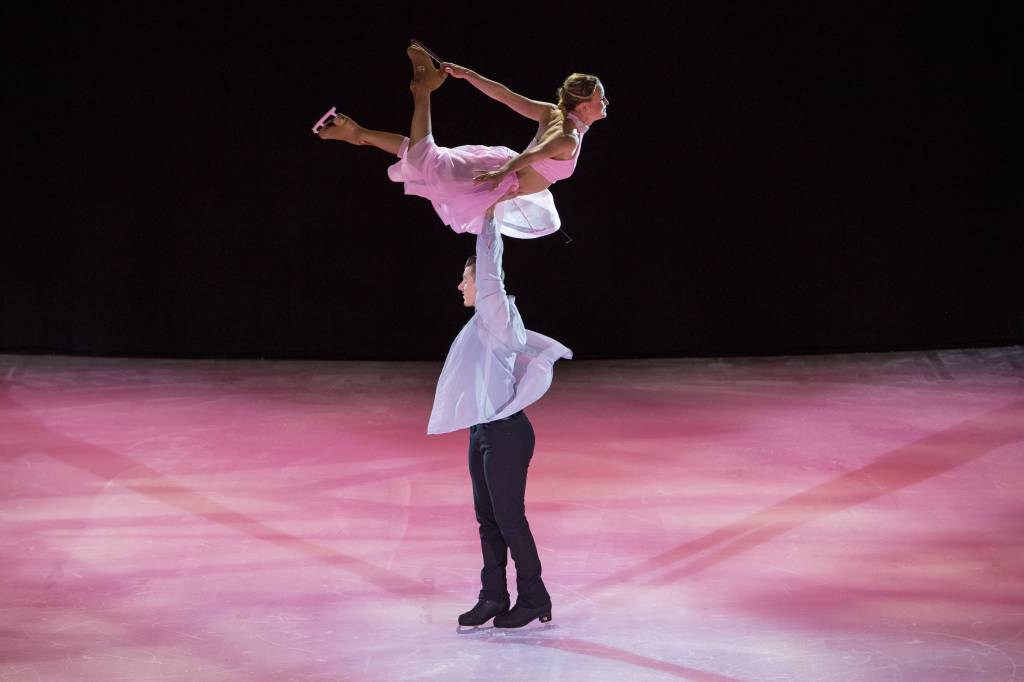
Personally, I too would ditch the split position liftings in pair skating, for me they became completely unelegant, disgusting and anti aesthetic..... There are a few other lifting positions that are nice, simple yet complex instead, that I prefer a lot. Here's an examples of them. I don't know the exact name of these liftings, but I always liked them.
(I hope the attached image isn't too big to be loaded)
Similar threads

- Replies
- 7
- Views
- 2K


- Replies
- 9
- Views
- 1K

- Replies
- 2
- Views
- 2K

- Replies
- 44
- Views
- 4K