
Navigation
Install the app
How to install the app on iOS
Follow along with the video below to see how to install our site as a web app on your home screen.
Note: This feature may not be available in some browsers.
More options
You are using an out of date browser. It may not display this or other websites correctly.
You should upgrade or use an alternative browser.
You should upgrade or use an alternative browser.
Shoma Uno
- Thread starter rabidline
- Start date
More options
Who Replied?




- Joined
- Aug 16, 2018
I really enjoyed watching the stream of OPOI! It really was as good as last year if not even better. Shoma is obviously excellent as a Shonen protagonist in his action scenes but this time there were moments that genuinely moved me... his Luffy was really warm, especially when he comforted Vivi after their fight and as the Straw Hat crew was about to leave Alabasta at the end. Well I suppose that's not hard for him to act out  but it was really lovely. Also all lifts are completed successfully. Less success with the quads
  but he's Luffy so it doesn't matter. A fan said there were kids saying Luffy is so cool for smiling even after falling on ice, so I hope that one reached Shoma.
Meanwhile, playing Luffy gave Shoma one thing he's never really quite able to fully do in competition: split jumps these likes, lol.
It's extremely funny to read OP fans going, "well it's Shoma Uno!! of course his jumping power is amazing!!!!!" when it's like... not even his forte during competitions
I don't know if it's because of the bigger arena, but I really love the quality of the stream on these particular shows. The angles are really good. I hope they can continue playing more of the story arcs in One Piece! (There was a survey for the audience to ask which story they would like to see next....)
but it was really lovely. Also all lifts are completed successfully. Less success with the quads but he's Luffy so it doesn't matter. A fan said there were kids saying Luffy is so cool for smiling even after falling on ice, so I hope that one reached Shoma.Meanwhile, playing Luffy gave Shoma one thing he's never really quite able to fully do in competition: split jumps
these likes, lol.It's extremely funny to read OP fans going, "well it's Shoma Uno!! of course his jumping power is amazing!!!!!" when it's like... not even his forte during competitions
I don't know if it's because of the bigger arena, but I really love the quality of the stream on these particular shows. The angles are really good. I hope they can continue playing more of the story arcs in One Piece! (There was a survey for the audience to ask which story they would like to see next....)
Last edited:
- Joined
- Aug 16, 2018
Shoma's interview with Kateigaho. Machine translation worked quite well. He talked about the usual topic of his retirement, but also the parts about his view of himself as a competitor and his strengths is skating, as well as about his mother, and his (lack of) fashion sense were pretty great.

プロフィギュアスケーター宇野昌磨「僕の進む道」 | 家庭画報.com|“素敵な人”のディレクトリ
泰然自若、鷹揚――。10代の頃から些細なことには動じない大物感が漂っていた宇野昌磨さん、26歳。長年、世界のフィギュアスケート界を牽引し続けてきたが、2024年5月14日、現役引退会見を開き、プロフィギュアスケーターとなった。その道はこれか...www.kateigaho.com
Deep L Machine Translation of this interview, simply because I enjoyed it so much:
Pro figure skater Shoma Uno: ‘The path I'm on’.
A man of great dignity and a hawkish attitude, Shoma Uno, 26, has always exuded the air of a big man who is unfazed by trivial matters since his teenage years. On 14 May 2024, after many years of leading the world figure skating world, he held a retirement press conference and became a professional figure skater. What kind of world will his path take him in the future? In this special interview, we bring you a collection of words that resonate straight from the heart, as only Uno can.
--Today was our first fashion shoot since you wore haori hakama in our January 2018 issue. How was it?
Uno: This kind of shoot is not my forte (laugh). But I think I'm gradually getting used to it after having experienced it a few times. I am allergic to sunlight and usually wear long sleeves, so the short-sleeved T-shirts were new to me. There aren't many clothes in my size that fit my body, but they fit and were comfortable.
-The tuxedo also looked good on you. First of all, thank you very much for your retirement - how have you been spending your days since the press conference on 14 May 2024?
Uno: Not much has changed. I stay up late and get up in the afternoon.
--How much training have you been doing?
Uno: In June, there was no ice show, so I was only on the ice three times a week to avoid losing my senses. Once the ice shows starts, I'm sure I'll be in the rink all the time.
--How do you feel about your time on the ice?
Uno: I have no regrets about the games at all (laughs). When I won the World Championships in March 2023, I was more relieved than happy. I felt like, ‘Finally, I can be free from my daily practice for a while now.’ Until then, I had never thought of it that way, I had only looked up and kept running to grow more.
I wondered how much the situation of Nathan Chen and Yuzuru (Yuzuru Hanyu), who were my goals and people I admired, not competing due to their return to studies and transition to professional figure skating respectively, would affect my motivation to compete so much. I realised once again that I was supported by them more than I had imagined.
-Do you mean that you no longer find goals in training for the competition?
Uno: Yes. Around that time, in July 2023, I started training for ‘One Piece on Ice’, which I really enjoyed. Because it was a world I had never done before, I was happy to practice and become able to do it, and the experience of building it up from scratch with everyone was the most enjoyable. I realised once again how fascinating the ice show is, and it made me think that it would be okay to take a break from the active career.
--What were some of the hardest moments in your career?
Uno: There were a lot of bad games, but the hardest thing was when practice didn't go well. In those times, you practice too much and the risk of injury increases. There are times when I can just stop, but when a match is coming up, I just keep practising. Also, I don't like to think to myself that if I make a jump in a competition, it's great, and if I miss a jump, it's not a good performance....... Of course it's right to give your all to your jumps, but I want to express myself in total. For me, that was a difficult part of my competitive career.
--Have there been any performances or competitions where you were satisfied with your performance?
Uno: There have been two. The first was when I won the World Championships in 2022 for the first time. I had good training and good results, so everyone around me was happy. Also, the NHK Cup in my last season (23/24) was rather good. I didn't win the World Championships, but I had a clear idea of what I wanted to do and what I wanted to achieve in practice in both cases. And my coach, Stéphane [Lambiel], saw the same thing, so these two competitions were the ones where I was satisfied with my performances after practising to the satisfaction of both of us. I felt like I had done it myself.
--What do you consider to be your strengths and weaknesses as a skater?
Uno: It's hard to say, because what I consider to be a weakness may be a strength from another point of view, but what makes me different from others is that I don't love figure skating so much that I wouldn't trade it for anything. It's not so much that I've continued skating because I love it so much, but rather that I've been doing it as a sport, as a competition, I've been giving it my all. It's probably because of that motivation that I was able to face any situation with a basically normal mind.
-What kind of skaters do you feel love skating, from your point of view?
Uno: Well, ......, skating inevitably costs a lot of money. Those who continue skating even after graduating from university or getting a job, I think they really love skating. Also, watching top skaters Yuzukun, Mao-chan (Mao Asada) and Dai-chan (Daisuke Takahashi), you can tell that they really love skating.
--I think people see you that way, too.
Uno: They don't see me that way. They probably think, ‘You like games more, don't you? I'm sure they think so (laughs).
--Do you like games more? (laughs).
Uno: When I started skating, I thought ‘I'll work hard at skating today’ in order to be allowed to play games as a reward. But once I really started competing at the top, I really enjoyed it as a game and a sport. As I was drawn into the fascination of the game, I wanted to grow even more. Well, I still like games too.
--As an active skater, have you been able to fulfil your ideals and wishes to some extent?
Uno: It was more than I could have imagined. I never thought that I would end up being able to reach the top. I was not aiming for it, but I said, ‘I'll be! I will!’ I practised every day with that as my premise.
--I will be the pirate king! That's right (laughs). How did you manage to become the world's top skater in a sport that you ‘don't love irreplaceably’?
Uno: Well, ......, when I was little, I just didn't have anything else I loved besides games, but it wasn't that I didn't like skating. I also felt that if I made something I loved so much my main focus, it would be quite painful. I thought that if you keep playing the game you love as a job, you might start to dislike it or see the bad parts. I now think that I chose something (skating) that I thought I could continue doing because I like it, even though it is not my main interest, and that it has lasted longer than I expected (laughs).
--(Laughs) - I guess your family's support must have been a big part of it.
Uno: Yes. My mother is definitely the reason I've come this far in skating. Her enthusiasm was incredible. She took figure skating more seriously than I did. Well, I'm the one who actually skates (laughs). But the talent that took a ‘boy who loves games’ and turned him into a world champion in skating is amazing. Now that her passion has gone to her dogs, I can take it easy (laughs).
-You're thankful to your mother and everyone around you.
Uno: I really am. I am not very good at human relations, but my family and everyone around me has created an environment in which I can face skating with a lot of energy. I am blessed with the people I have met.
--What were your coaches, Machiko Yamada and Mihoko Higuchi, like?
Uno: Machiko is my grandmother (laughs). Even after I left the Grand Prix Tokai Club, I would see her at matches and she would kindly ask me, ‘How are you doing these days?' I hope she will always be in good health. When I was a member of the club, I was mainly watched by Mihoko-sensei, and even now, when I see her at ice shows, she clearly tells me when I was really good and when I wasn't, she says so. In an environment where you are praised more and more after you have reached the top as a skater, Mihoko-sensei is a person who gives me a very reliable evaluation of my figure skating, good or bad.
-What about Stéphane Lambiel?
Uno: In the last one or two years, I skated with the hope of making Stéphane happy. He is really passionate, as you can see from the way he watches our performances at the rink side. Normally, coaches are supposed to support the athletes, but that's why Stéphane was such a teammate. It was because of Stéphane that my teammate Koshiro Shimada and I were able to do our best, thinking that we wanted to support him and make him happy. He was the one who made us feel that way.
--Now that you are a professional figure skater, is there anything you would like to work on?
Uno: I haven't had the desire to do something like that for a long time. I have never had the desire to do that. But I'm sure there will be more encounters in the future, like with ‘One Piece on Ice’, which will be performed again in September 2024, where I had a lot of fun, so I'd like to experience a lot of things. I'm also happy to be able to create my own programmes freely as a professional figure skater, without being conscious of the score. I'm sure I can do even better than when I was active. I'm enjoying skating rather a lot at the moment!
Last edited:
- Joined
- Aug 16, 2018
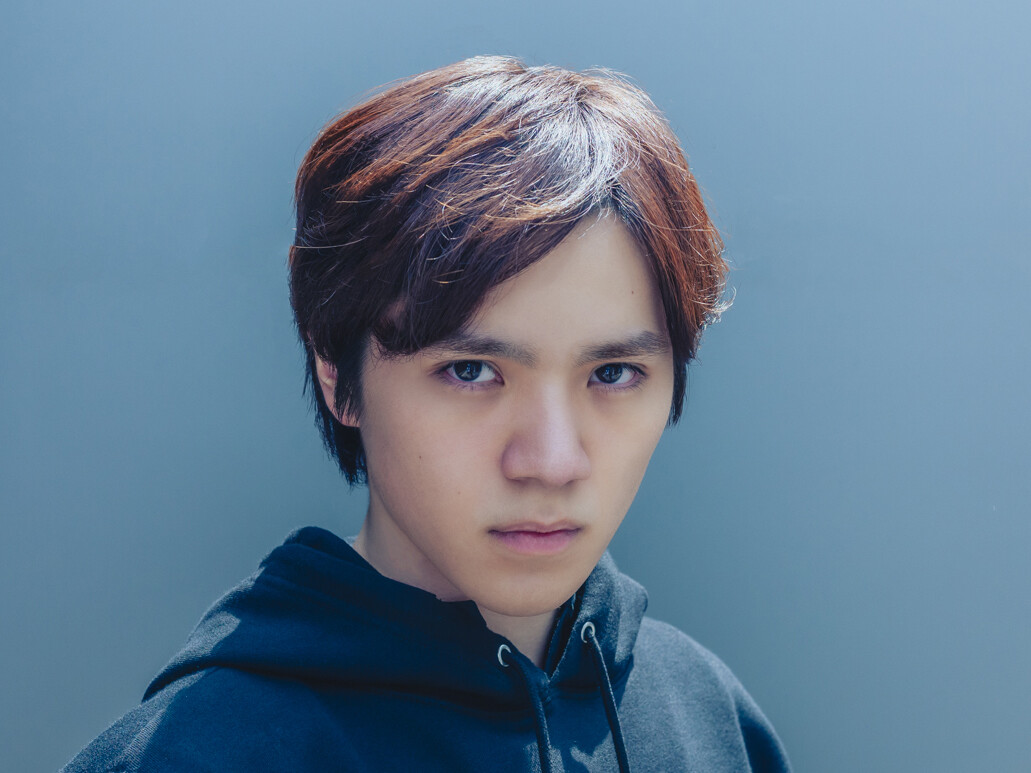
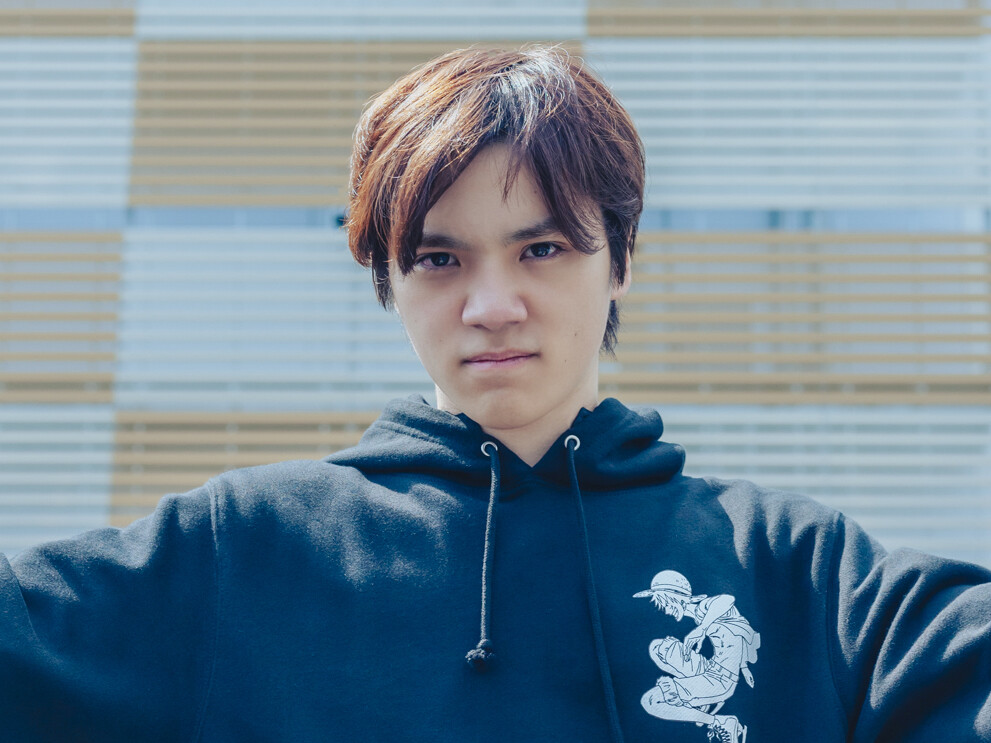
Also, a new 2-parter interview with Shoma, right before OPOI.
 sportiva.shueisha.co.jp
 sportiva.shueisha.co.jp
Will translate this later, but a very good set of interviews (once again, lol). Shoma talked about his feelings about not wanting the OPOI re-run to be a problem for the active skaters who have to compete this season, including Rinka and Kazuki who have competed even before OPOI started. He also talked about his decision to retire and why he chose to do so instead of saying "he's taking a break", which is to not give people false hopes that he can/will return to active duty (which he's not going to do).
And obviously he talked about playing Luffy. There's a part where the interviewer (Yumeko Yamamoto) asked Shoma about which one is his favorite part of the new extended OPOI finale, and Shoma cheekily asked her about which one is her favorite part, lol. Her favorite part is the ones with Baroque Works (the antagonists) doing a group dance, and Shoma loved that too, and he also loves the part where Vivi and Koza are skating with their younger selves (this was done before OPOI started so he also expressed that he thinks it would be very moving when they do it in costumes).
宇野昌磨「思わせぶりな感じは違うかなと」現役引退前の葛藤を明かす
宇野昌磨インタビュー『ワンピース・オン・アイス』2024 前編(全2回) 9月7日、8日にララアリーナ東京ベイ(千葉県船橋市)で再演される『ワンピース・オン・アイス〜エピソード・オブ・アラバスタ〜』。本番を前に行なわれたメディア向け公開リ…
sportiva.shueisha.co.jp
ルフィ・宇野昌磨とビビ・本田真凜がリフト技に挑戦『ワンピース・オン・アイス』の見どころは?
宇野昌磨インタビュー『ワンピース・オン・アイス』2024 後編(全2回) 9月7日、8日にララアリーナ東京ベイ(千葉県船橋市)で再演される『ワンピース・オン・アイス〜エピソード・オブ・アラバスタ〜』。主人公ルフィを演じる宇野昌磨は、新たに…
sportiva.shueisha.co.jp
Will translate this later, but a very good set of interviews (once again, lol). Shoma talked about his feelings about not wanting the OPOI re-run to be a problem for the active skaters who have to compete this season, including Rinka and Kazuki who have competed even before OPOI started. He also talked about his decision to retire and why he chose to do so instead of saying "he's taking a break", which is to not give people false hopes that he can/will return to active duty (which he's not going to do).
And obviously he talked about playing Luffy. There's a part where the interviewer (Yumeko Yamamoto) asked Shoma about which one is his favorite part of the new extended OPOI finale, and Shoma cheekily asked her about which one is her favorite part, lol. Her favorite part is the ones with Baroque Works (the antagonists) doing a group dance, and Shoma loved that too, and he also loves the part where Vivi and Koza are skating with their younger selves (this was done before OPOI started so he also expressed that he thinks it would be very moving when they do it in costumes).
Last edited:

- Joined
- Aug 16, 2018
Fu Man Chu^^^I was surprised to see Hama-san in that video. I recognized the voice,but his Fu Man Chu look had me fooled.
I wasn't surprised at all! Hama san is with USM and USM is the agency of Shizuka and Daisuke and of course the organizer for Friends on Ice. It makes sense that he's one of the familiar faces briefing Shoma in on how the show would work this year 
But I have been thinking that with Shoma's retirement and current ventures in ice shows and entertainment, it feels like the skaters' management agencies and show organizers have been overlapping! Mao skating for the very first time at Friends on Ice is one of the things that made me think this way.


- Joined
- Jun 2, 2014

Today feels like a great day to revisit Sho's beautiful Team Event Shoboe SP. He did such a great job. I remember screaming when he did a beautiful 4T-3T, and his "shot out of a cannon" 3A was glorious too. Very good decision to wear the red and black costume against the backdrop of the light blue rink. Kenji's choreography really played to his strengths. Only thing missing was a HUGE crowd cheering like crazy! Thanks for the memories!
Similar threads


- Replies
- 1
- Views
- 272
