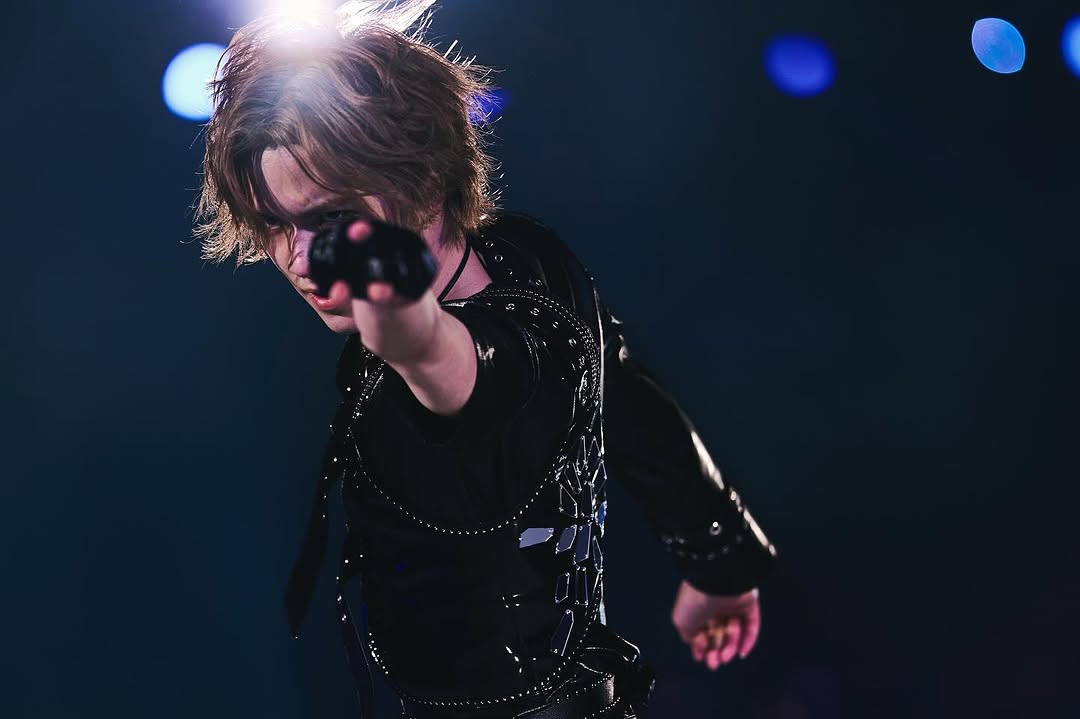
Oooh, this is a longer interview by Olympics.com in Shoma! It's in Japanese unfortunately, but I tried machine translation on it:
Shoma Uno Talks About Yuzuru Hanyu, Marin Honda, and Expression Theory — His First Ice Show Production “Ice Brave” Nears Niigata Performance
In May 2024, Olympic medalist Shoma Uno, who concluded his 21-year competitive career, is currently holding his first-ever produced ice show,
Ice Brave.
When Shoma Uno was still competing, he often spoke about “growth” and showed many fans his journey of facing his true self realistically.
He won the silver medal in men’s singles at the PyeongChang 2018 Olympics, bronze in men’s singles and silver in the team event at Beijing 2022. Even more than a year after retirement, his attitude remains unchanged. In the ice show
Ice Brave, he not only produced for the first time but also challenged himself in ice dance, pursuing “expression” as a skater. What does Uno, now a professional skater, think about “Yuzuru Hanyu, Marin Honda, and expression theory”? This exclusive interview with Olympics.com reveals all.
“I Wanted a Space with the Energy of a Live Concert”
Olympics.com: Is your first produced ice show going as you envisioned?
Shoma Uno (hereafter, Uno): I didn’t want a traditional quiet show; I wanted a space full of energy like a live concert. It went better than I imagined. I think it’s not just because of our efforts but also because of everyone’s enthusiasm. I believe I achieved everything I wanted for “Ice Brave.” I’m really glad we were able to make it happen.
Olympics.com: Unlike your competitive days, you are both performing and producing. What did you keep in mind, especially regarding other performers?
Uno: For smooth communication, I first selected serious people (laughs). When I perform, it’s hard to watch everything overall. Compared to my competitive days, I feel I have less time.
Olympics.com: Did you reference anything when producing?
Uno: I watched various shows and live performances. I think my strength lies in my energetic, youthful attitude even at 27. I wanted to create a show that runs through from start to finish with that energy. I imagined the show with a live concert vibe more than the elegance of typical ice shows—something like an idol concert—infused with skating and my past, present, and future.
Olympics.com: When did you start planning this?
Uno: About 3–4 months after retiring, I thought, “Someday I want to make a show based on my past programs.” I seriously shaped it around last October.
“What I Noticed in Yuzu-kun’s Show Was…”
Olympics.com: Did you reference Yuzuru Hanyu’s show?
Uno: I watched it on video. He did it solo. We have seven performers, which is already fewer than usual ice shows, but Yuzu-kun is alone, so I wondered how he manages his stamina. Since my show centers on me, I didn’t want people to think I appear too little. Yuzu-kun’s pieces are, of course, wonderful, but I mainly watched how he took breaks and the ratio of jumps. I paid attention to the moments he wasn’t performing.
Olympics.com: You challenged ice dance in
Ice Brave. How does it compare to singles in enjoyment and difficulty?
Uno: From my perspective, the highlight is that there are no jumps (laughs). Also, it’s really fun not being alone. Skating with others or a partner is enjoyable. No matter how tired I am, because I’m not alone, I want to keep going. I like that mindset where you naturally step beyond your limits without forcing yourself. Although I have skills as a singles skater, ice dance basics like posture and steps are very different from what I’m used to. That’s why I included ice dance in the show—I know I’m lacking, so I wanted to challenge myself.
Olympics.com: When did you decide to try ice dance?
Uno: After retirement. Before this show, I was skating less, but after trying a light lift once in
One Piece on Ice, I found it difficult. As a professional, shows are freer, so I thought it was good to do more proper things, and I started.
Aiming to Reach a Level That Could Spark Comeback in Ice Dance
Olympics.com: How do you feel about your challenge in ice dance?
Uno: Compared to world top skaters, I’m still far behind. But the audience telling me it was “proper ice dance” made me really happy. Of course, that’s partly because I’m a beginner, but I want to be someone who is impressive even beyond that. If I’m going to do it, I want people to say “wow” for my skills, not just “how cute” for the clumsiness. As a producer, I want to keep surprising people.
Olympics.com: Do you intend to compete in ice dance?
Uno: Marin Honda and I have talked seriously about that. Getting asked that question right after the show ended made me happy because it meant people knew we were serious. But having seen top ice dancers, we know how beginner-level we are. I hope to get to the point where people say “it’s a waste not to compete,” and then answer that question again.
Olympics.com: So no comeback without reaching that level?
Uno: If asked now, I couldn’t compete. It’s not Marin’s fault but mine—I’m a complete beginner and can’t do many parts. If I talked to coaches as a competitor now, it would be laughable. So I think I have things to work on before considering a comeback.
Searching for Ways to Improve Expression
Olympics.com: At 27, do you feel like you’ve become the one being chased rather than the chaser?
Uno: Honestly, no. If I did, I’d probably speak more like an athlete. I don’t feel like a target, but if someone struggling asks me for advice, I want to help as much as possible. For myself, I think about “how to enjoy today” and align that with what I want.
Olympics.com: Has your view of figure skating changed?
Uno: Quite a bit. I used to focus on jumps and was able to explain them logically better than anyone. I thought “expression” was something vague like personality or flair and hard to grasp, but I was wrong. Of course, talent matters, but figure skaters—including myself—tend to rely on potential and practice hard daily aiming for 100–120%, gradually improving expression. Watching dancers from other genres made me realize skating relies too much on natural talent. I think we can analyze more deeply why things look the way they do. I lacked that too, and now I’m working on it.
Olympics.com: So it’s a shift from just skating to dancing and performing?
Uno: When I consider why someone gives a certain impression—even if doing the same expression—it makes me question things rather than leaving it as is. By explaining and understanding it myself, I can incorporate it. But unlike jumps, which happen in an instant, dancing happens all the time except when jumping or spinning, so it’s harder than jumps. Even if you understand, as long as you’re consciously thinking about it, it’s hard to express naturally. It’s a long journey, but watching many dancers has made me realize why some look good, and I want to take that in.
“Only Yuzu-kun Can Be Yuzu-kun. I Am…”
Olympics.com: Since retiring and now watching figure skating from outside, what do you expect from the Olympics?
Uno: The Olympics feel more “Olympic” when watching rather than competing. As an athlete, you come in, compete one event, then leave. Watching from outside, you see two weeks full of competitions broadcast anytime. I wonder what kind of feelings people in Japan have towards that.
Olympics.com: Are you excited for Milan Cortina 2026?
Uno: It feels totally like someone else’s event, but I’m excited. I’ll probably be cheering from home. If my friend Kazuki Tomono goes, that’ll be interesting. He’ll be nervous, and I’d probably laugh watching that on TV.
Olympics.com: What advice would you give athletes aiming for the Olympics?
Uno: The Olympics come once every four years, close to a goal for athletes. It’s natural to want a good performance. Those who succeed either have extremely strong mental power or treat it so lightly they don’t feel like it’s the Olympics. I hope they choose what suits them. I’m definitely the latter (laughs). It’s rare but I’ve smiled during matches and played games until late the day before. It’s not easy, but trust the process, be normal, and don’t aim to surpass your usual too much. Achieving results is important, but just being there is something to be proud of. The Olympics are a reward in both results and experience.
Olympics.com: Do you have an ideal Olympian image as an athlete?
Uno: Only Yuzu-kun can be Yuzu-kun. He puts pressure on himself and overcomes it—it’s amazing. Watching him up close, I know I could never do that, so I do it my own way. That’s cool but only he can do it. Maybe Nathan Chen… it’s hard to choose. For me, ideal athletes are people like Kohei Uchimura or Kosuke Kitajima. They show a sense of accomplishment, which is great about sports. I’m the opposite type.
Olympics.com: What are your future goals?
Uno: To enjoy skating. But if a stronger desire to improve arises, I’d put aside enjoyment for a while and work hard toward that goal. Ultimately, what I’m doing now is all because of skating. I have no regrets about my jumps as a singles skater.
Since I didn’t have more talent than others, I think through trial and error I maximized my potential to reach this position. I can teach that to others. But while confident about jumps, I still feel I need much work on expression. I want to gain experiences and someday say confidently, “I have no regrets as a skater,” when interviewed.



 I love the white/cream jackets...