
Navigation
Install the app
How to install the app on iOS
Follow along with the video below to see how to install our site as a web app on your home screen.
Note: This feature may not be available in some browsers.
More options
You are using an out of date browser. It may not display this or other websites correctly.
You should upgrade or use an alternative browser.
You should upgrade or use an alternative browser.
Wakaba Higuchi
- Thread starter gsk8
- Start date
More options
Who Replied?


- Joined
- Dec 9, 2019
Congratulations to Wakaba for her Skate America win!
SP and FP, from the ISU YouTube channel:
Is her Dune dress from Satomi Ito? It's gorgeous!
I'm glad that Wakaba Higuchi is "back in the race".


- Joined
- Jan 23, 2004
Thrilled  for Wakaba for winning Bronze and getting chosen for the World Team.
She has had a wonderful season so far and her hard work has paid off!!!
for Wakaba for winning Bronze and getting chosen for the World Team.She has had a wonderful season so far and her hard work has paid off!!!

- Joined
- Aug 16, 2018
I read this 2-part interview/article of Wakaba by Takaomi Matsubara (one of my favorite Japanese FS writers) during my morning coffee, and I think it needs to be archived somewhere because it's so damn good.
Wakaba talked about her summary of 2024-2025 season, including the break she took after the 2021-2022 season before returning to compete, and her outlook on the 2025-2026 season and the Olympics.
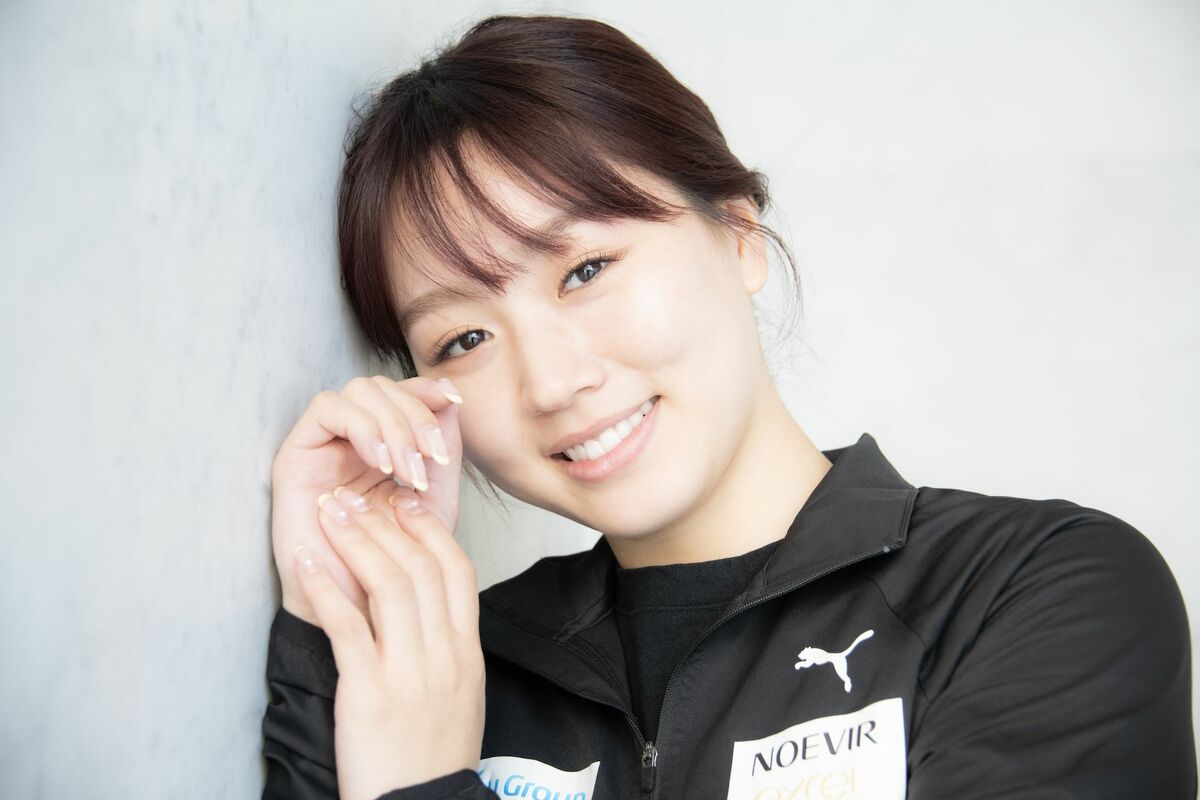
 jbpress.ismedia.jp
“I had no intention of returning” — Wakaba Higuchi on the reason behind her breakthrough in the second season after her hiatus, and the realizations and discoveries she made while away
A review of the 2024–2025 season and a look ahead to the Olympic season (Part 1)
__________________________
First Grand Prix Series Victory in Her 13th Appearance
In the vibrant and diverse 2024–2025 figure skating season, one skater who stood out was Wakaba Higuchi.
After taking a season off, Higuchi returned in the 2023–2024 season. That year served as something of a warm-up period, and in her second season back, 2024–2025, she showed clear growth.
To begin with, she won Skate America, one of the Grand Prix Series events. It was her first victory in the series, achieved in her 13th appearance since her debut in 2016.
She also placed second at the Grand Prix de France, qualifying for the Grand Prix Final for the second time in seven seasons—an event open only to the top six skaters in the series. In addition, she was selected to represent Japan at both the Four Continents Championships and the World Championships, where she placed sixth.
But her achievements went beyond just results. Her performance in the free skate at Worlds, where the arena echoed with applause, symbolized how she captivated the audience. Both on and off the ice—including during interviews—her presence conveyed a new sense of fulfillment, or perhaps composure. However one describes it, it suggested a noticeable change from before.
Higuchi reflected on the past year in her own words:
As the conversation about the 2024–2025 season continued, she shared words that seemed paradoxical at first glance:
Those words weren’t born from just this season alone—they were the result of her entire journey up to this point.
_____________
“I had no intention of returning”
Let’s briefly look back at Wakaba Higuchi’s journey.
Higuchi first gained major attention in 2014. At just 13 years old and in her second year of junior high school, she placed third at the All-Japan Championships. It was the first time in ten years—since Mao Asada in 2004—that a second-year junior high student had stood on the podium.
The following year, she again made the podium with a second-place finish, and she also won back-to-back bronze medals at the World Junior Championships over those two seasons. In the 2016–2017 season, she transitioned to the senior level and competed at the World Championships.
At the 2022 Beijing Olympics, she contributed to Japan’s silver medal in the team event and placed fourth in the individual competition, continuing her career as one of Japan’s top skaters.
In the 2022–2023 season—the season following the Olympics—Higuchi competed in the Lombardia Trophy in September, but then announced she would be sitting out the rest of the season.
She explained her decision in a public statement:
But it wasn’t just because of the injury.
She started skating at the age of three, rose quickly, and carried great expectations. She committed herself wholeheartedly to the sport and lived in the world of skating. So when that certainty began to waver, stepping away was a natural progression.
When she made the decision to take a break, she says: “I had no intention of coming back.”
___________________
The Discoveries and Realizations Gained from Stepping Away
Although she did ultimately return the following season, Wakaba Higuchi explains how her mindset gradually shifted—despite initially having no intention of coming back.
Now, having completed her second season since returning, she feels a clear shift from how things were before her break.
Taking a break allowed her to make important discoveries and gain new insights. That likely contributed to the sense of calm and completeness she’s now projecting—both on and off the ice.
But that wasn’t all she gained from stepping away.
This broadening of perspective has changed how she relates to skating as well.
After a season filled with performances she could be satisfied with, she now looks ahead to the next chapter.
For Wakaba Higuchi, it will be a special season.
Wakaba talked about her summary of 2024-2025 season, including the break she took after the 2021-2022 season before returning to compete, and her outlook on the 2025-2026 season and the Olympics.
「復帰するつもりはなかった」樋口新葉、休養後2シーズン目で迎えた飛躍の理由、離れたことで得た発見や気づき 2024-2025シーズンの総括とオリンピックシーズンへの展望(1)樋口新葉・前編 | JBpress (ジェイビープレス)
さまざまに彩られたフィギュアスケートの2024-2025シーズンにあって、存在感を示したスケーターに、樋口新葉がいる。 樋口は1シーズンの休養のあと、2023-2024シーズンに復(1/3)
jbpress.ismedia.jp
“I had no intention of returning” — Wakaba Higuchi on the reason behind her breakthrough in the second season after her hiatus, and the realizations and discoveries she made while away
A review of the 2024–2025 season and a look ahead to the Olympic season (Part 1)
__________________________
First Grand Prix Series Victory in Her 13th Appearance
In the vibrant and diverse 2024–2025 figure skating season, one skater who stood out was Wakaba Higuchi.
After taking a season off, Higuchi returned in the 2023–2024 season. That year served as something of a warm-up period, and in her second season back, 2024–2025, she showed clear growth.
To begin with, she won Skate America, one of the Grand Prix Series events. It was her first victory in the series, achieved in her 13th appearance since her debut in 2016.
She also placed second at the Grand Prix de France, qualifying for the Grand Prix Final for the second time in seven seasons—an event open only to the top six skaters in the series. In addition, she was selected to represent Japan at both the Four Continents Championships and the World Championships, where she placed sixth.
But her achievements went beyond just results. Her performance in the free skate at Worlds, where the arena echoed with applause, symbolized how she captivated the audience. Both on and off the ice—including during interviews—her presence conveyed a new sense of fulfillment, or perhaps composure. However one describes it, it suggested a noticeable change from before.
Higuchi reflected on the past year in her own words:
"I had the goal of competing at Worlds, but I approached each event with the mindset of wanting to finish every competition feeling satisfied with myself. The fact that I was able to keep skating continuously, from start to finish, without breaking that flow—that left a strong impression on me."
As the conversation about the 2024–2025 season continued, she shared words that seemed paradoxical at first glance:
“Skating is hard. Skating is fun.”
Those words weren’t born from just this season alone—they were the result of her entire journey up to this point.
_____________
“I had no intention of returning”
Let’s briefly look back at Wakaba Higuchi’s journey.
Higuchi first gained major attention in 2014. At just 13 years old and in her second year of junior high school, she placed third at the All-Japan Championships. It was the first time in ten years—since Mao Asada in 2004—that a second-year junior high student had stood on the podium.
The following year, she again made the podium with a second-place finish, and she also won back-to-back bronze medals at the World Junior Championships over those two seasons. In the 2016–2017 season, she transitioned to the senior level and competed at the World Championships.
At the 2022 Beijing Olympics, she contributed to Japan’s silver medal in the team event and placed fourth in the individual competition, continuing her career as one of Japan’s top skaters.
In the 2022–2023 season—the season following the Olympics—Higuchi competed in the Lombardia Trophy in September, but then announced she would be sitting out the rest of the season.
She explained her decision in a public statement:
“Due to a delay in my recovery from a stress fracture in my right fibula, which I sustained in late April, I’ve been unable to reach peak condition. As a result, I’ve decided to withdraw from all competitions this season, including my two Grand Prix assignments and the All-Japan Championships.”
But it wasn’t just because of the injury.
“When I thought about the fact that life after retirement is longer than my skating career, I realized that focusing solely on skating—while maybe acceptable for some—felt incredibly constraining to me. For example, setting goals like going to the Olympics or winning medals at world events and training toward those goals—that’s the typical image of an athlete, right? But I started to feel that my emotions were going in a completely different direction. I was in a state where I couldn’t aim for those goals anymore, yet I felt like I still had to say I was. I had to keep facing in that direction. It didn’t feel like I was being true to myself, so I decided to take a break.”
She started skating at the age of three, rose quickly, and carried great expectations. She committed herself wholeheartedly to the sport and lived in the world of skating. So when that certainty began to waver, stepping away was a natural progression.
When she made the decision to take a break, she says: “I had no intention of coming back.”
___________________
The Discoveries and Realizations Gained from Stepping Away
Although she did ultimately return the following season, Wakaba Higuchi explains how her mindset gradually shifted—despite initially having no intention of coming back.
“It started when my coach, Koji Okajima, asked me, ‘When are you coming back to practice?’ That gave me a little push, and I gradually started going back to the rink. As I kept skating, I found it interesting how I was slowly able to do things again. I approached that season kind of lightly, with a floaty, uncertain feeling. But by the last competition of the season—the National Sports Festival at the end of January—I thought, ‘It doesn’t feel right to end it like this.’ I also felt like there was still more I could do.”
Now, having completed her second season since returning, she feels a clear shift from how things were before her break.
“Before, whether it was in practice or in how I approached competitions, my motivation felt more... tense, I guess? Looking back, I honestly don’t think I was having much fun. But during my first season back, I realized that being away for so long had left me unable to do a lot of things, and as I gradually regained them from zero, I found skating difficult—but also fun. I was able to rediscover that enjoyment. I also realized that simply being able to compete in events or travel overseas is something that isn’t guaranteed.”
Taking a break allowed her to make important discoveries and gain new insights. That likely contributed to the sense of calm and completeness she’s now projecting—both on and off the ice.
But that wasn’t all she gained from stepping away.
“While I was away from skating, I had more chances to go to university, to talk to people from outside the sports world. There were so many people—some younger than me—who were more grounded and knowledgeable than I was. I realized there was so much I didn’t know. It made me want to learn more, and I felt like I was able to start learning some of the things I need not just as a skater, but to live as a regular person, too.”
This broadening of perspective has changed how she relates to skating as well.
“Up through the Beijing Olympics, I always had this anxiety like, ‘If I take a day off practice, I won’t be able to do it anymore.’ Of course, skating was the central axis of everything I did. And while it still is a major part of my life, I now also value living as a regular person. If I’m tired, I let myself rest. I make decisions based on my own will—how I want to live and be—and I think that’s led to more confidence and peace of mind.”
After a season filled with performances she could be satisfied with, she now looks ahead to the next chapter.
For Wakaba Higuchi, it will be a special season.
Similar threads


- Replies
- 0
- Views
- 730


