- Joined
- Nov 30, 2016
1984
WINTER OLYMPIC GAMES
WINTER OLYMPIC GAMES
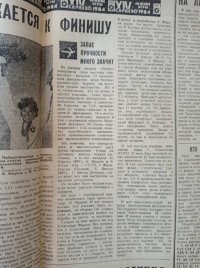
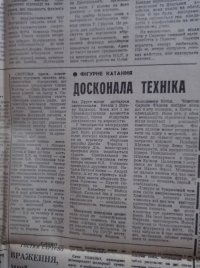
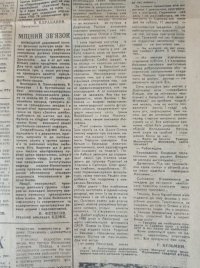
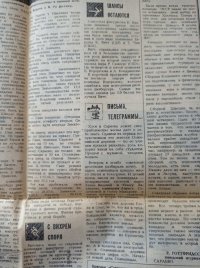
PERFECT TECHNIQUE
(the article published in Ukrainian 'Sportyvna Hazeta' on February 15, 1984)
(the article published in Ukrainian 'Sportyvna Hazeta' on February 15, 1984)
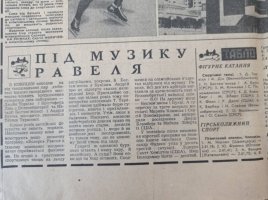
The world press, commenting on the results of the pair competitions, unanimously emphasizes that the Soviet athletes Elena Valova and Oleg Vasiliev had no equals on the ice in Sarajevo. The Belgrade newspaper "Vecernje Novine" writes that the champions performed their program in a style worthy of their high title. Former figure skating 'star' and now TV commentator Ingrid Wendl from Austria notes the perfect technique of Valova and Vasiliev; she is delighted with the grace and artistry of this pair.
The free program of the Leningrad pair captivated even the strict judges. For artistry, Elena and Oleg received six scores of 5.9; for technique, seven scores of 5.8. The champions' mentor, Honoured Coach of the USSR Tamara Moskvina, considers the main advantage of her students to be the balance of their program and the ability to combine the most complex elements into a single composition.
Other debutants and fellow Leningraders Larisa Selezneva and Oleg Makarov also deserved high marks. Their 'bronze' is of the highest quality, as it was earned with scores of 5.6 - 5.8 for technique and artistry, leaving all the GDR pairs behind, including the former world and European champions Bess and Tirbach. Second place went to the Americans Caitlin and Peter Carruthers. Although they did not demonstrate 'ultra-C' elements, they won people over with their synchronicity and expressiveness."
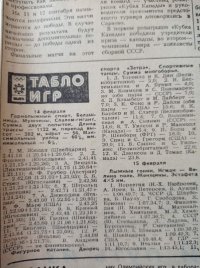
In the ice dancers' competition on the eve of the final day (medals were contested late yesterday evening), the British couple Jayne Torvill and Christopher Dean maintained the best chances for victory; their innovative programs are popular with the judges. Their original dance earned the world champions four scores of 6.0. Our Natalia Bestemyanova and Andrei Bukin confidently held second place. Marina Klimova and Sergei Ponomarenko, and the Americans Judy Blumberg and Michael Seibert, had almost equal chances for the 'bronze'. The strong point for our pair is perfect choreography, while the Americans possess speed and originality in their dance moves.
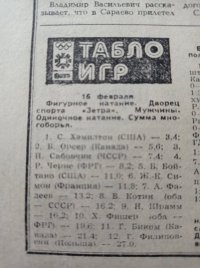
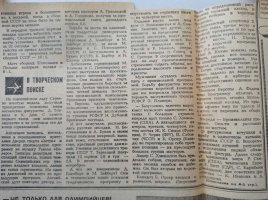
Last Monday, the men began their path to the Olympic podium. On the 'Zetra' rink, school figures were performed by 23 skaters from 15 countries. Representing the USSR are Alexander Fadeev and Vladimir Kotin. European champion Fadeev is currently in fifth position, and Kotin is eleventh. Naturally, both have a chance to move higher after the short and free programs. For example, Fadeev can well count on one of the medals, as the famous Norbert Schramm did not make it into the top six, and now he needs to take risks to break into the leaders. This season, Schramm had a falling out with coach Erich Zeller and prepared for the Games under the guidance of Carlo Fassi. Perhaps this was evident during the compulsory figures competition, where accuracy, calmness, and stability are key.
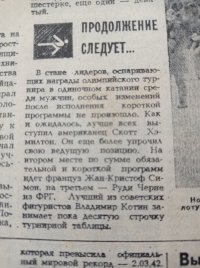
Leading the field is the three-time world champion American Scott Hamilton, whom all nine judges unanimously placed first after the 'school' (figures). It can be said that the fate of the 'gold' medal here is practically decided. Besides Fadeev, Josef Sabovčík from Czechoslovakia and three skaters from West Germany are also contending for other awards. One should not forget about the Canadians either, who, admittedly, performed poorly in the 'school'.
The free program of the Leningrad pair captivated even the strict judges. For artistry, Elena and Oleg received six scores of 5.9; for technique, seven scores of 5.8. The champions' mentor, Honoured Coach of the USSR Tamara Moskvina, considers the main advantage of her students to be the balance of their program and the ability to combine the most complex elements into a single composition.
Other debutants and fellow Leningraders Larisa Selezneva and Oleg Makarov also deserved high marks. Their 'bronze' is of the highest quality, as it was earned with scores of 5.6 - 5.8 for technique and artistry, leaving all the GDR pairs behind, including the former world and European champions Bess and Tirbach. Second place went to the Americans Caitlin and Peter Carruthers. Although they did not demonstrate 'ultra-C' elements, they won people over with their synchronicity and expressiveness."
In the ice dancers' competition on the eve of the final day (medals were contested late yesterday evening), the British couple Jayne Torvill and Christopher Dean maintained the best chances for victory; their innovative programs are popular with the judges. Their original dance earned the world champions four scores of 6.0. Our Natalia Bestemyanova and Andrei Bukin confidently held second place. Marina Klimova and Sergei Ponomarenko, and the Americans Judy Blumberg and Michael Seibert, had almost equal chances for the 'bronze'. The strong point for our pair is perfect choreography, while the Americans possess speed and originality in their dance moves.
Last Monday, the men began their path to the Olympic podium. On the 'Zetra' rink, school figures were performed by 23 skaters from 15 countries. Representing the USSR are Alexander Fadeev and Vladimir Kotin. European champion Fadeev is currently in fifth position, and Kotin is eleventh. Naturally, both have a chance to move higher after the short and free programs. For example, Fadeev can well count on one of the medals, as the famous Norbert Schramm did not make it into the top six, and now he needs to take risks to break into the leaders. This season, Schramm had a falling out with coach Erich Zeller and prepared for the Games under the guidance of Carlo Fassi. Perhaps this was evident during the compulsory figures competition, where accuracy, calmness, and stability are key.
Leading the field is the three-time world champion American Scott Hamilton, whom all nine judges unanimously placed first after the 'school' (figures). It can be said that the fate of the 'gold' medal here is practically decided. Besides Fadeev, Josef Sabovčík from Czechoslovakia and three skaters from West Germany are also contending for other awards. One should not forget about the Canadians either, who, admittedly, performed poorly in the 'school'.
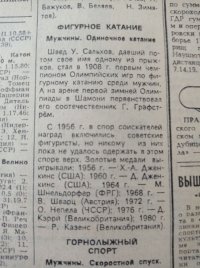
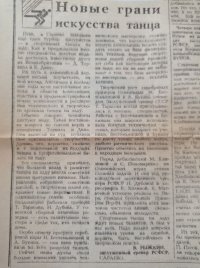
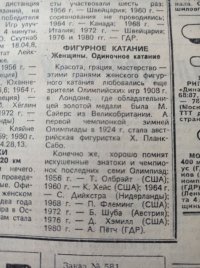
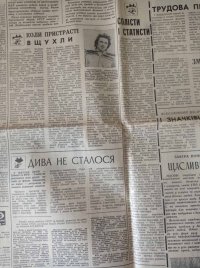
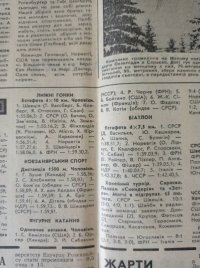
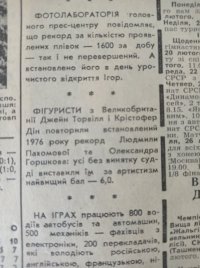


 Finally overcame laziness and went to my collection of linguistics textbooks left over from grad school. I see the Ukrainian alphabet doesn't have a letter J so they use the combination of two letters representing the sound, D+soft G. Roughly speaking. And for his surname, they just needed the D equivalent by itself. My sub-field in linguistics was personal names, so when I see something like that, not seeming to make sense at first glance, the old academic curiosity stirs