- Joined
- Nov 30, 2016
1986
School of Olympic Champions
School of Olympic Champions
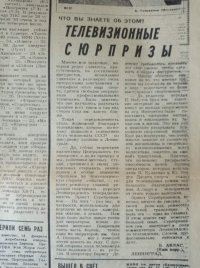
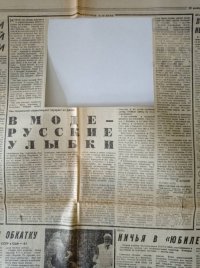
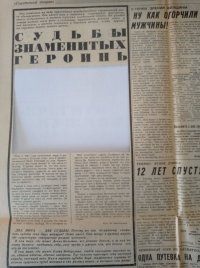
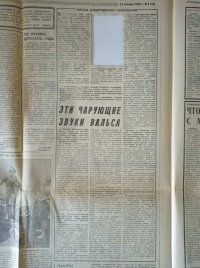
These Enchanting Sounds of the Waltz
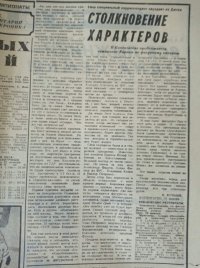
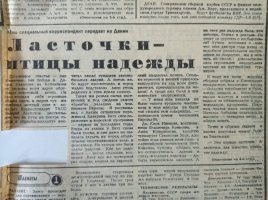
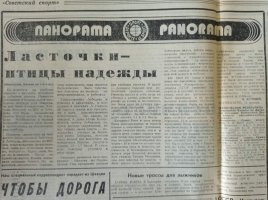
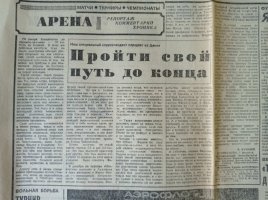
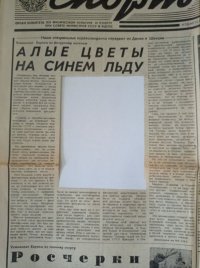
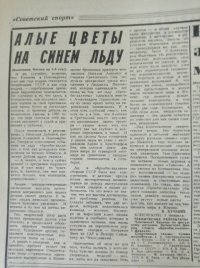
(the article published in russian 'Sovetskiy Sport' on January 12, 1986)
(the article published in russian 'Sovetskiy Sport' on January 12, 1986)
ON THAT memorable day, our coach Elena Anatolievna Tchaikovskaia woke us up early — at 6:30 AM. We were rushing to practice at the sports palace in a festive mood: we were about to ‘compose’ a new original dance — the paso doble. And what an amazing atmosphere it was that morning — we were catching our coach’s thoughts literally on the fly. The coach herself was experiencing a true creative surge. During the two-hour lesson, we managed to think through and choreograph three-quarters of the dance. We imagined an arena in a Spanish city, half-jokingly portraying a bull and a toreador on the ice, ‘killing’ the ferocious bull. When the dance took its final shape, my partner Gennady Karponossov and I got the feeling that the paso doble would definitely become one of our best dances. It was then that I realized that an athlete can inherently feel and recognize the strongest, most successful moments of a program.
That is why today I tell my students: listen to your own inner evaluation, analyze your dances more by yourselves. People might tell you that you skate beautifully and artistically, but you must stay on your guard! Flattery is a poor ally, especially in figure skating, where there is so much subjectivity…
It was with this episode — the creation story of the paso doble, which received the highest score of 5.9 at the 1978 World Championship — that Natalia Linichuk, Honored Master of Sports, Olympic champion, and two-time world champion in ice dancing, began her conversation with the newspaper's readers. Young ice dancers are interested in a wide variety of aspects of mastery — including technical issues and psychological preparation.
D. Lagutin (Alma-Ata) asks whether a young athlete can get by without a painstaking study of compulsory dances once they have achieved the first or second adult rank in ice dancing?
N. Linichuk: The first ice dances were created back in the 1930s, when the technique of most figure skaters was by no means the most brilliant. Today, the pattern of many dances can be learned in a very short time. But does this mean that the standard of mastery is easily achievable here? No, on the contrary, I have learned from my own experience: a dance from the compulsory program only begins to shine with all its colors when you display your own individuality in it.
A prime example is working on the waltz. I entered ice dancing at the age of 15, but I was still working on the waltz ten years later. It is a kind of litmus paper that reveals the strength and class of an ice dancer. The more performances you have, the more beauty, grace, and poetry you can convey in the waltz movements. I think there is no dance that brings more pleasure. It is precisely the simplicity of the steps and edges that makes the waltz very difficult, because here you have to feel the overall rhythm to your very fingertips.
What is the special psychological role of the original dance? This question is asked by figure skater Ya. Nechaeva (Moscow).
N. Linichuk: From the standpoint of choreography—and I have been engaged in intense coaching work for the last three years—any original dance is the most complex creative task for figure skaters. Athletes are given a very limited time—just one minute, and within these seconds they must manage to show an entire choreographic miniature, where there is practically no lull in the action, and where every single gesture and step must be expressive.
People who are deeply emotional and impressionable are, in a special way, predisposed to creating very concise, small-scale miniatures and dances. I have witnessed several cases where working on an original dance led to very striking breakthroughs and enriched a duet's style. For instance, back in the day, when Olympic champions Lyudmila Pakhomova and Aleksandr Gorshkov were preparing an original dance, they and their coach Elena Tchaikovskaia created a dance of amazing beauty and lyrical mood to Khachaturian’s music for ‘Masquerade.’ It entered their repertoire as a magnificent exhibition number; it was later emulated, and new generations of dancers learned from this waltz.
It is toward this creative peak, toward solving this ultimate artistic goal, that those who set out to create an original ice dance today must strive.
A. Alymova (Ivanovo) is interested in how the problem of artistic appeal and spectacle is solved in a modern program at the Master of Sports level.
N. Linichuk: We think about these problems constantly, from the very first sessions on the ice. Even in compulsory dances, the strongest duets prepare three different options for costumes right away to achieve a complete synthesis with one rhythm of the dance or another.
So what can we say then about the free dance program?!
Here is what the Olympic champion, American figure skater Dick Button, wrote in 1960: ‘A figure skater must make sure that they look good from every angle, which is achieved only by fully utilizing the entire surface of the ice rink equally in all directions. This is precisely where dance steps come to the rescue. It is known that dance steps are based on numerous turns and the gliding inherent to figure skating. Threes, brackets, rockers, counters, and changes of edge—under the condition of various combinations, changing feet, and altering the direction of flight—can make up a rather brilliant free program...’ ”
A quarter of a century has passed. The basic principle formulated by Button has remained unchanged, but, say, in singles skating, the complexity of jumps has come to the skater's rescue. When an athlete takes off into the air and completes 3.5 revolutions, it inevitably takes your breath away and captivates the audience.
However, it is impossible to create a true spectacle based on technical difficulty alone. That is when choreographers and directors come to help the coaches. In recent years, an interesting trend has emerged — not only staff choreographers but also ballet dancers, variety stage performers, and circus artists are being brought in to choreograph programs. In short, people with a fresh perspective on the sporting spectacle. And they are creating a new kind of show — this is how we came to see brilliant programs choreographed with the help of ballet masters Dmitry Bryantsev and Elena Matveeva, variety artist Yuri Zamyatnin, and others.
Today, we understand the problem of artistic appeal this way: we need to reveal the skaters' individuality and show them in various emotional states — in lyrical, dramatic, comedic, and heroic segments. And there is another important principle: a composition is only strong when it has a cohesive core idea. A dance is all the more interesting the deeper and clearer its overall concept can be traced. Following exactly this principle, I suggested that my students perform a dance to the music of Bach’s ‘Toccata,’ and in this case, the young figure skaters O. Grishchuk and A. Chichkov received a great creative impulse: they realized that the most valuable thing in sports is to showcase a unique, distinct identity in every single program of yours...”
Figure skater E. Malyutin (Ryazan): I have watched many ice compositions. However, the aesthetic beauty of the free dance nowadays clearly leaves a stronger impression than in other disciplines of competition. What is the secret here?
N. Linichuk: As is well known, in ice dancing, jumps and lifts above the waist are prohibited, and partners' spins must not exceed two to three revolutions. Power-based elements are also forbidden. It seems like there are quite a lot of restrictions. Yet, every season, the top duets of our national team work wonders, surprising us with dances full of playfulness, dynamics, and virtuoso step sequences.
I see the secret, first of all, in the rapid growth of the skaters' technique, especially among the ice dancers on our national team. At the same time, the aesthetic side of the dance has been brought to perfection by many couples. Here, a major factor is the choice of musical pieces with what we call a unified, through-line action.
And finally, the third point, which is by no means secondary, is the cultivation of artistic erudition, willpower, and purposefulness in many figure skaters. My own path in sports, for example, was not easy — in my youth, I 'migrated' from one coaching group to another. I changed 12 mentors. The reason was not my inability to get along with people. Not at all! I just wanted to work hard. I had a kind of motto: even if I don't know how to do it yet, I will execute it regardless.
The mistake of many beginners is precisely that they reason differently: if I don't know how, then nothing will work out. By the way, in all practical matters, in life itself, such an approach causes great psychological harm. Charge into any difficulties with your visor up! Believe that the fortress will be taken no matter what! That is the main secret that has allowed many of our young athletes to conquer fantastic heights, including in figure skating.
That is why today I tell my students: listen to your own inner evaluation, analyze your dances more by yourselves. People might tell you that you skate beautifully and artistically, but you must stay on your guard! Flattery is a poor ally, especially in figure skating, where there is so much subjectivity…
It was with this episode — the creation story of the paso doble, which received the highest score of 5.9 at the 1978 World Championship — that Natalia Linichuk, Honored Master of Sports, Olympic champion, and two-time world champion in ice dancing, began her conversation with the newspaper's readers. Young ice dancers are interested in a wide variety of aspects of mastery — including technical issues and psychological preparation.
D. Lagutin (Alma-Ata) asks whether a young athlete can get by without a painstaking study of compulsory dances once they have achieved the first or second adult rank in ice dancing?
N. Linichuk: The first ice dances were created back in the 1930s, when the technique of most figure skaters was by no means the most brilliant. Today, the pattern of many dances can be learned in a very short time. But does this mean that the standard of mastery is easily achievable here? No, on the contrary, I have learned from my own experience: a dance from the compulsory program only begins to shine with all its colors when you display your own individuality in it.
A prime example is working on the waltz. I entered ice dancing at the age of 15, but I was still working on the waltz ten years later. It is a kind of litmus paper that reveals the strength and class of an ice dancer. The more performances you have, the more beauty, grace, and poetry you can convey in the waltz movements. I think there is no dance that brings more pleasure. It is precisely the simplicity of the steps and edges that makes the waltz very difficult, because here you have to feel the overall rhythm to your very fingertips.
What is the special psychological role of the original dance? This question is asked by figure skater Ya. Nechaeva (Moscow).
N. Linichuk: From the standpoint of choreography—and I have been engaged in intense coaching work for the last three years—any original dance is the most complex creative task for figure skaters. Athletes are given a very limited time—just one minute, and within these seconds they must manage to show an entire choreographic miniature, where there is practically no lull in the action, and where every single gesture and step must be expressive.
People who are deeply emotional and impressionable are, in a special way, predisposed to creating very concise, small-scale miniatures and dances. I have witnessed several cases where working on an original dance led to very striking breakthroughs and enriched a duet's style. For instance, back in the day, when Olympic champions Lyudmila Pakhomova and Aleksandr Gorshkov were preparing an original dance, they and their coach Elena Tchaikovskaia created a dance of amazing beauty and lyrical mood to Khachaturian’s music for ‘Masquerade.’ It entered their repertoire as a magnificent exhibition number; it was later emulated, and new generations of dancers learned from this waltz.
It is toward this creative peak, toward solving this ultimate artistic goal, that those who set out to create an original ice dance today must strive.
A. Alymova (Ivanovo) is interested in how the problem of artistic appeal and spectacle is solved in a modern program at the Master of Sports level.
N. Linichuk: We think about these problems constantly, from the very first sessions on the ice. Even in compulsory dances, the strongest duets prepare three different options for costumes right away to achieve a complete synthesis with one rhythm of the dance or another.
So what can we say then about the free dance program?!
Here is what the Olympic champion, American figure skater Dick Button, wrote in 1960: ‘A figure skater must make sure that they look good from every angle, which is achieved only by fully utilizing the entire surface of the ice rink equally in all directions. This is precisely where dance steps come to the rescue. It is known that dance steps are based on numerous turns and the gliding inherent to figure skating. Threes, brackets, rockers, counters, and changes of edge—under the condition of various combinations, changing feet, and altering the direction of flight—can make up a rather brilliant free program...’ ”
A quarter of a century has passed. The basic principle formulated by Button has remained unchanged, but, say, in singles skating, the complexity of jumps has come to the skater's rescue. When an athlete takes off into the air and completes 3.5 revolutions, it inevitably takes your breath away and captivates the audience.
However, it is impossible to create a true spectacle based on technical difficulty alone. That is when choreographers and directors come to help the coaches. In recent years, an interesting trend has emerged — not only staff choreographers but also ballet dancers, variety stage performers, and circus artists are being brought in to choreograph programs. In short, people with a fresh perspective on the sporting spectacle. And they are creating a new kind of show — this is how we came to see brilliant programs choreographed with the help of ballet masters Dmitry Bryantsev and Elena Matveeva, variety artist Yuri Zamyatnin, and others.
Today, we understand the problem of artistic appeal this way: we need to reveal the skaters' individuality and show them in various emotional states — in lyrical, dramatic, comedic, and heroic segments. And there is another important principle: a composition is only strong when it has a cohesive core idea. A dance is all the more interesting the deeper and clearer its overall concept can be traced. Following exactly this principle, I suggested that my students perform a dance to the music of Bach’s ‘Toccata,’ and in this case, the young figure skaters O. Grishchuk and A. Chichkov received a great creative impulse: they realized that the most valuable thing in sports is to showcase a unique, distinct identity in every single program of yours...”
Figure skater E. Malyutin (Ryazan): I have watched many ice compositions. However, the aesthetic beauty of the free dance nowadays clearly leaves a stronger impression than in other disciplines of competition. What is the secret here?
N. Linichuk: As is well known, in ice dancing, jumps and lifts above the waist are prohibited, and partners' spins must not exceed two to three revolutions. Power-based elements are also forbidden. It seems like there are quite a lot of restrictions. Yet, every season, the top duets of our national team work wonders, surprising us with dances full of playfulness, dynamics, and virtuoso step sequences.
I see the secret, first of all, in the rapid growth of the skaters' technique, especially among the ice dancers on our national team. At the same time, the aesthetic side of the dance has been brought to perfection by many couples. Here, a major factor is the choice of musical pieces with what we call a unified, through-line action.
And finally, the third point, which is by no means secondary, is the cultivation of artistic erudition, willpower, and purposefulness in many figure skaters. My own path in sports, for example, was not easy — in my youth, I 'migrated' from one coaching group to another. I changed 12 mentors. The reason was not my inability to get along with people. Not at all! I just wanted to work hard. I had a kind of motto: even if I don't know how to do it yet, I will execute it regardless.
The mistake of many beginners is precisely that they reason differently: if I don't know how, then nothing will work out. By the way, in all practical matters, in life itself, such an approach causes great psychological harm. Charge into any difficulties with your visor up! Believe that the fortress will be taken no matter what! That is the main secret that has allowed many of our young athletes to conquer fantastic heights, including in figure skating.