- Joined
- Nov 30, 2016
1987
WHO KEEPS THE SYSTEM RUNNING
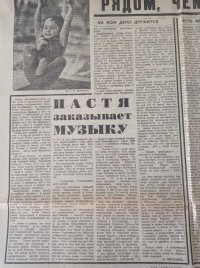
WHO KEEPS THE SYSTEM RUNNING
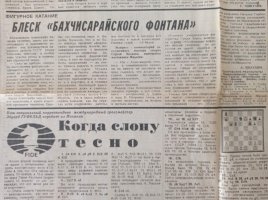
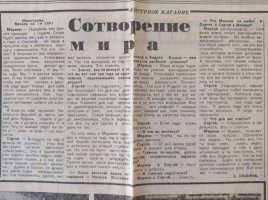
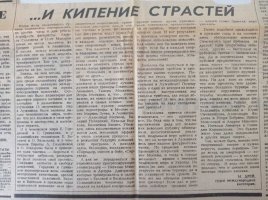
NASTYA CALLS THE TUNE
(the article published in russian 'Sovetskiy Sport' on November 8, 1987)
(the article published in russian 'Sovetskiy Sport' on November 8, 1987)
Do you know what children love most during training? Even to annoy, to play pranks! For example, a few teenage figure skaters go out onto an open ice rink. Their task is not simple — to perform thirty to forty jumps each. They begin. But as soon as the coach turns away, they immediately accelerate — and hop, a jump into a snowbank! A lot of snow has been piled up, creating whole mounds along the edges of the ice.
Soon they all look like bear cubs — covered from head to toe in snow dust. After the lesson, parents with brooms in hand "discipline" their boys: "This is not yard games for you, this is not Petka and Vovka! This is a school. Here they teach big sports!".
Two-time world champion Vladimir Kovalev told us about this episode from his childhood. Now he is a coach himself. He leads a group of young figure skaters. Times change, and manners change with them. The kids of the new generation no longer do somersaults into snowdrifts, but they still misbehave. Someone went ahead and dyed his hair white, someone else lit a cigarette in a dark corridor...
The restless tribe of the young persistently knocks on the doors of big-time sports, bringing new problems along with them. Far from all coaches manage to direct the energy of the young, bold, and searching into the right channel. What is needed first and foremost for the life of young athletes in high-performance sports to be full-blooded and bright?
"Personally, I think that above all we need a kind heart," says two-time Olympic champion Aleksandr Zaitsev, now a coach at the Moscow school of the 'Dynamo' society. "We created our pair skating group in great agony. We searched for talents all over Moscow. It ended up with us taking kids who had been 'rejected' by other schools. It is very sad when a child at the age of 10–12 is labeled as "incapable." We took a risk by opening the doors to those who, despite everything, burned with a desire to train. Over the course of two seasons, we managed to form eight pairs. So far, everything is going well for them: they are establishing themselves on the ice arena...
Here is a small vignette. In the summer, the group went to Vilnius to prepare. Already on the second evening, 10-year-old Nastya Alimova timidly knocked on Zaitsev's room door:
"Aleksandr Gennadievich, I want to go home."
She repeated this every evening. He had to call home to Moscow over and over again to calm the girl down. Only after a week were the anxieties left behind. She became close with the kids, found friends. It became interesting for her.
"Once we were late for a competition," Zaitsev says. "The bus was delayed. I rushed to the hotel, put the young girls into taxis, and headed straight to the rink. Imagine my surprise: all five of the male partners were already in the locker room. I asked them, 'How were you planning to perform? Alone, without your female partners? Leaving them behind all alone!' This incident convinced me once again of how easily we sometimes treat moral concepts such as collectivism and a sense of camaraderie. No, these are not empty words — in sports, collectivism is where eveything begins - the mastery, courage, and dedication!
To be inspired by a common feeling, a shared interest—young athletes will be able to do this only if they are united by school and the road, shared joys and tears. Love for sport. For two years now, the group led by Aleksandr Zaitsev and Master of Sports Galina Motovilova has become, I am not afraid to say, like one big family. The kids successfully perform in all-union tournaments. What is important: success was forged not only on the ice, but primarily beyond its edge. All girls are now studying in one school, No. 220. That very same Nastya Alimova, it happens, asks to be accommodated in a hotel room only with five other girlfriends. And she also asks: "I want to read about world and Olympic champions!"
And here is the competent opinion of our famous champion with brilliant performances at the 1980 Winter Olympic Games in ice dance, Natalia Linichuk:
"This is my fifth season leading a group of young ice dancers. There are those among them who will soon leave the junior age behind. Let's say Oksana and Aleksandr Grishuk, silver medalists of the World Junior Championships, will compete among seniors in the near future. While Yaroslava Nechaeva and Dima Lagutin are just beginning their path to mastery. But both are searching for high examples to follow, their own ideal in sport and life. The kids are very different. They will have different styles on the ice as well. And yet, many things bring them close and unite them. What is it? The influence of the coach.
Everything that captivates a coach, all of their likes and dislikes, find an echo in the souls of their students. It is impossible to separate the personal life of a teacher with a stone wall from the life of their group. I do not simply tell the kids about gliding or ice dance secrets; I want to teach them how to walk correctly, how to dress with good taste, how to behave freely in a company of strangers, how to choose comrades and conversational partners with discretion. Out of these small details grows the personality of an athlete and a human being.
In the life of our group, there are two important principles. First, we are against greenhouse conditions of training. Second, a professional attitude toward your favorite life's work. One should not be afraid of this word, even when it comes to children. In sports, kids mature very quickly; they see a lot, they travel a lot. Is it worth shielding them from prose of life? Perhaps it is worth telling them right away how much he will have to pay for the sharpening of skates, that a sports suit will not be sewn for him out of simple cotton cloth, that some talented kids are poached and invited to another school not out of noble intentions, but quite often for the sake of profit.
High-performance sport is a school of harsh truth, and along with that, a world of real beauty where there must be no place for consumerism.
Naturally, between the groups of Olympic champions Aleksandr Zaitsev and Natalia Linichuk there are quite a few differences in the pedagogical plan. To begin with, for the former, the kids gathered are practically of the same age, while for the latter, they are of various ages. But more significant for us is something new that distinguishes them from the mass of sports schools. The instructors deliberately do not want to invite "ready-made" masters; they create novitiate duos that are unlike one another. Their groups are transforming before our eyes into micro-schools with their own moral climate and their own code of honor. 13-year-old Yuri Razgulyayev, a newcomer to the ice dance team, directly says: "In about five years, the whole country will know about us." And Nastya Alimova asks Zaitsev to make a program for her that is more complex than Katy Gordeeva's.
"Is it hard going?" I asked Kovalev.
"That's not the word for it! It seems you have anticipated everything, but still, something gets overlooked, and blunders happen. In psychology. Apparently, the school needs a specialized educator-psychologist. So that he could live side-by-side with the kids..."
Yes, many coaches already feel an organic need to merge two directions into one: so that a student grows up both as a great athlete and as an extraordinary personality with high moral standards. Three groups of young athletes organized under the "Dynamo" society banner are entrusted to quite young coaches, who nevertheless hold very high authority in sports. Linichuk, Zaitsev, and Kovalev, having gone through the school of many world and European championships, continue to pass on their best programs to their young pupils. They correctly grasped what their main task is: not to skim the cream off the top, but to test themselves in "draft" work, to go through all the steps of knowledge. Let there still be mistakes, and defeats.
Find the key to sports pedagogy, and then fame and even glory will not pass you by.
Soon they all look like bear cubs — covered from head to toe in snow dust. After the lesson, parents with brooms in hand "discipline" their boys: "This is not yard games for you, this is not Petka and Vovka! This is a school. Here they teach big sports!".
Two-time world champion Vladimir Kovalev told us about this episode from his childhood. Now he is a coach himself. He leads a group of young figure skaters. Times change, and manners change with them. The kids of the new generation no longer do somersaults into snowdrifts, but they still misbehave. Someone went ahead and dyed his hair white, someone else lit a cigarette in a dark corridor...
The restless tribe of the young persistently knocks on the doors of big-time sports, bringing new problems along with them. Far from all coaches manage to direct the energy of the young, bold, and searching into the right channel. What is needed first and foremost for the life of young athletes in high-performance sports to be full-blooded and bright?
"Personally, I think that above all we need a kind heart," says two-time Olympic champion Aleksandr Zaitsev, now a coach at the Moscow school of the 'Dynamo' society. "We created our pair skating group in great agony. We searched for talents all over Moscow. It ended up with us taking kids who had been 'rejected' by other schools. It is very sad when a child at the age of 10–12 is labeled as "incapable." We took a risk by opening the doors to those who, despite everything, burned with a desire to train. Over the course of two seasons, we managed to form eight pairs. So far, everything is going well for them: they are establishing themselves on the ice arena...
Here is a small vignette. In the summer, the group went to Vilnius to prepare. Already on the second evening, 10-year-old Nastya Alimova timidly knocked on Zaitsev's room door:
"Aleksandr Gennadievich, I want to go home."
She repeated this every evening. He had to call home to Moscow over and over again to calm the girl down. Only after a week were the anxieties left behind. She became close with the kids, found friends. It became interesting for her.
"Once we were late for a competition," Zaitsev says. "The bus was delayed. I rushed to the hotel, put the young girls into taxis, and headed straight to the rink. Imagine my surprise: all five of the male partners were already in the locker room. I asked them, 'How were you planning to perform? Alone, without your female partners? Leaving them behind all alone!' This incident convinced me once again of how easily we sometimes treat moral concepts such as collectivism and a sense of camaraderie. No, these are not empty words — in sports, collectivism is where eveything begins - the mastery, courage, and dedication!
To be inspired by a common feeling, a shared interest—young athletes will be able to do this only if they are united by school and the road, shared joys and tears. Love for sport. For two years now, the group led by Aleksandr Zaitsev and Master of Sports Galina Motovilova has become, I am not afraid to say, like one big family. The kids successfully perform in all-union tournaments. What is important: success was forged not only on the ice, but primarily beyond its edge. All girls are now studying in one school, No. 220. That very same Nastya Alimova, it happens, asks to be accommodated in a hotel room only with five other girlfriends. And she also asks: "I want to read about world and Olympic champions!"
And here is the competent opinion of our famous champion with brilliant performances at the 1980 Winter Olympic Games in ice dance, Natalia Linichuk:
"This is my fifth season leading a group of young ice dancers. There are those among them who will soon leave the junior age behind. Let's say Oksana and Aleksandr Grishuk, silver medalists of the World Junior Championships, will compete among seniors in the near future. While Yaroslava Nechaeva and Dima Lagutin are just beginning their path to mastery. But both are searching for high examples to follow, their own ideal in sport and life. The kids are very different. They will have different styles on the ice as well. And yet, many things bring them close and unite them. What is it? The influence of the coach.
Everything that captivates a coach, all of their likes and dislikes, find an echo in the souls of their students. It is impossible to separate the personal life of a teacher with a stone wall from the life of their group. I do not simply tell the kids about gliding or ice dance secrets; I want to teach them how to walk correctly, how to dress with good taste, how to behave freely in a company of strangers, how to choose comrades and conversational partners with discretion. Out of these small details grows the personality of an athlete and a human being.
In the life of our group, there are two important principles. First, we are against greenhouse conditions of training. Second, a professional attitude toward your favorite life's work. One should not be afraid of this word, even when it comes to children. In sports, kids mature very quickly; they see a lot, they travel a lot. Is it worth shielding them from prose of life? Perhaps it is worth telling them right away how much he will have to pay for the sharpening of skates, that a sports suit will not be sewn for him out of simple cotton cloth, that some talented kids are poached and invited to another school not out of noble intentions, but quite often for the sake of profit.
High-performance sport is a school of harsh truth, and along with that, a world of real beauty where there must be no place for consumerism.
Naturally, between the groups of Olympic champions Aleksandr Zaitsev and Natalia Linichuk there are quite a few differences in the pedagogical plan. To begin with, for the former, the kids gathered are practically of the same age, while for the latter, they are of various ages. But more significant for us is something new that distinguishes them from the mass of sports schools. The instructors deliberately do not want to invite "ready-made" masters; they create novitiate duos that are unlike one another. Their groups are transforming before our eyes into micro-schools with their own moral climate and their own code of honor. 13-year-old Yuri Razgulyayev, a newcomer to the ice dance team, directly says: "In about five years, the whole country will know about us." And Nastya Alimova asks Zaitsev to make a program for her that is more complex than Katy Gordeeva's.
"Is it hard going?" I asked Kovalev.
"That's not the word for it! It seems you have anticipated everything, but still, something gets overlooked, and blunders happen. In psychology. Apparently, the school needs a specialized educator-psychologist. So that he could live side-by-side with the kids..."
Yes, many coaches already feel an organic need to merge two directions into one: so that a student grows up both as a great athlete and as an extraordinary personality with high moral standards. Three groups of young athletes organized under the "Dynamo" society banner are entrusted to quite young coaches, who nevertheless hold very high authority in sports. Linichuk, Zaitsev, and Kovalev, having gone through the school of many world and European championships, continue to pass on their best programs to their young pupils. They correctly grasped what their main task is: not to skim the cream off the top, but to test themselves in "draft" work, to go through all the steps of knowledge. Let there still be mistakes, and defeats.
Find the key to sports pedagogy, and then fame and even glory will not pass you by.
A. Shelukhin.