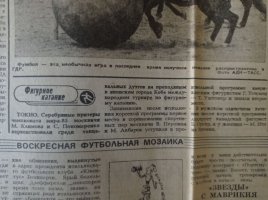
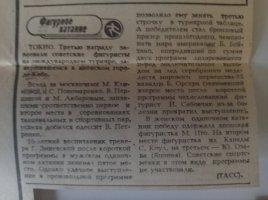
- Joined
- Nov 30, 2016
1985
How are you living, champion?
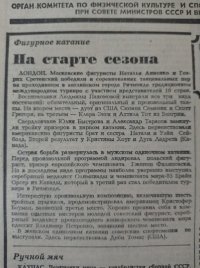
Visually, they don't exist yet—these programs of the upcoming season. And yet they already exist in the creative imagination of the performers and the champions' mentor—Honored Coach of the USSR Tamara Moskvina.
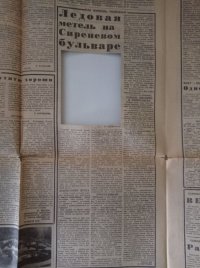
How are you living, champion?
Ice Blizzard on Lilac Boulevard
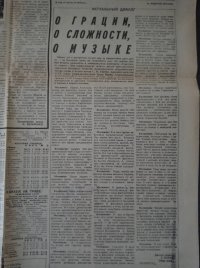
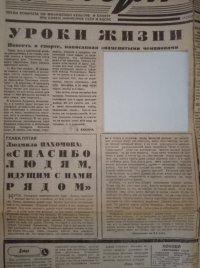
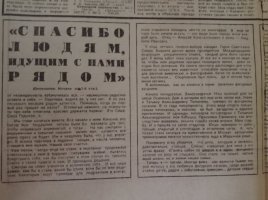
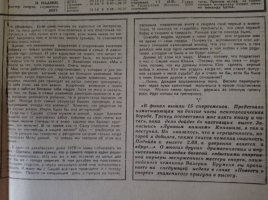
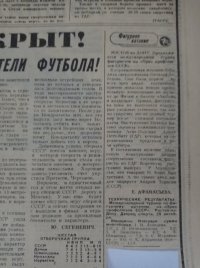
(the article published in russian 'Sovetskiy Sport' on September 25, 1985)
(the article published in russian 'Sovetskiy Sport' on September 25, 1985)
Late Moscow evening. The streets are plunged into darkness. But on Lilac Boulevard, the house on the hill — the physical education institute’s new artificial ice rink — is all aglow with lights. Despite the late hour, life here is bustling just as it does during 'rush' hours. But, perhaps, the most curious thing about this situation is the appearance on the ice arena of guests from Leningrad: Olympic, World, and European pair skating champions Elena Valova and Oleg Vasiliev.
The figure skaters had a busy life in the capital: as members of the Soviet delegation at the World Festival of Youth and Students, Valova and Vasiliev took part in rallies, club meetings, and discussions about youth sports. But now, the 'Mayak' radio station call signs have finished chiming in the loudspeakers, counting down the time. 21:00 (9:00 PM). Time to hit the rink! From that moment on, the figure skaters' thoughts are on the ice arena…
Psychology of a Duo
— Oleg, both you and Elena happened to perform for several years in the role of singles skaters. Only the last five seasons of yours have been connected with pair skating. What has pair skating brought with it in a psychological sense?
My question did not catch the Olympic champions off guard. Oleg’s answer followed instantly:
— There is a difference, and a huge one at that! We constantly feel like a small collective, where everyone carries a double burden of responsibility — both for oneself and for the other. Every step on the ice immediately triggers a thought: you are not alone; how will your partner react to your movement? This 'sense of the elbow' (feeling of teamwork/support) does not disappear even when we leave the ice.
Elena Valova, completely agreeing with Oleg’s opinion, nonetheless wanted to expand on the topic of the role of psychology:
— To some sports fans, our path in pair skating resembles a labyrinth. For three seasons, we were, so to speak, in the shadows, behind the backs of the leading pairs. Yes, there were failures. But every defeat seemed to spur us on; we became 'meaner' (more determined), more cheerful, and more energetic in training. And perhaps that is why entering the arena of the European Championship did not present a psychological barrier for us. We skated easily, without inhibition. Having become more experienced, we very quickly understood that the main danger lies precisely in victories. Yes, the first moments of victory are very pleasant. But they are exactly what relaxes the will. That is why Oleg and I wanted to forget the past tournament as early as the next morning; we rushed to training with thoughts of a new program, a new dance. To forget the past is, in a way, to conquer oneself. Then you see the path to the future more clearly…
— Does this mean that you believe in the infinite perfection of mastery and technique?
— We believe and have always believed, — remarked Elena Valova. — We, of course, understand that the higher you climb, the more difficult it becomes. In high-level sports, every new step is overcome with much greater effort than at the beginning of the journey. And yet, this path is captivating. And how could it be otherwise?
Programs-86The figure skaters had a busy life in the capital: as members of the Soviet delegation at the World Festival of Youth and Students, Valova and Vasiliev took part in rallies, club meetings, and discussions about youth sports. But now, the 'Mayak' radio station call signs have finished chiming in the loudspeakers, counting down the time. 21:00 (9:00 PM). Time to hit the rink! From that moment on, the figure skaters' thoughts are on the ice arena…
Psychology of a Duo
— Oleg, both you and Elena happened to perform for several years in the role of singles skaters. Only the last five seasons of yours have been connected with pair skating. What has pair skating brought with it in a psychological sense?
My question did not catch the Olympic champions off guard. Oleg’s answer followed instantly:
— There is a difference, and a huge one at that! We constantly feel like a small collective, where everyone carries a double burden of responsibility — both for oneself and for the other. Every step on the ice immediately triggers a thought: you are not alone; how will your partner react to your movement? This 'sense of the elbow' (feeling of teamwork/support) does not disappear even when we leave the ice.
Elena Valova, completely agreeing with Oleg’s opinion, nonetheless wanted to expand on the topic of the role of psychology:
— To some sports fans, our path in pair skating resembles a labyrinth. For three seasons, we were, so to speak, in the shadows, behind the backs of the leading pairs. Yes, there were failures. But every defeat seemed to spur us on; we became 'meaner' (more determined), more cheerful, and more energetic in training. And perhaps that is why entering the arena of the European Championship did not present a psychological barrier for us. We skated easily, without inhibition. Having become more experienced, we very quickly understood that the main danger lies precisely in victories. Yes, the first moments of victory are very pleasant. But they are exactly what relaxes the will. That is why Oleg and I wanted to forget the past tournament as early as the next morning; we rushed to training with thoughts of a new program, a new dance. To forget the past is, in a way, to conquer oneself. Then you see the path to the future more clearly…
— Does this mean that you believe in the infinite perfection of mastery and technique?
— We believe and have always believed, — remarked Elena Valova. — We, of course, understand that the higher you climb, the more difficult it becomes. In high-level sports, every new step is overcome with much greater effort than at the beginning of the journey. And yet, this path is captivating. And how could it be otherwise?
Visually, they don't exist yet—these programs of the upcoming season. And yet they already exist in the creative imagination of the performers and the champions' mentor—Honored Coach of the USSR Tamara Moskvina.
— Moskvina’s favorite phrase is: 'Guys, it’s you who’s skating, not me. Think, think constantly!' — Oleg Vasiliev shared a secret. — And we do think. Every day we bring new musical fragments to the rink, trying out elements and transitions. Not a single question regarding future compositions is decided without our involvement. Elena, for example, has put together so many different programs that she could 'equip' an entire school of figure skaters for the season…
— And won't you whisper in my ear what you have already planned?
— Music by Georgy Sviridov. The dance 'The Blizzard,' — said Valova. — But this is a top secret because the dance won't be ready until September. There are many reasons for this. The Leningrad duo has planned to replace both competitive programs — the short and the free. Moreover, they plan to conduct a 'reconnaissance in force' very early: to take part in the November international tournament in Tokyo, and then literally ten days later start in the Moscow tournament. A tight schedule. Is this, perhaps, a novelty? A departure from the system tested over the years? The skaters themselves do not think so. That which has been developed over years cannot be replaced. The backbone of the original system always remains, but every season corrections are made to the system.
— Flexibility is one of the main pedagogical principles of Tamara Nikolaevna Moskvina, and we are learning from her, — notes Elena Valova.
— Is there something important that, so to speak, charges you for creative work in the upcoming season?
— Absolutely. For example, this summer — getting acquainted with new ballets in Leningrad. Our Kirov Theater showed two wonderful premieres — 'The Knight in the Tiger's Skin' and 'Spartacus.' The performers' technique was so brilliant that we also wanted to experience such a lift on the ice, the same freedom of movement. One of our mottos: 'Live for a century — learn for a century.' It helps our work...
— And what other catchphrases do you use?
— Hurry, but don't rush...
SKATES, PIANO AND MOVIE CAMERA
In the spring of this year, Oleg Vasiliev acquired a new profession: he became a cinematographer.
— Actually, I have dreamed of working with a movie camera since childhood, — he admits. — But it so happened that only in 1983 did I start filming the programs of pairs on film. Now I have been able to film the entire spring tour of our national team at various rinks around the world. In my plans several more films on a specific theme…
— And what is planned for the future for Elena?
— I dream of learning to play the piano. Music has entered my life so deeply that I am beginning to regret not having received a special education in my time. And yet, I am making up for lost time. I don't miss a single music competition. I follow very closely what is happening in related sports. For example, in rhythmic gymnastics. My sympathies are with Galina Beloglazova and Dalia Kutkaitė. Their performances, in my opinion, are very instructive for many figure skaters.
— Last question. How do you envision the near future of figure skating?
Elena: I am convinced that the reserves of our sport are inexhaustible. Primarily in artistry and the revelation of musical images. I am sure that we will soon see compositions that are brilliant in both form and content.
Oleg: It seems to me that the time is coming for a new wave of talent in figure skating. Of course, it is difficult now to name someone, say, in women's single skating, where it is risky to make predictions. But in other disciplines, we can now talk about interesting phenomena. In ice dance today, Natalia Bestemianova and Andrei Bukin, Marina Klimova and Sergei Ponomarenko are clearly ahead, and behind them is an entire galaxy of gifted ice dancers—at least five or six young duos. In pair skating, the World Junior champions Katya Gordeeva and Sergei Grinkov have good prospects. There are two more interesting duos in the CSKA school. Well, and in men's single skating, in my opinion, our world champion Alexander Fadeev, the owner of uniquely difficult cascades, has secured leadership for several years ahead. The young Odessan Viktor Petrenko is catching up to him. In short, our coaches have plenty of reasons for optimism. I think our generation will also have its say. In any case, Elena and I believe in it!"
— And won't you whisper in my ear what you have already planned?
— Music by Georgy Sviridov. The dance 'The Blizzard,' — said Valova. — But this is a top secret because the dance won't be ready until September. There are many reasons for this. The Leningrad duo has planned to replace both competitive programs — the short and the free. Moreover, they plan to conduct a 'reconnaissance in force' very early: to take part in the November international tournament in Tokyo, and then literally ten days later start in the Moscow tournament. A tight schedule. Is this, perhaps, a novelty? A departure from the system tested over the years? The skaters themselves do not think so. That which has been developed over years cannot be replaced. The backbone of the original system always remains, but every season corrections are made to the system.
— Flexibility is one of the main pedagogical principles of Tamara Nikolaevna Moskvina, and we are learning from her, — notes Elena Valova.
— Is there something important that, so to speak, charges you for creative work in the upcoming season?
— Absolutely. For example, this summer — getting acquainted with new ballets in Leningrad. Our Kirov Theater showed two wonderful premieres — 'The Knight in the Tiger's Skin' and 'Spartacus.' The performers' technique was so brilliant that we also wanted to experience such a lift on the ice, the same freedom of movement. One of our mottos: 'Live for a century — learn for a century.' It helps our work...
— And what other catchphrases do you use?
— Hurry, but don't rush...
SKATES, PIANO AND MOVIE CAMERA
In the spring of this year, Oleg Vasiliev acquired a new profession: he became a cinematographer.
— Actually, I have dreamed of working with a movie camera since childhood, — he admits. — But it so happened that only in 1983 did I start filming the programs of pairs on film. Now I have been able to film the entire spring tour of our national team at various rinks around the world. In my plans several more films on a specific theme…
— And what is planned for the future for Elena?
— I dream of learning to play the piano. Music has entered my life so deeply that I am beginning to regret not having received a special education in my time. And yet, I am making up for lost time. I don't miss a single music competition. I follow very closely what is happening in related sports. For example, in rhythmic gymnastics. My sympathies are with Galina Beloglazova and Dalia Kutkaitė. Their performances, in my opinion, are very instructive for many figure skaters.
— Last question. How do you envision the near future of figure skating?
Elena: I am convinced that the reserves of our sport are inexhaustible. Primarily in artistry and the revelation of musical images. I am sure that we will soon see compositions that are brilliant in both form and content.
Oleg: It seems to me that the time is coming for a new wave of talent in figure skating. Of course, it is difficult now to name someone, say, in women's single skating, where it is risky to make predictions. But in other disciplines, we can now talk about interesting phenomena. In ice dance today, Natalia Bestemianova and Andrei Bukin, Marina Klimova and Sergei Ponomarenko are clearly ahead, and behind them is an entire galaxy of gifted ice dancers—at least five or six young duos. In pair skating, the World Junior champions Katya Gordeeva and Sergei Grinkov have good prospects. There are two more interesting duos in the CSKA school. Well, and in men's single skating, in my opinion, our world champion Alexander Fadeev, the owner of uniquely difficult cascades, has secured leadership for several years ahead. The young Odessan Viktor Petrenko is catching up to him. In short, our coaches have plenty of reasons for optimism. I think our generation will also have its say. In any case, Elena and I believe in it!"
Interview conducted by A. SHELUKHIN.
Last edited:


 . I've done it myself, but only in practice. It was a move that didn't gain much in the way of points, so it sort of died out in popularity.