
Navigation
Install the app
How to install the app on iOS
Follow along with the video below to see how to install our site as a web app on your home screen.
Note: This feature may not be available in some browsers.
More options
You are using an out of date browser. It may not display this or other websites correctly.
You should upgrade or use an alternative browser.
You should upgrade or use an alternative browser.
Why do more skaters not file protests against the results?
- Thread starter Skating91
- Start date


- Joined
- Oct 22, 2022

A bit off-topic, but I've always performed in any activity for my own satisfaction. I could medal and be unhappy with what I'd done, or vice versa. After one small competition, where my partner and I had done what we thought was a sloppy job but were given the silver, I ran into one of the judges who was a family acquaintance. She congratulated me and I blurted: "You all actually thought that was GOOD?" A small protest, but mine own. 


- Joined
- Dec 9, 2019
At the moment, tech panels and judges are unfair to the point that a great many would need lengthy protests.I hope not (see OP). If every programme and contributing elements are going to be discussed...it's the end for me. I can not always be happy with the calls and gifts, but if everyone is going to protest them? Sigh.
After reading several posts doing as if judging in Figure Skating was based on what tech panels and judges see, instead of narratives and rules of conducts contrary to ISU rules as we see, I really long for such a world. Where, indeed, the occasional and involuntary error from tech panel or judges would have to be accepted by competitors.
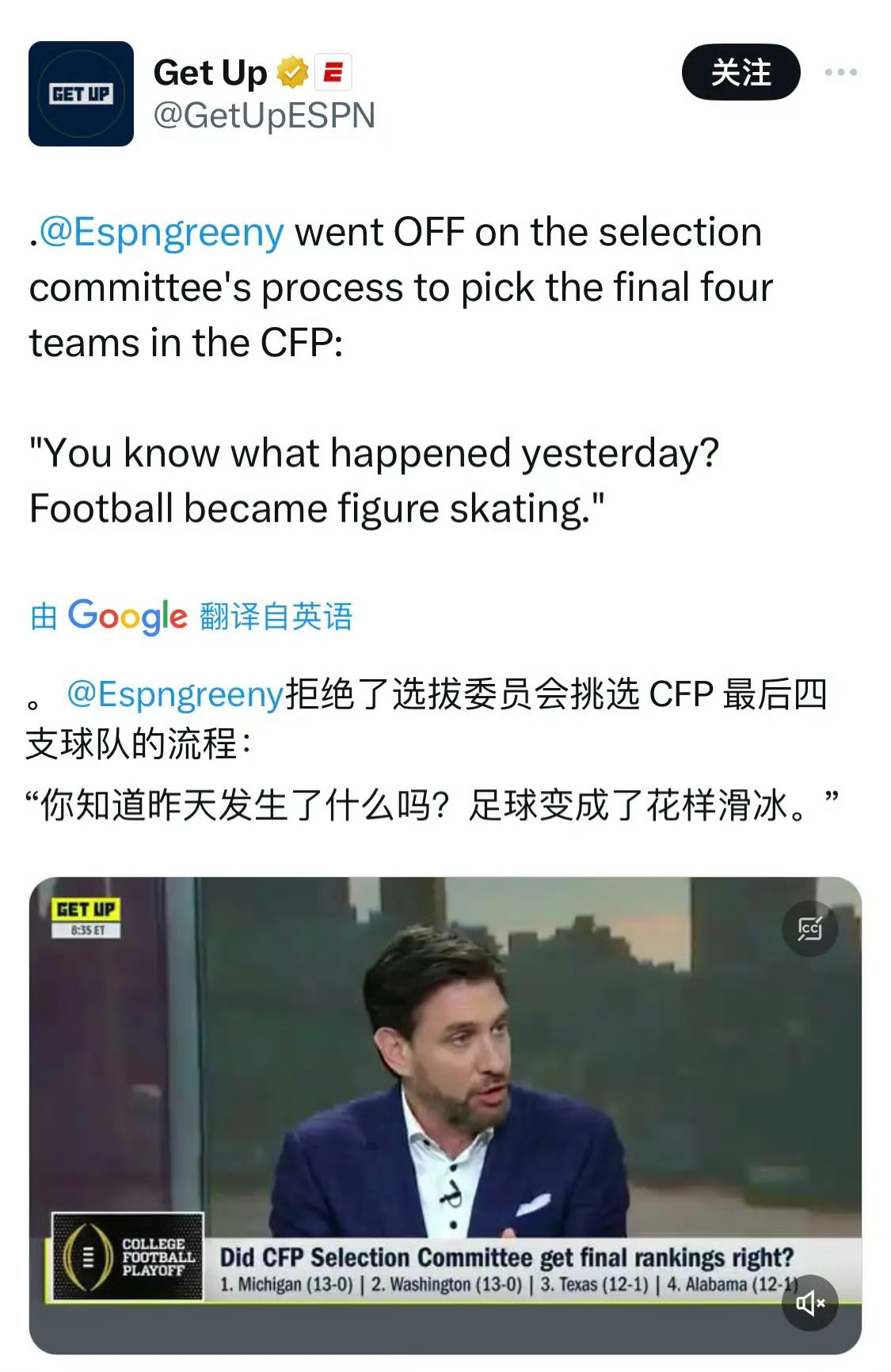
Unfairness in figure skating has become a meme:


- Joined
- Jun 21, 2003
I didn’t explain my point very well.@Mathman Can you give me an example of a skater with uncalled faults, who works hard and gets crystal-clear technique?
If a skater flutzes and gets away with it, that skater is not going to be lodging any protests with the authorities, nor does she have any particular motivation to devote a lot of effort to improving this element except perhaps the personal pride that she takes as an athlete. Her time would be better spent working on landing her triple Axel.
The concept of a “protest” only applies to the skater who does get an edge call when the other skater doesn’t. The argument: “Hey, no fair, Suzie’s flutz is just as bad as mine, but she didn’t get called and I did!” – this does not have any actual legal merit, if by a “protest” we mean a formal filing to a quasi-judicial body. Like if I get a ticket for speeding, I can’t get out of it by telling the judge, “hey, look at that guy – he’s speeding, too. Is he your cousin or something?”
And while I’m on my soapbox: What I really miss is the long, straight, “telegraphed” Bo-yang Jin –type Lutz approach that rides that outside edge the length of the rink and says: “Wait for it, wait for it, here it comes, here it comes, HERE IT IS!

Edit: By the way, I am watching the Detroit Lions U.S. football team on TV right now. The NFL allows a coach to challenge a referee's call a few times per game under ceratin circumatances. This triggers an automatic video review by by the refs, after which they either uphold the call or overturn it. The announcers just made the point that over the 11 games the Lions have played this year, they have lost every single challenge.

According to the rules, the only protests allowed are
about your own program (or your own skater's if you are a coach),
immediately after receiving the protocol,
regarding misidentified elements, errors in data input, lack of second half bonus, missing elements, and mathematical or calculation errors
It is not permitted to protest the scoring of someone else's program, nor to protest the judgment calls of the judges or the "field of play" decisions of the technical panel regarding jump rotation etc.
Figure Skating ISU Judging System
The technical panel in the ISU Judging System (IJS) determine the level for each skill. The technical specialist makes the call.gofigureskating.com
I can find the current US official document on the USFS member's only site. I'm not easily finding the corresponding ISU document on the ISU site, but the rules are essentially the same.
ISU Rule 123, Paragraph 4
a) No protests against evaluations by Referees, Judges and the Technical Panel (Technical Controller, Technical Specialists) of Skaters’ performances are allowed.
b) Protests against results are permitted only in the case of incorrect mathematical calculation. A wrong identification of an element or of a level of difficulty, although it results in a lower or higher score is not an incorrect mathematical calculation.
c) Authority of Referee to Correct Errors
As an exception to the aforementioned Rule(s), the Referee shall correct errors, i.e. even if no protest has been filed, if he/she learns:
i) Prior to the beginning of the award ceremony (or prior to the official announcement of results if there is no award ceremony), that a wrong data input by the Data Operator occurred, provided the Technical Controller and both Technical Specialists agree that there was an input error. For the purpose of this Rule, the presentation of the medals for Short Program/Rhythm Dance is considered as an award ceremony.
ii) Within 24 hours after the award ceremony that an incorrect mathematical calculation occurred, provided the Technical Controller and both Technical Specialists agree that there was such an incorrect calculation. If such correction leads to changes in the final placements, the corresponding medals and/or awards shall be redistributed accordingly.
d) If a situation under paragraphs a) - c) above arises, the Referee shall make a short record in writing which in case of c) i) and ii) must be signed by all members of the Technical Panel.
- Joined
- Jun 21, 2003
Unfairness in figure skating was a meme before memes were invented (1976).Unfairness in figure skating has become a meme:
Ulrich Salchow and Gilbert Fuchs refused to compete in world chamionships held in countries where the other was considered the judges' favorite. Herma Szabo abruptly retired from the sport after she lost the 1927 world championship to Sonia Henie by a score of three Norwegian judges to two German/Austrian judges. (This prompted the ISU to pass the rule prohibiting more than one judge per country on the panel.)
Last edited:


This is basically the same as in artistic and rhythmic gymnastics. Appeals can be made against the difficulty score (which is, in effect, equivalent to the TES in figure skating) if they think the elements or connections have not been identified/credited correctly, but they cannot appeal against the execution score. The appeal has to be made within a fairly short time period after the result is received. I think it is something like ten minutes.According to the rules, the only protests allowed are
about your own program (or your own skater's if you are a coach),
immediately after receiving the protocol,
regarding misidentified elements, errors in data input, lack of second half bonus, missing elements, and mathematical or calculation errors
- Joined
- Jun 21, 2003
A strange case occured at 2008 U.S. Nationals. Evan Lysacek and Johnny Weir exactly tied with 244.77 points. Lysacek won on a tie-breaker. It turned out that the computer code for tallying the points had been incorrectly written and did not actually follow the ISU published rules. Should you add first, then round, or round first, then add? Doing it the "right way" would have given Weir the victory by a hundredth of a rounding error point.ISU Rule 123, Paragraph 4
b) Protests against results are permitted only in the case of incorrect mathematical calculation.
This, hoever, did not count as a "methematical error" sunject to correction, so the result stood.
Weir, in his own way, did lodge a "protest," sort of. He said: "“I respect Evan as an athlete, but as a person I don’t really like him, There’s nothing special about him to me ... and I wouldn’t even know who he was if we weren’t competing against each other.”


- Joined
- Jan 29, 2007

Well, I am not done yet.
Everything judges talk during competition is recorded. From whom I heard is is our commentator Mika Saarelainen who is the only one in the world who has highest levels of judging in every categories, men, women, pairs and ID. I believe him.
If you go to watch protcols from previous years, very few had edge calls. Some got > or >>, but minority. There are protocols from 2005 or something like that and anybody can go and check, you don't have to guess.
Just some examples, just picked these by lottery.
Grand prix final 2016 ladies SP protocols
Worlds 2007 ladies FS
Notice that in second one Mao Asada has one < at her FS winning program.
I need to have very accurate eye on my professional life. I cannot regonize all the jumps because I have not spent time to learn them. But I can often see "underscored" skater really underrotates and "overscored" does not. I don't mention anyone by name. But as I have written in many times in other topics, Mika sees often immediately when a jump is underrotated, and yes, also local skaters' jumps. In my professional life 1 mm line can be worth of 300 euros, so I have to be very accurate.
I would love to watch gymnastics more but there are exactly two reasons why I don't. 1. The broadcasts are a mess, on Tv must watch what directors decide because there is so much going on at the same time. 2. The scoring system is a mess on Tv viewers' aspect, if you are not familiar to it. I don't often know who is getting scores when and protests make it more mess.
If somebody wants protesting it is the same to say I want to decrease popularity of the sport - but well, media is always intetested in scandals, also in sports journalists don't bother to write much about otherwise. So fans are done, non-fans can bark to it. But when it happens often, media looses the inteterest and so does audience who have liked the sport.
Everything judges talk during competition is recorded. From whom I heard is is our commentator Mika Saarelainen who is the only one in the world who has highest levels of judging in every categories, men, women, pairs and ID. I believe him.
If you go to watch protcols from previous years, very few had edge calls. Some got > or >>, but minority. There are protocols from 2005 or something like that and anybody can go and check, you don't have to guess.
Just some examples, just picked these by lottery.
Grand prix final 2016 ladies SP protocols
Worlds 2007 ladies FS
Notice that in second one Mao Asada has one < at her FS winning program.
I need to have very accurate eye on my professional life. I cannot regonize all the jumps because I have not spent time to learn them. But I can often see "underscored" skater really underrotates and "overscored" does not. I don't mention anyone by name. But as I have written in many times in other topics, Mika sees often immediately when a jump is underrotated, and yes, also local skaters' jumps. In my professional life 1 mm line can be worth of 300 euros, so I have to be very accurate.
Well. Then media starts to be interested in it and FS is paid attention to also outside of the those few countries where it is popular. And people can yell " it is not sport" even more than they do now. Much more. But they still don't watch it.I hope not (see OP). If every programme and contributing elements are going to be discussed...it's the end for me. I can not always be happy with the calls and gifts, but if everyone is going to protest them? Sigh.
I would love to watch gymnastics more but there are exactly two reasons why I don't. 1. The broadcasts are a mess, on Tv must watch what directors decide because there is so much going on at the same time. 2. The scoring system is a mess on Tv viewers' aspect, if you are not familiar to it. I don't often know who is getting scores when and protests make it more mess.
If somebody wants protesting it is the same to say I want to decrease popularity of the sport - but well, media is always intetested in scandals, also in sports journalists don't bother to write much about otherwise. So fans are done, non-fans can bark to it. But when it happens often, media looses the inteterest and so does audience who have liked the sport.
Last edited:
The conversations of the technical panel are recorded.Well, I am not done and I hope
Everything judges talk during competition is recorded.
Judges aren't because they are prohibited from talking while sitting on the panel.
- Joined
- Jan 29, 2007
Thanks, that is what he probably also Mika said or meant.The conversations of the technical panel are recorded.
Judges aren't because they are prohibited from talking while sitting on the panel.
- Joined
- Dec 9, 2019
Oh yes! Sonja Henie's fathers reportedly went so far as to physically threaten judges who wouldn't score his daughter as high as he wished.nfairness in figure skating was a meme before memes were invented (1976).
Ulrich Salchow and Gilbert Fuchs refused to compete in world chamionships held in countries where the other was considered the judges' favorite. Herma Szabo abruptly retired from the sport after she lost the 1927 world championship to Sonia Henie by a score of three Norwegian judges to two German/Austrian judges. (This prompted the ISU to pass the rule prohibiting more than one judge per country on the panel.)
Now, there was the Salt Lake City scandal, the Olympic Committee said that Figure Skating had to be scored accurately or it wouldn't be recognised anymore as an Olympic sport; the IJS scoring system was established and at least in most areas, it was precise and binding. Room for influence was more limited though not suppressed. But since 2014 some alarming instances of unexplainable scoring have occurred, and since 2017 the phenomenon has been amplified to a most ridiculous point. So, it cannot be said that a, say, approximately fair scoring is impossible, as it has been done some years ago. Plus, it would be possible to measure automatically and comput digitally, in my opinion 90% of the score, the rest being left to tech panel's and judges' appreciation, how comes it that no experiment has been done to have at least a small part of it? There was a 250,000SF budget for it in last year's ISU budget, nothing came of it? Not the least local competition experiment for a partial automated scoring, such as of the number of rotations in jumps and spins, which take so much of tech panels' time? Or showing some data to judges for Skating Skills scoring?
- Joined
- Dec 9, 2019
In Gymnastics, if I understand well, a good proportion of the scoring is given by automated sensors and softwares. From this, it would be extremely difficult to go into the hard- and software to fix something in the case when a correct move has been deemed incorrect. It would be fine if it could be noticed and some experts try to amend it, but not to have all a competition wait until it's solved.This is basically the same as in artistic and rhythmic gymnastics. Appeals can be made against the difficulty score (which is, in effect, equivalent to the TES in figure skating) if they think the elements or connections have not been identified/credited correctly, but they cannot appeal against the execution score. The appeal has to be made within a fairly short time period after the result is received. I think it is something like ten minutes.

- Joined
- Sep 23, 2020
Yep. The AI ISU budget use is a real puzzle as are the reasons why we do not get any reporting on the outcomes of the money, surely, well spent. I,. for one, would love to hear how, where and to what result this money is going.Oh yes! Sonja Henie's fathers reportedly went so far as to physically threaten judges who wouldn't score his daughter as high as he wished.
Now, there was the Salt Lake City scandal, the Olympic Committee said that Figure Skating had to be scored accurately or it wouldn't be recognised anymore as an Olympic sport; the IJS scoring system was established and at least in most areas, it was precise and binding. Room for influence was more limited though not suppressed. But since 2014 some alarming instances of unexplainable scoring have occurred, and since 2017 the phenomenon has been amplified to a most ridiculous point. So, it cannot be said that a, say, approximately fair scoring is impossible, as it has been done some years ago. Plus, it would be possible to measure automatically and comput digitally, in my opinion 90% of the score, the rest being left to tech panel's and judges' appreciation, how comes it that no experiment has been done to have at least a small part of it? There was a 250,000SF budget for it in last year's ISU budget, nothing came of it? Not the least local competition experiment for a partial automated scoring, such as of the number of rotations in jumps and spins, which take so much of tech panels' time? Or showing some data to judges for Skating Skills scoring?
- Joined
- Jun 21, 2003
I think that the ISU is out of its depth in terms AI reseach and development. I don't think it is as easy as just hiring Robots R Us and paying them a million dollars to come up with something. I am not surprised that the process is advancing with glacial speed.
- Joined
- Sep 23, 2020
Still, somebody gets the money. Wonder what they do with it.I think that the ISU is out of its depth in terms AI reseach and development. I don't think it is as easy as just hiring Robots R Us and paying them a million dollars to come up with something. I am not surprised that the process is advancing with glacial speed.
- Joined
- Jan 29, 2007
I think the technique itself not so expensive today. The equipments could be really small sensors and results seem by ordinary computers or cell phones. The biggest cost is to develop the system. But I woud not say million dollars. It depends where it is developed. Who do make the measuring in practice is the question. One possibility is accurate camera system. It is not impossible today to get very accurate video from distance. Or one system which probably in not good idea could be tiny - it can be really tiny sensor on skaters blade oar bottom of the boot. The sensor could accurately measure what is the angle when the blade is off the ice and when it is back on and count exactly was it f.ex. 360 degrees between when off and back. It not good idea for many reasons: where to put it, who does put it and how to make sure is is kept where it is put. I think even my husband has skills enough - he is professional software designer in industry - could develop this kind of system maybe help by son, who has been studying also electronics before he started work in on information systems. I can ask them when son comes here for Xmas if I remember. I cannot even think how robots may do it. But an example about very tiny censors. We have a few in hour house, they are tiny equipments in tiny cases, in some of our rooms and outside. We have an application on hour phones and we see temperature. Those sensors and application are made in Finland in a small company.I think that the ISU is out of its depth in terms AI reseach and development. I don't think it is as easy as just hiring Robots R Us and paying them a million dollars to come up with something. I am not surprised that the process is advancing with glacial speed.
Hey, as also my other son has studied IT he could join us. Did you guys just tell how to make our family rich? Oh so, ISU does not have money. We must forget it.
But what ever the system is, people do never stop complaining. Camera was in wrong position. The sensor was not attached properly. Somebody has tampered the devices and so on.
Last edited:


- Joined
- Sep 23, 2020
I don't know the stats for all sports but at least in tennis there are much fewer disputes when the Eagle Eye (the camera system) decides the dubious balls and not the human eye. I think it has a similar effect with VAR in football. Anyway, I do not think complaints and protests are the real problem such a system aims to solve but ensuring accurate scoring and judging.I think the technique itself not so expensive today. The equipments could be really small sensors and results seem by ordinary computers or cell phones. The biggest cost is to develop the system. But I woud not say million dollars. It depends where it is developed. Who do make the measuring in practice is the question. One possibility is accurate camera system. It is not impossible today to get very accurate video from distance. Or one system which probably in not good idea could be tiny - it can be really tiny sensor on skaters blade oar bottom of the boot. The sensor could accurately measure what is the angle when the blade is off the ice and when it is back on and count exactly was it f.ex. 360 degrees between when off and back. It not good idea for many reasons: where to put it, who does put it and how to make sure is is kept where it is put. I think even my husband has skills enough - he is professional software designer in industry - could develop this kind of system maybe help by son, who has been studying also electronics before he started work in on information systems. I can ask them when son comes here for Xmas if I remember. I cannot even think how robots may do it. But an example about very tiny censors. We have a few in hour house, they are tiny equipments in tiny cases, in some of our rooms and outside. We have an application on hour phones and we see temperature. Those sensors and application are made in Finland in a small company.
Hey, as also my other son has studied IT he could join us. Did you guys just tell how to make our family rich? Oh so, ISU does not have money. We must forget it.
But what ever the system is, people do never stop complaining. Camera was in wrong position. The sensor was not attached properly. Somebody has tampered the devices and so on.
If it makes your family rich in the process, even better

Last edited:
that's not true? gymnastics is currently judged entirely by people, just like skating. the judges obviously enter their scores into a computer but there's no AI/non-human component to it. when an appeal is filed, the judges simply rewatch a video of the routine and either accept the appeal (admit they've misjudged something) and alter the difficulty score or they don't.In Gymnastics, if I understand well, a good proportion of the scoring is given by automated sensors and softwares. From this, it would be extremely difficult to go into the hard- and software to fix something in the case when a correct move has been deemed incorrect. It would be fine if it could be noticed and some experts try to amend it, but not to have all a competition wait until it's solved.
this could be easily implemented in skating, though i don't think it'd do much since skaters without URs or edge issues don't get them unfairly called very often at all. the problem with skating is that the judging is lenient with some and fair with others. the gymnastics model doesn't allow an athlete to question the score of a competitor.
Similar threads
- Replies
- 50
- Views
- 10K

- Replies
- 82
- Views
- 18K

- Replies
- 13
- Views
- 6K
- Replies
- 2
- Views
- 2K
